
Boron nitride (BN) is a chemical compound consisting of boron (B) and nitrogen (N) in a 1:1 ratio. It is a synthetic material with several structural forms, similar to how carbon can exist as graphite, diamond, or graphene.
Here’s a clear overview:
Basic Information
- Chemical formula: Boron Nitride
- Composition: Boron + Nitrogen
- Molecular weight: ~24.82 g/mol
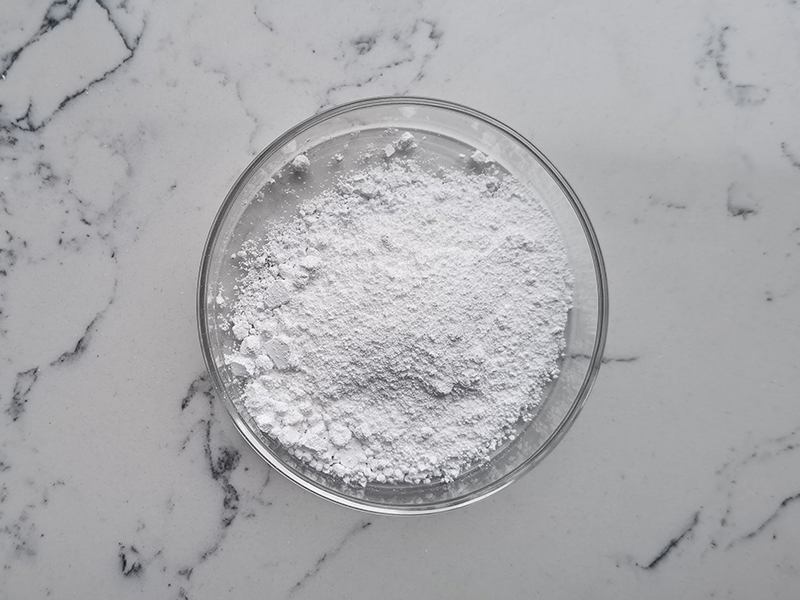
- Appearance: White, odorless, and often powdery solid
- Thermal stability: Extremely high (up to 1000°C in air, 2000°C in inert atmospheres)
Allotropic Forms
Boron Nitride exists in several structural forms, analogous to carbon:
1. Hexagonal Boron Nitride (h-BN):
- Structure similar to graphite
- Soft, lubricating, and a good electrical insulator
- Excellent thermal conductor
- Often called “white graphite”
- Applications: Lubricants, cosmetics, electrical insulators, coatings
2. Cubic Boron Nitride (c-BN):
- Structure similar to diamond
- Second hardest material after diamond
- Chemically more stable than diamond in air and at high temperatures
- Applications: Cutting tools, abrasives, high-temperature electronics
3. Wurtzite Boron Nitride (w-BN):
- Very rare and super-hard phase
- Even harder than cubic Boron Nitride under certain conditions
Key Properties
| Property | Description |
| Hardness | Cubic Boron Nitride nearly as hard as diamond |
| Thermal conductivity | Very high, ideal for heat dissipation |
| Electrical insulation | Excellent (used as dielectric material) |
| Chemical resistance | Stable against oxidation and most chemicals |
| Lubrication | Hexagonal Boron Nitride acts as a dry lubricant at high temperatures |
Applications
- High-performance lubricants (especially in high-temperature environments)
- Abrasives and cutting tools (using c-BN)
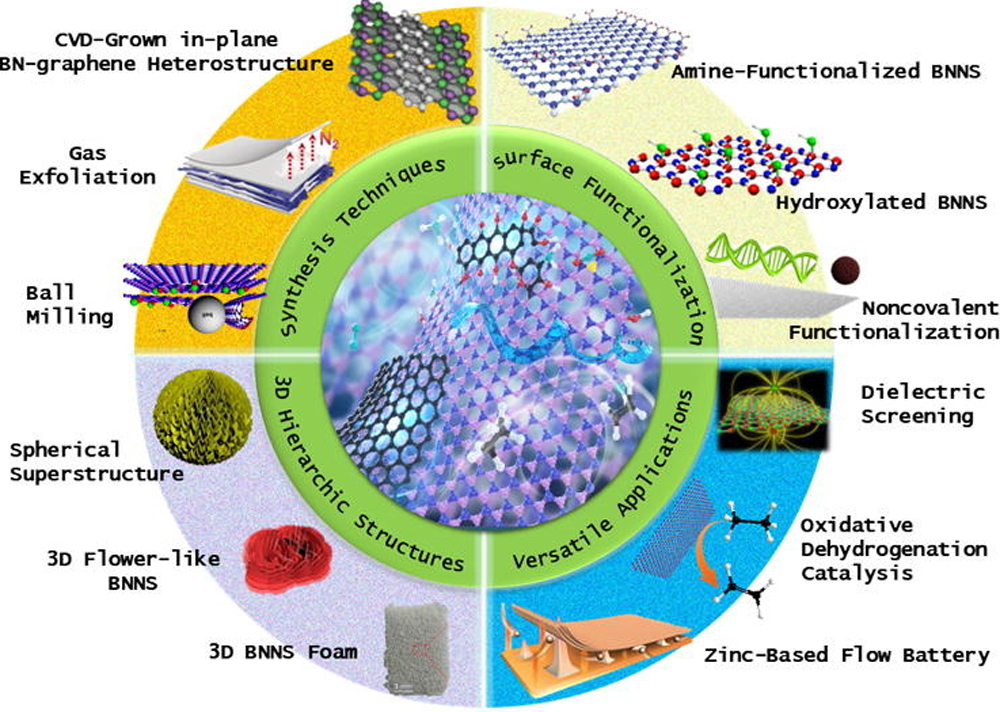
- Electronics: insulating layers in semiconductors and 2D materials
- Protective coatings for metal parts and molds
- Cosmetics: smooth, silky texture in powders
- Composites: added to polymers or ceramics to improve heat resistance
Comparison with Carbon Forms
| Property | Hexagonal Boron Nitride | Graphite |
| Electrical conductivity | Insulator | Conductor |
| Lubrication | Excellent | Excellent |
| Thermal stability | Higher | Lower |
| Color | White | Black/Gray |
Would you like me to focus next on its synthesis methods, applications in electronics, or physical properties (e.g., hardness, conductivity)?