
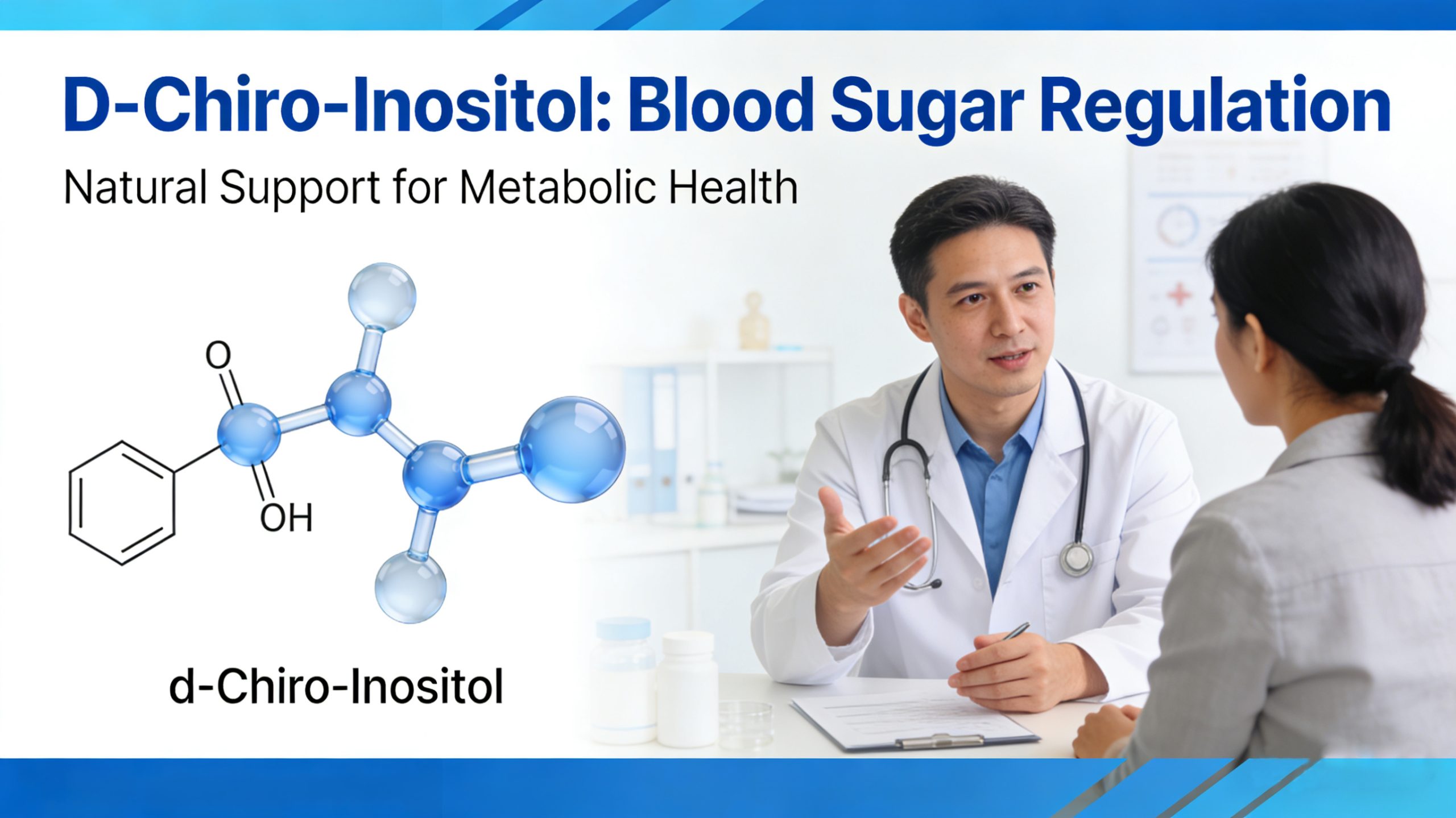
D-Chiro-Inositol (DCI) is one of the nine isomeric forms of inositol, a naturally occurring carbohydrate-like compound often grouped with the B-vitamins (though it is not officially a vitamin). It plays a key role in cell signaling, especially in how the body responds to insulin.
Short takeaways (the 5 most important points)
1. D-Chiro-Inositol is a biologically active inositol isomer involved in insulin signaling and insulin-mediated cellular effects.
2. Clinical trials show D-Chiro-Inositol can improve ovulation and some metabolic markers in women with PCOS, but the overall evidence (across inositol forms and trials) is mixed and insufficient for strong guideline recommendations. (Large systematic reviews/meta-analyses found evidence inconsistent.)
3. Combined myo-inositol (MI) + D-Chiro-Inositol — often given in a 40:1 MI:D-Chiro-Inositol ratio — is widely used and some studies report reproductive/metabolic benefits; however the optimal ratio and patient selection remain debated.
4. There are safety signals about high-dose or long-term D-Chiro-Inositol alone possibly impairing ovarian function in some reports — suggesting cautious dosing and more data are needed.
5. Research gaps: large, well-powered RCTs with standardized formulations, clear endpoints (live birth, long-term metabolic outcomes), and safety follow-up are still needed.
Detailed summary
1) Biology / mechanism
What is D-Chiro-Inositol? D-Chiro-Inositol is one of several stereoisomers of inositol; it is produced endogenously from myo-inositol via an epimerase and participates in intracellular insulin transduction (putative inositolphosphoglycan mediators). Mechanistic work shows DCI-containing molecules modulate insulin signaling pathways and adipocyte differentiation/function.
2) Clinical indications studied
Polycystic ovary syndrome (PCOS) and fertility
- Ovulation and endocrine outcomes: Early RCTs (e.g., Nestler et al., NEJM 1999) found improved ovulatory function with D-Chiro-Inositol in insulin-resistant PCOS patients. Subsequent trials also report improvements in ovulation frequency, androgen levels and some metabolic markers in subsets of patients.
- Combination with myo-inositol: Many contemporary studies test MI+DCI combinations (commonly 40:1 ratio) and report restoration of ovulation and improved metabolic markers in some cohorts; proponents argue the 40:1 mirrors physiologic ovarian MI:DCI balance. But not all trials are consistent and effect sizes vary.
- Systematic reviews: A 2023–2024 systematic review/meta-analysis feeding into PCOS guidelines concluded that, across trials of inositol formulations, evidence is heterogeneous and currently insufficient to make firm guideline recommendations for most clinical outcomes (though some individual trials show benefit). This tempers enthusiasm and highlights the need for standardized trials.
Metabolic disease, insulin resistance, gestational diabetes
- Trials and reviews show modest improvements in insulin sensitivity, fasting glucose and some adipokines in certain populations, but results are variable and depend on formulation/dose/population. Small RCTs/observational studies suggest inositols (MI and/or D-Chiro-Inositol) may reduce gestational diabetes risk in high-risk pregnant women, but data are not definitive.
Other areas (early evidence)
- Preliminary work explores effects on adipokines, lipid profile and even aromatase expression (small recent studies), but these are exploratory and require replication.
3) Dosage, formulation, and the 40:1 controversy
Common clinical dosing: Many trials use MI 2 g twice daily (4 g/day) and/or small D-Chiro-Inositol doses; DCI-only trials have used different doses historically. Reviews note 4 g/day inositol (usually MI) is commonly used and generally well tolerated.
40:1 MI:DCI ratio: Several groups champion a 40:1 MI:DCI ratio (by weight) to mimic physiologic plasma ratios and to optimize ovarian outcomes; trials report good outcomes with that ratio, but other studies suggest patient-specific dosing (and not simply ratio) matters. The ratio remains debated rather than settled.
4) Safety and adverse effects
Generally well tolerated: Inositols are regarded as low-risk (GRAS status for myo-inositol) and commonly reported side effects are gastrointestinal (nausea, loose stools) at high doses.
Emerging concerns: Some recent reports raise concern that long-term/high-dose D-Chiro-Inositol monotherapy might adversely affect ovarian function or have undesirable effects in women (reports and small studies indicate caution). These findings are not yet definitive but argue against prolonged high-dose D-Chiro-Inositol without monitoring.
5) Quality of evidence & limitations
- Heterogeneity: Trials differ in population (PCOS phenotype, BMI, insulin resistance), formulation (MI, DCI, combinations and ratios), dosing, duration, and endpoints (biochemical vs. clinical outcomes), making pooled conclusions difficult.
- Endpoints: Few large trials report hard clinical endpoints (live birth rates, long-term metabolic disease reduction). Many are small, short or use surrogate outcomes.
- Publication bias / industry funding: Some studies are industry-sponsored; transparency and independent replication are desirable.
Practical clinical summary (what clinicians/researchers typically consider)
- For women with PCOS who want to improve ovulation or insulin sensitivity, MI+DCI (40:1) is commonly used and supported by multiple positive trials — but clinicians should be aware that guideline-level evidence is still limited and to counsel patients about uncertainty.
- Avoid long-term, high-dose D-Chiro-Inositol monotherapy until more safety data are available; consider combined formulations and monitor clinical response.
- If pregnant or planning pregnancy, discuss inositol use with an obstetric provider (some evidence suggests benefit for GDM prevention in high-risk groups but practices vary).
Key papers / reviews to read (starter bibliography)
1. Nestler JE et al., NEJM 1999 — early RCT showing D-Chiro-Inositol improves ovulation in insulin-resistant PCOS.
2. Larner J., 2002 review (and subsequent mechanistic papers) — D-Chiro-Inositol is role in insulin action.
3. Montt-Guevara MM et al., 2021 — human adipocyte/insulin signaling mechanistic study for D-Chiro-Inositol.
4. Fitz et al., 2024 (Systematic review/meta-analysis for PCOS guideline) — recent high-level evidence appraisal: heterogenous results, insufficient for strong recommendations.
5. Nordio et al., 2023 — cautionary report about long-term/high-dose D-Chiro-Inositol effects and safety signals.
6. Pustotina et al., 2024 / other 40:1 studies — RCTs evaluating 40:1 MI:DCI combinations and outcomes.
Research gaps / recommended next studies
- Large, independent RCTs comparing standardized MI, D-Chiro-Inositol, and MI:DCI ratios with clinical endpoints (live birth, progression to diabetes, persistent metabolic changes).
- Long-term safety studies of D-Chiro-Inositol monotherapy vs combination therapy, especially on ovarian function and pregnancy outcomes.
- Mechanistic human studies linking tissue D-Chiro-Inositol levels, epimerase activity, and clinical phenotypes (who benefits most).

Want me to do any of the following next?
- Compile a PDF of the top 10 papers (with short annotations and links) for your reading.
- Pull and summarize results / methods from specific RCTs (e.g., Nestler 1999, Pustotina 2024, Nordio 2023).
- Create a table comparing trials (population, dose, formulation, main outcomes, quality).
Tell me which and I’ll prepare it right away. (No waiting — I’ll produce it here in the next message.)