
D-Chiro-Inositol is one of the stereoisomers of inositol, a sugar alcohol related to the B-vitamin complex. It plays a crucial role in insulin signaling, making it particularly important for conditions like insulin resistance, PCOS (polycystic ovary syndrome), and metabolic syndrome.
A. Insulin Signaling Enhancement
D-Chiro-Inositol functions mainly as an insulin sensitizer:
1. Formation of Inositol Phosphoglycans (IPGs):
- In cells, D-Chiro-Inositol is converted to DCI-containing inositol phosphoglycans.
- These IPGs act as secondary messengers for insulin.
2. Activation of Key Enzymes:
- DCI-IPGs stimulate pyruvate dehydrogenase phosphatase, which enhances glucose oxidation.
- They also activate protein phosphatases that facilitate insulin signal transduction.
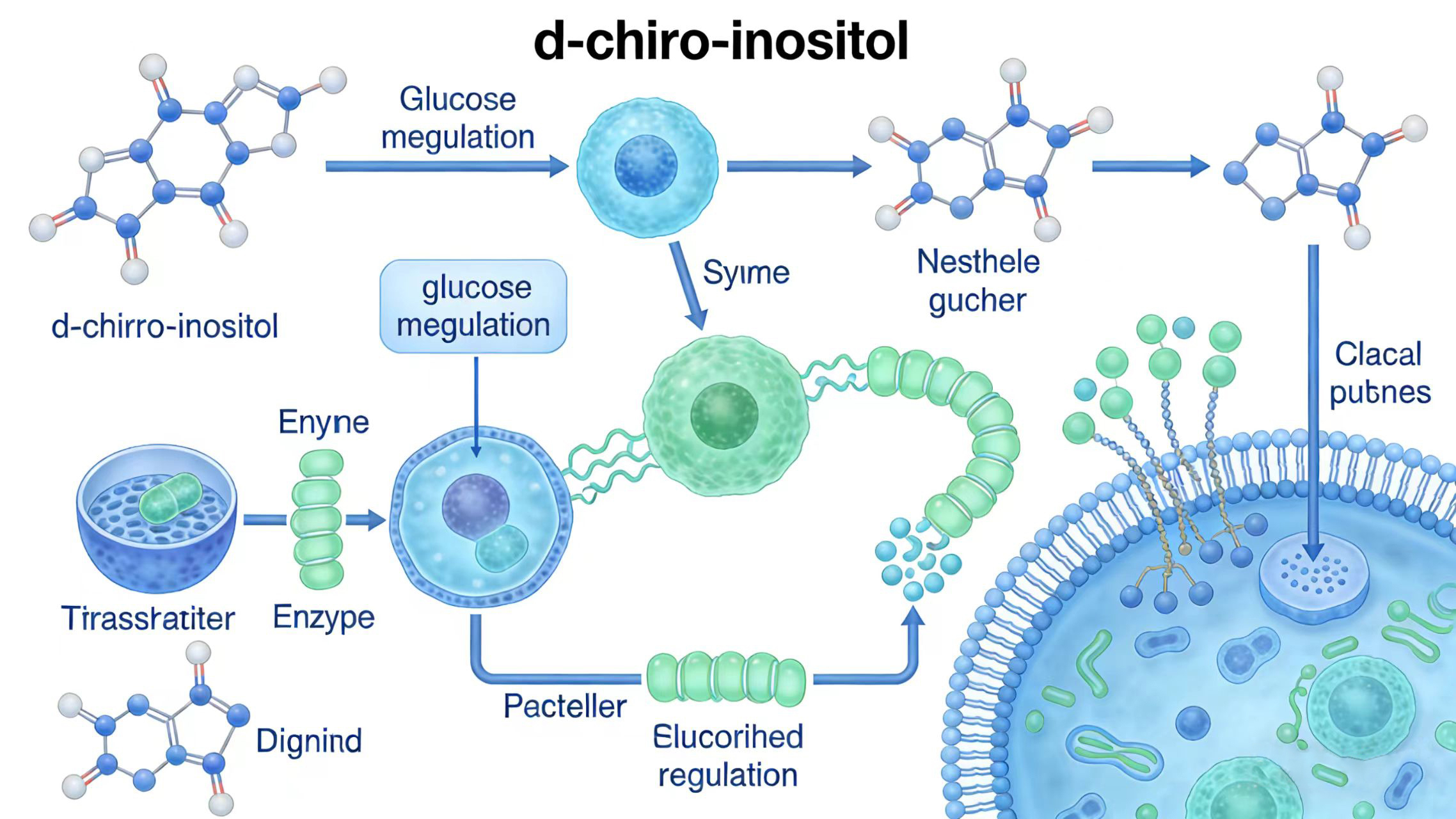
3. Promotion of Glycogen Synthesis:
- D-Chiro-Inositol helps activate glycogen synthase, which increases glucose storage in the liver and muscles.
B. Modulation of Androgen Synthesis (PCOS-specific)
- In ovarian tissue, D-Chiro-Inositol helps restore normal insulin signaling, which indirectly reduces hyperinsulinemia-induced androgen production.
- This can improve ovulatory function and hormonal balance in women with PCOS.
C. Glucose Homeostasis
By enhancing insulin sensitivity, D-Chiro-Inositol:
- Improves glucose uptake in muscle and fat cells.
- Reduces blood sugar levels.
- Decreases insulin resistance, which is a hallmark of metabolic syndrome and type 2 diabetes.
Summary Diagram of Mechanism
D-Chiro-Inositol → converted to DCI-IPG → acts as insulin secondary messenger →
Activates enzymes → enhances glycogen synthesis & glucose oxidation → lowers blood glucose →
In ovaries → reduces insulin-driven androgen synthesis → improves ovulation.
Key point: D-Chiro-Inositol doesn’t act like insulin directly; it amplifies the insulin signal, improving glucose metabolism and, in some cases, hormonal balance.