
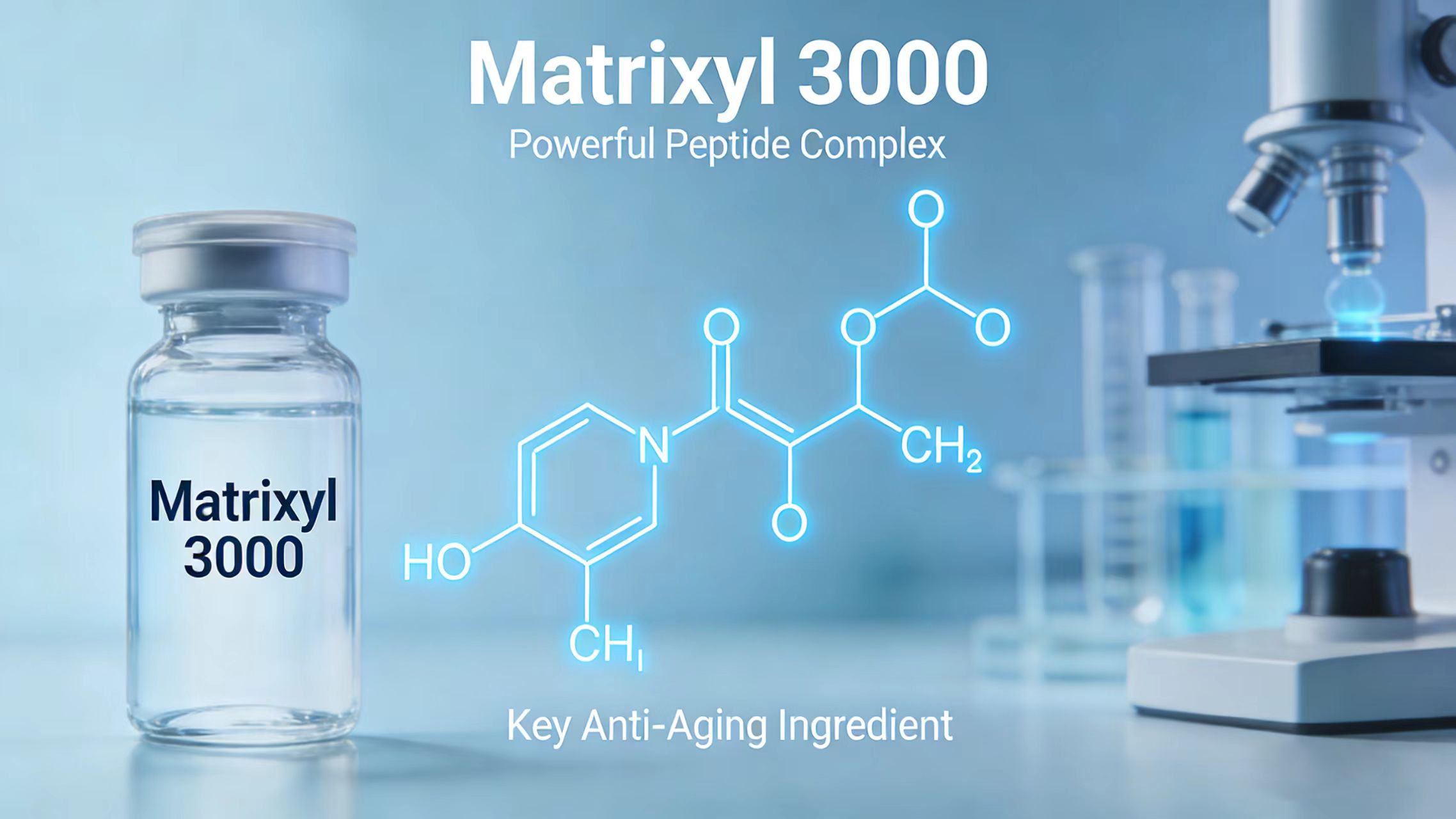
Matrixyl 3000 is not a single chemical, but a peptide complex used in skincare — its core active components are two specific palmitoyl-linked peptides. These proteins help signal the skin to boost collagen and elastin production and improve firmness and texture.
Core Ingredients in Matrixyl 3000
The primary molecular ingredients in the Matrixyl 3000 complex are:
- Palmitoyl Tripeptide-1 (Pal-GHK) – a small peptide (three amino acids) linked to palmitic acid that promotes collagen synthesis.
- Palmitoyl Tetrapeptide-7 (Pal-GQPR) – a four-amino-acid peptide linked to palmitic acid that works synergistically with Palmitoyl Tripeptide-1 to reduce inflammation and support ECM (extracellular matrix) health.
These two components are what make the Matrixyl 3000 complex effective as an anti-aging peptide blend.
Common Supporting/Carrier Ingredients
In formulations labeled “Matrixyl 3000”, the peptide complex is usually delivered with a few common skincare bases to help with texture and solubility:
• Glycerin – hydrates and attracts moisture to the skin.
• Water (Aqua) – solvent.
• Butylene Glycol – humectant and solvent.
• Carbomer – texture-controlling polymer.
• Polysorbate 20 – surfactant/emulsifier to help ingredients mix.
These additional ingredients help the peptide blend function properly in a serum or cream, but they are not the anti-aging actives themselves — the functional benefits come from the palmitoyl peptides.
Adverse effects of Matrixyl 3000
Matrixyl 3000 (a peptide complex widely used in anti-aging skincare) is generally considered very safe, with serious adverse effects being rare—but like any topical ingredient, it can cause some mild reactions in certain individuals.
Common/Reported Adverse Effects
Most side effects are mild and temporary and usually related to skin sensitivity or formulation rather than the peptide itself:
Mild Irritation
- Redness
- Tingling or stinging
- Burning sensation
These are usually temporary and more likely in sensitive skin or when first starting a product.
Dryness or Flaking
- Some people report mild dry patches especially when the skin barrier is compromised.
Breakouts / Acne Flare-Ups
- Occasionally users see pimples or clogged pores after starting a new peptide product (this may be from the formulation’s other ingredients, like oils or occlusives).
Allergic Reactions (Rare)
- Hives, rash, swelling, itching: These are uncommon but possible with any skincare ingredient. If this happens, stop use and consult a healthcare provider.
Less Common or Context-Dependent Issues
Increased Irritation with Other Actives
If you layer Matrixyl 3000 with strong acids (AHAs/BHAs), high-strength vitamin C, or retinoids without proper spacing, the overall routine can become irritating even if the peptide itself isn’t the main irritant.
Sensitivity During Barrier Compromise
If your skin is already inflamed (e.g., eczema, rosacea), any new ingredient has a higher chance of causing a reaction—even something typically well-tolerated like Matrixyl.
Tips to Minimize Side Effects
- Patch test on inner forearm or behind ear before full application.
- Introduce slowly, especially if you have sensitive skin.
- Avoid simultaneous use with harsh actives unless spaced out (e.g., apply Matrixyl in PM and acids/retinoids in AM or vice versa).
- Moisturize well to support the skin barrier.
Overall Safety Profile
Clinical and ingredient safety reviews generally rate Matrixyl 3000 as very safe with low incidence of irritation or adverse reactions when used properly. Major safety panels confirm palmitoyl peptides (components of Matrixyl) are safe as cosmetic ingredients.
If you’re ever unsure about how your skin reacts or have a pre-existing skin condition, consulting a dermatologist before starting new active products is a good precaution.