
Ectoine is a small organic molecule produced by certain bacteria, especially extremophiles, as a compatible solute to help them survive in extreme environmental conditions such as high salinity, temperature, or desiccation. The biosynthetic pathway of ectoine involves a series of enzymatic reactions that lead to its formation from aspartate.
Biosynthetic Pathway of Ectoine:
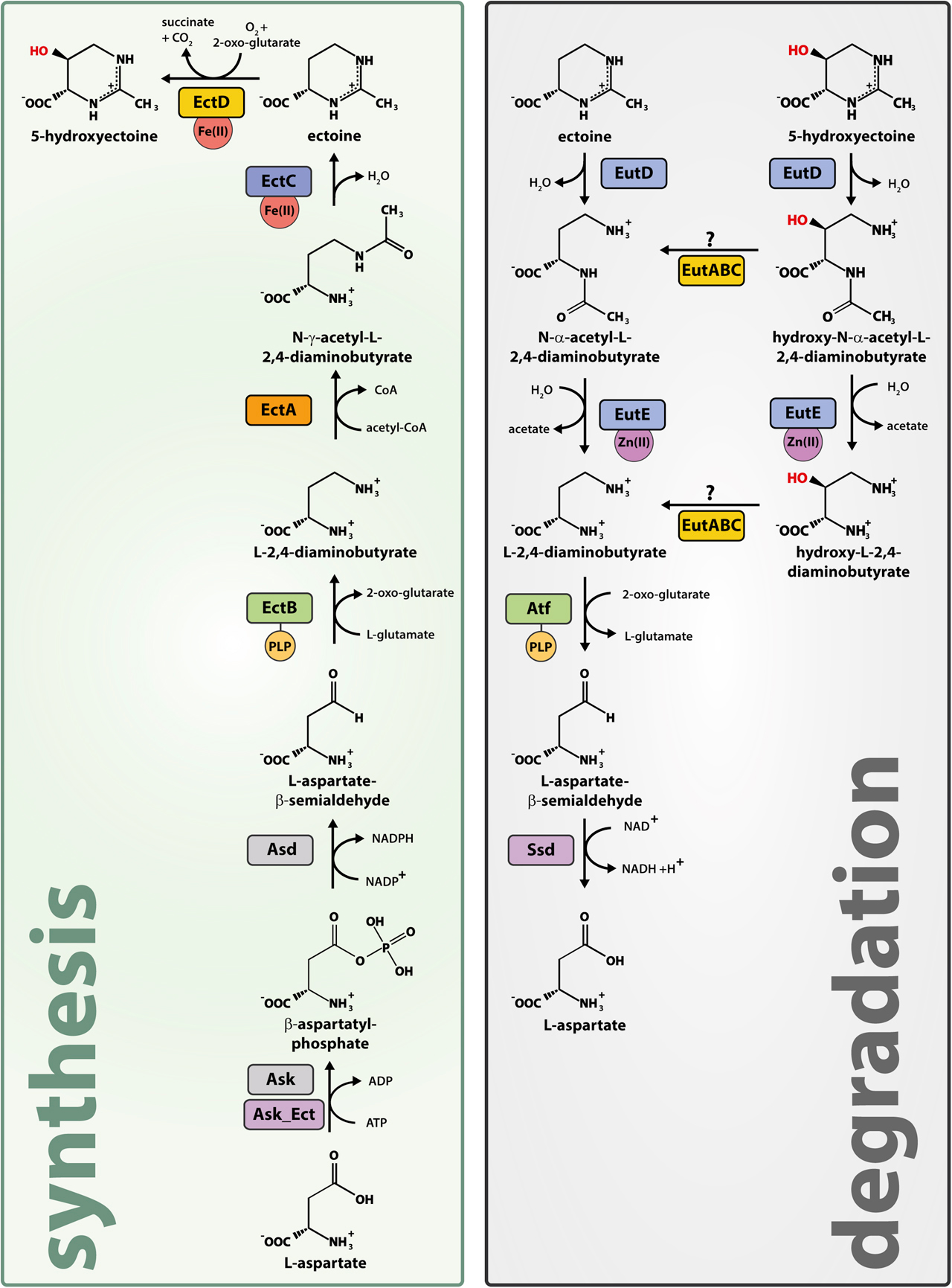
1.Aspartate to N-Acetyl-L-2,4-diaminobutyrate (N-Ac-DAB):
- The precursor for ectoine is L-aspartate.
- The first enzyme in the pathway, Aspartate kinase (ASK), catalyzes the phosphorylation of aspartate to produce aspartyl phosphate.
- This is followed by a reaction with acetyl-CoA, catalyzed by N-acetyltransferase, leading to the formation of N-acetyl-L-aspartate.
- Then, N-acetyl-L-aspartate undergoes further reactions, including the formation of N-acetyl-L-2,4-diaminobutyrate (N-Ac-DAB).
2. Formation of Ectoine:
- The next step involves the formation of ectoine itself from N-Ac-DAB.
- The key enzyme here is N-acetyl-L-2,4-diaminobutyrate dehydrogenase (or ectoine synthase).
- This enzyme catalyzes the cyclization of N-Ac-DAB to form ectoine by closing the cyclic structure.
3. Modification to Hydroxyectoine (Optional Pathway):
- In some microorganisms, hydroxyectoine can be produced through hydroxylation of Ectoine.
- The enzyme hydroxyectoine synthase adds a hydroxyl group to the 5-position of the ectoine ring, producing hydroxyectoine as an alternative compatible solute.
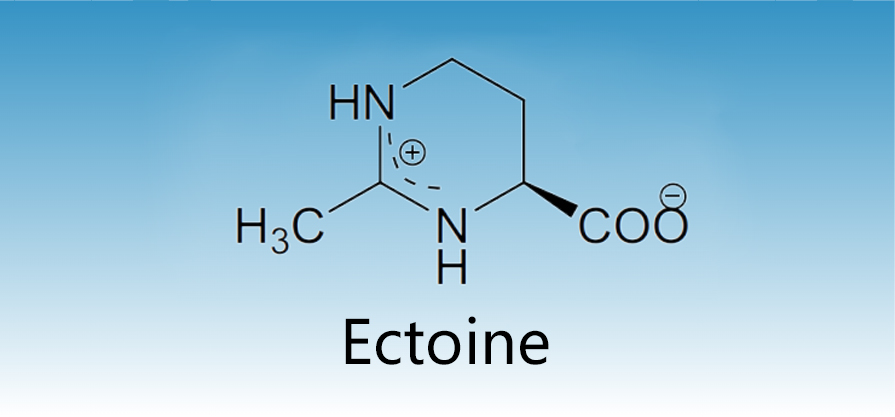
Summary of Enzymes Involved:
- Aspartate kinase – catalyzes the phosphorylation of L-aspartate.
- Acetyltransferase – adds an acetyl group to aspartate.
- N-acetyl-L-2,4-diaminobutyrate dehydrogenase (ectoine synthase) – forms ectoine by cyclization.
- Hydroxyectoine synthase (optional) – converts ectoine into hydroxyectoine.
This pathway allows bacteria to produce Ectoine, which helps in protecting cellular components under stressful conditions by stabilizing proteins and cellular structures.