
BAM-15 is a synthetic small molecule studied primarily as a mitochondrial uncoupler. Here’s a clear breakdown of its chemical structure and physical properties:
Chemical Structure of BAM-15
IUPAC Name: N5,N6-bis(2-fluorophenyl)[1,2,5]oxadiazolo[3,4-b]pyrazine-5,6-diamine
Molecular Formula: C<sub>16</sub>H<sub>10</sub>F<sub>2</sub>N<sub>6</sub>O
Molecular Weight: 328.29 g/mol
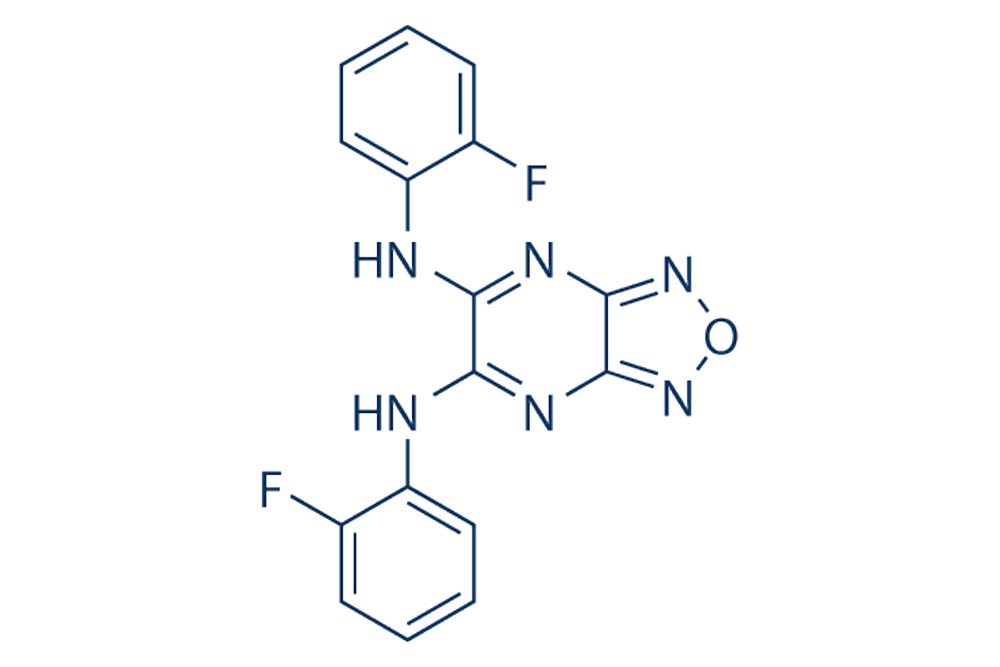
Core Structure:
- BAM-15 features a [1,2,5]oxadiazolo[3,4-b]pyrazine heterocyclic core.
- It has two 2-fluorophenyl groups attached to the amino positions on the pyrazine ring.
- The molecule is planar and aromatic, which contributes to its ability to interact with mitochondrial membranes.
Structural Highlights:
- The heterocyclic core is critical for mitochondrial membrane penetration.
- Fluorination increases lipophilicity and metabolic stability.
- It is neutral at physiological pH, which enhances membrane permeability.
Physical Properties of BAM-15
| Property | Value / Description |
| Appearance | Yellow to orange crystalline solid |
| Solubility | Poor in water (~5–10 µM); soluble in DMSO, ethanol |
| LogP (Partition coefficient) | ~4.0–4.5, indicating high lipophilicity |
| Melting Point | ~275–280°C (decomposes) |
| Stability | Stable under ambient conditions; sensitive to strong acids/bases |
| Absorption | Strong UV absorbance due to conjugated heterocycle |
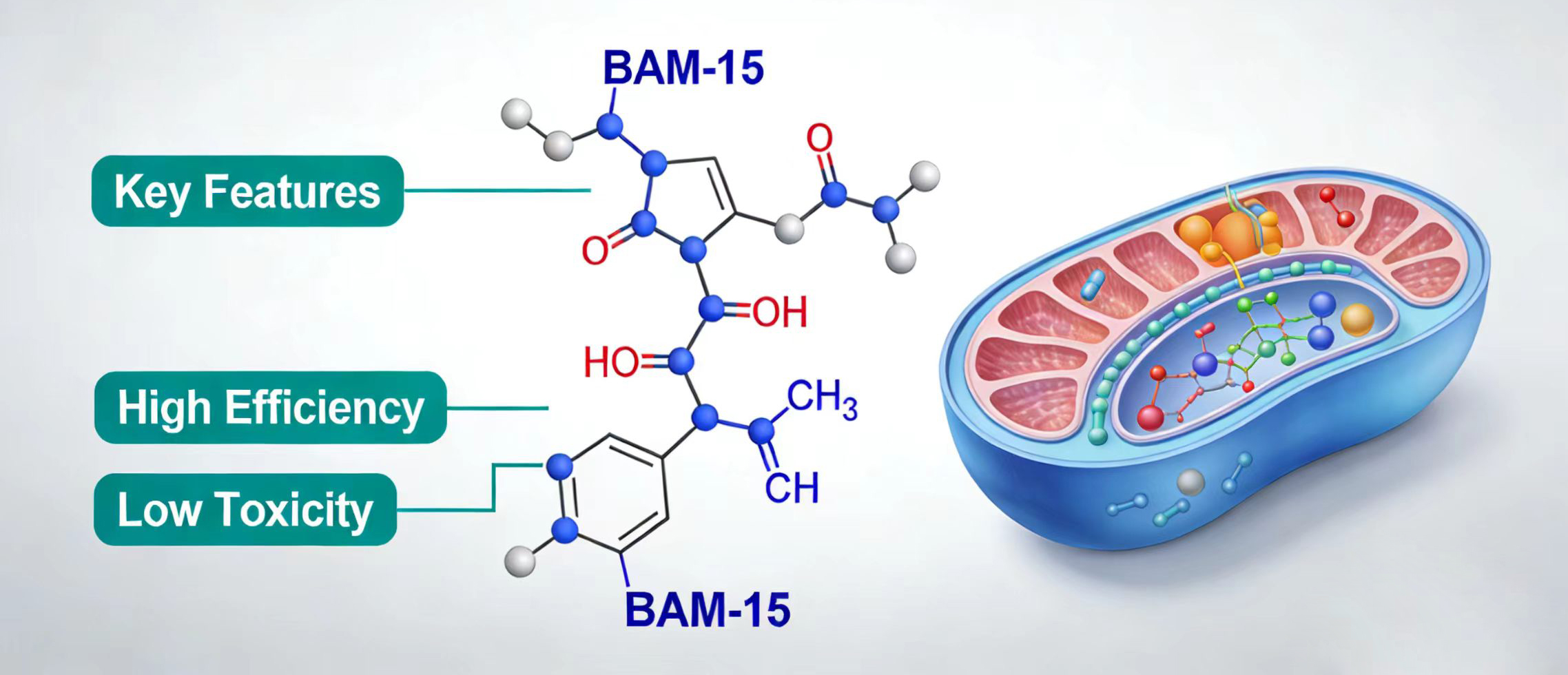
Key Chemical Characteristics
- Lipophilic cation-independent uncoupler: Unlike classical uncouplers, BAM-15 doesn’t carry a strong charge but still dissipates the mitochondrial proton gradient.
- Thermal stability: High, allowing standard storage as a solid.
- Hydrophobicity: Supports accumulation in mitochondrial membranes.
If you want, I can also draw a clear chemical structure diagram of BAM-15, highlighting the fluorophenyl groups and oxadiazole-pyrazine core, which makes its mechanism easier to visualize.
Do you want me to make that diagram?