
Magnesium Acetyl Taurate is a chelated magnesium compound formed by combining magnesium with acetylated taurine (acetyl taurate). It is designed to improve magnesium bioavailability and to enhance neurological and cardiovascular benefits associated with taurine.
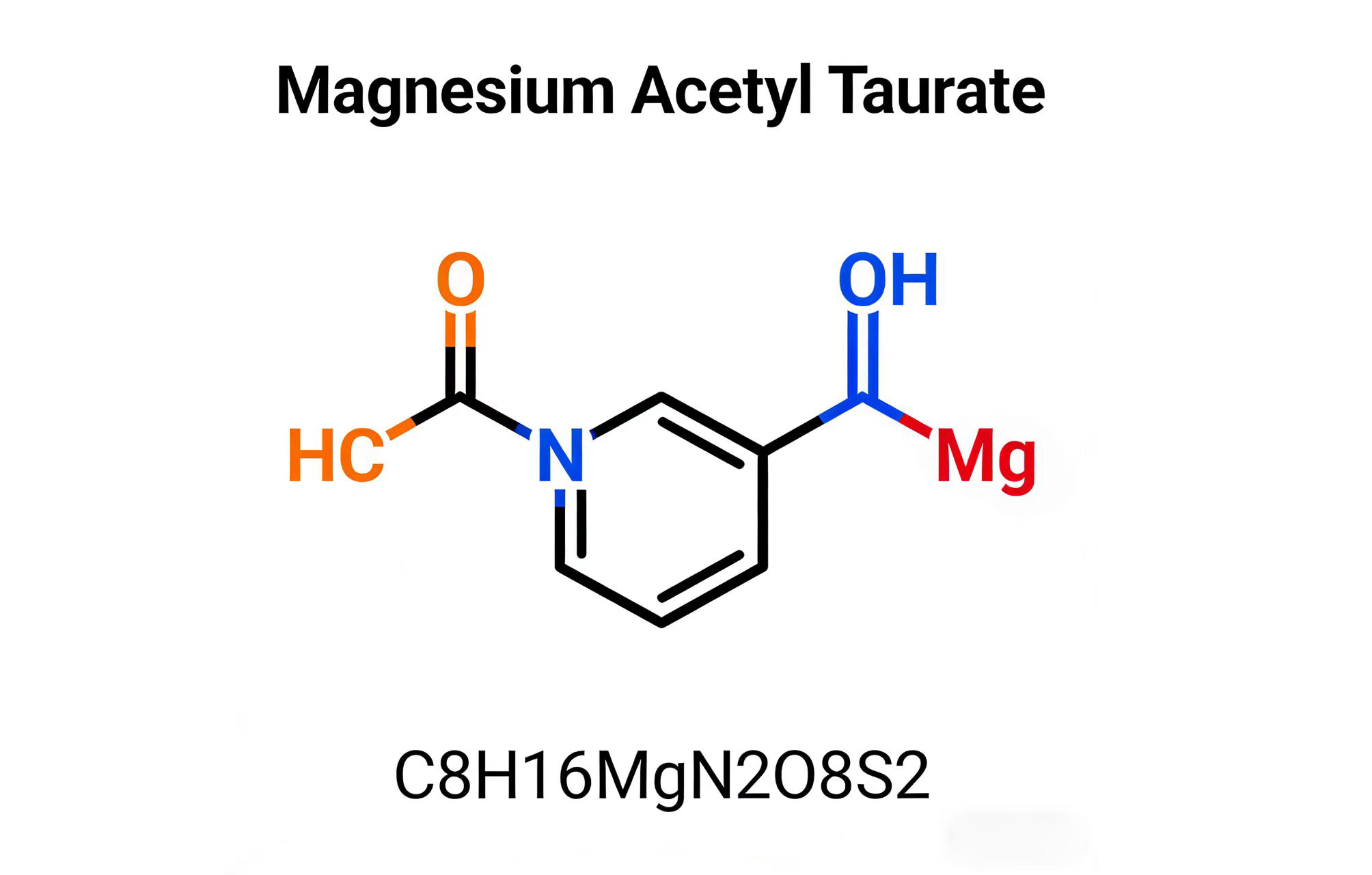
Chemical Structure of Magnesium Acetyl Taurate
1. Basic Description
Magnesium Acetyl Taurate is an organic magnesium salt formed by the coordination of magnesium ions (Mg²⁺) with acetylated taurine (N-acetyl taurine) ligands.
- Taurine base structure: 2-aminoethanesulfonic acid
- Acetylation occurs at the amino (–NH₂) group, forming N-acetyl taurine
- Magnesium binds primarily through ionic coordination with the sulfonate (–SO₃⁻) and carboxyl-related oxygen atoms
2. Structural Characteristics
Magnesium typically exists in a divalent cationic state (Mg²⁺)
The compound is non-covalent, stabilized by:
- Ionic interactions
- Coordination bonds
- Hydrogen bonding
The structure enhances magnesium bioavailability and physiological compatibility
3. Empirical Representation (Simplified)
- General form: Mg²⁺ · (Acetyl Taurate)₂
- Not a single fixed molecular structure due to hydration states and ionic coordination variability
Physical Properties of Magnesium Acetyl Taurate
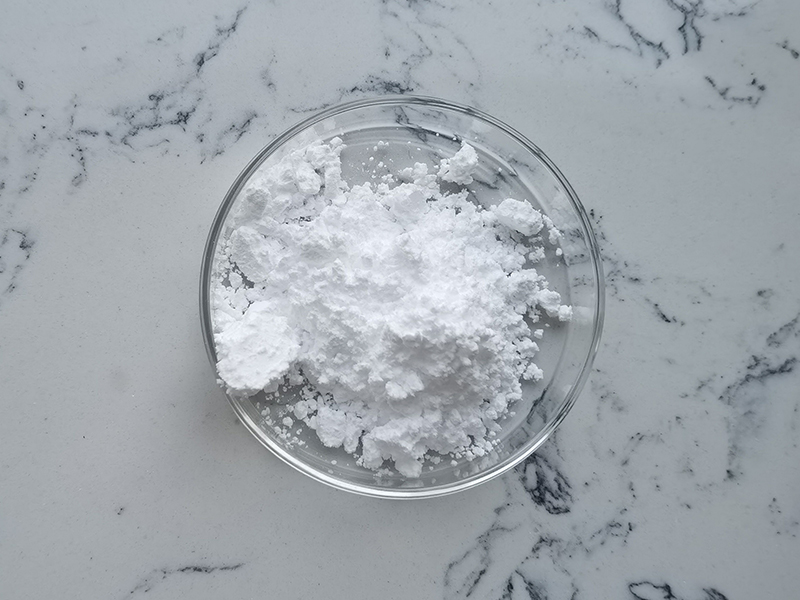
1. Appearance
- White to off-white crystalline powder
- Odorless or nearly odorless
- Fine particle texture
2. Solubility
| Medium | Solubility |
| Water | Freely soluble |
| Ethanol | Slightly soluble |
| Oils | Insoluble |
| Organic solvents | Generally insoluble |
High aqueous solubility makes it suitable for oral supplements and water-based formulations.
3. Hygroscopicity
Mildly hygroscopic
Should be stored in airtight containers to prevent moisture absorption
4. pH (Aqueous Solution)
1–5% solution: pH 6.0–7.5
Near-neutral pH contributes to low gastrointestinal and skin irritation
5. Thermal Properties
No sharp melting point (typical of organic salts)
Decomposes at elevated temperatures (>200 °C)
Stable under normal processing conditions
6. Stability
Stable under:
- Neutral to slightly acidic conditions
- Normal light exposure
Avoid prolonged exposure to:
- Strong acids or bases
- High humidity
- High temperatures
Functional Physicochemical Advantages
Chelated magnesium form → improved absorption
Neutral charge environment → reduced GI irritation
Low reactivity → good formulation compatibility
Non-metallic taste → improved palatability in supplements
Analytical Identification (Common Methods)
FT-IR: Sulfonate (SO₃⁻) stretching and acetyl carbonyl signals
NMR: Confirms acetylation of taurine
ICP-OES / AAS: Magnesium content determination
HPLC: Purity and ligand verification
XRD: Semi-crystalline salt structure
Summary Table
| Property | Description |
| Chemical type | Organic magnesium salt |
| Ligand | N-Acetyl Taurine |
| Appearance | White crystalline powder |
| Solubility | High in water |
| pH | Near neutral |
| Hygroscopicity | Mild |
| Thermal stability | Good (decomposes >200 °C) |
If you want, I can also provide:
- Structural comparison with Magnesium Taurate
- Molecular diagram (schematic)
- Formulation compatibility in supplements or cosmetics
- Regulatory or pharmacopeia-style description
Just let me know.