
Bifida Ferment Lysate (BFL)—a widely used postbiotic skincare ingredient derived from the fermentation and lysed extract of Bifidobacterium species. This overview covers origin & composition, biological mechanisms, evidence from research, dermatological effects, formulation science, safety, limitations, and practical applications.
1. Definition & Biochemical Origin
Bifida Ferment Lysate is a postbiotic ingredient derived from the fermentation and subsequent lysis (breaking down) of Bifidobacterium species, most commonly Bifidobacterium longum. Unlike probiotics (live bacteria), postbiotics consist of bioactive metabolites, peptides, polysaccharides, nucleotides, and cell wall fragments released during fermentation and controlled cell disruption.
Key Concepts
- Postbiotic: non-living microbial derivatives with functional activity in host tissues.
- Lysate: the aqueous extract of intracellular and extracellular fermentation products obtained after cell disruption.
This biochemical mixture includes short-chain fatty acids, peptides, amino acids, and signaling molecules that interact with skin cells and the cutaneous microbial ecosystem.
2. Mechanisms of Action — Biological & Dermatological Pathways
A. Skin Barrier Reinforcement
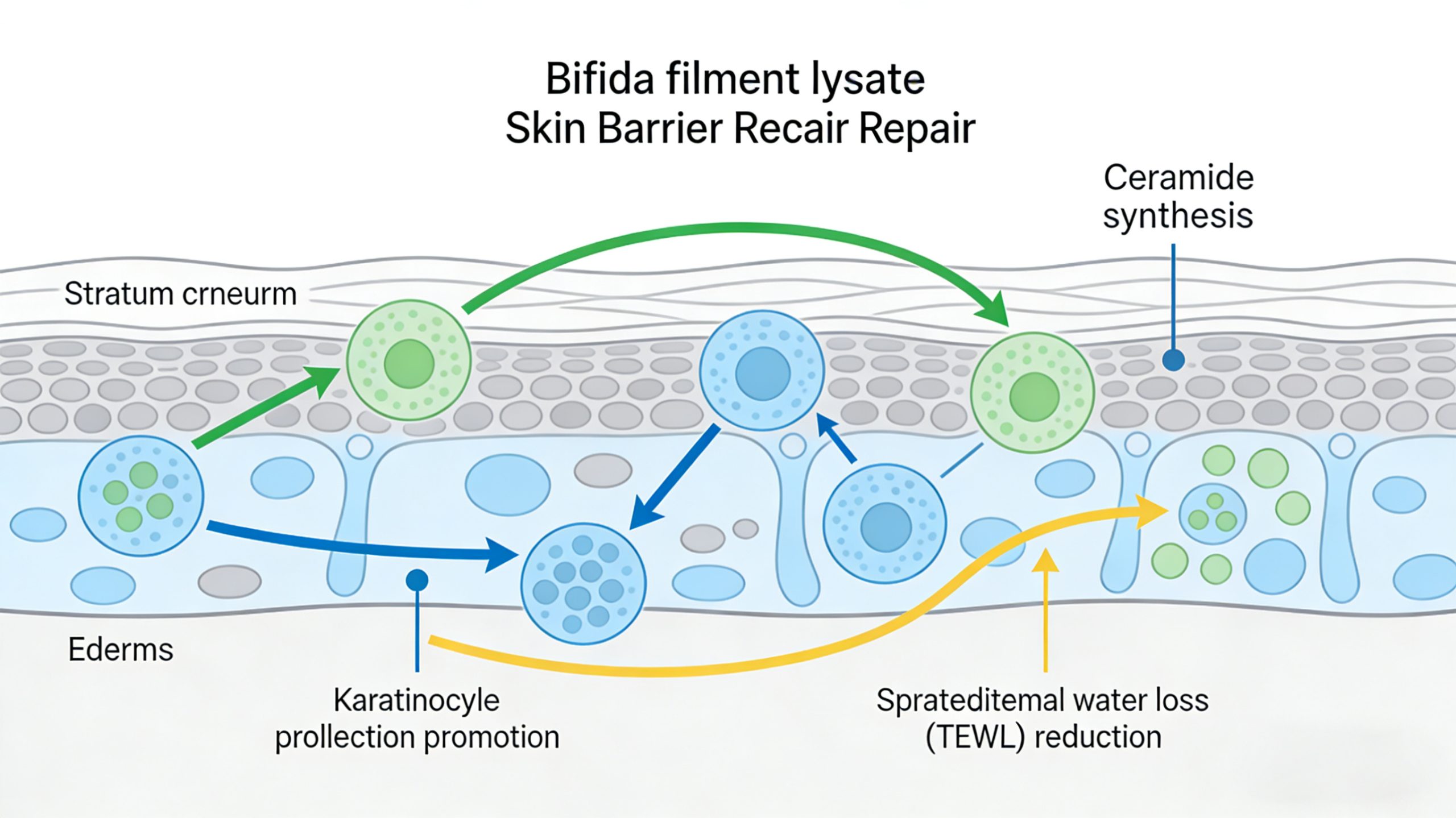
Bifida Ferment Lysate upregulates gene expression and synthesis of essential barrier proteins such as filaggrin, involucrin, transglutaminase, and components of tight junctions, thus improving stratum corneum integrity and resistance to irritants. This effect reduces transepidermal water loss (TEWL) and fortifies the physical skin barrier.
Impacts:
- Increased ceramide synthesis and lipid matrix density.
- Enhanced moisture retention and hydration.
B. Immunomodulation & Anti-Inflammatory Effects
Bifida Ferment Lysate modulates inflammatory pathways by decreasing pro-inflammatory cytokine release (such as IL-8, TNF-α, and IL-6) and reducing COX-2 expression. This contributes to reduced redness and irritation in sensitive or compromised skin.
C. Antioxidant Activity
Fermentation-derived compounds exhibit antioxidant properties, scavenging free radicals and boosting endogenous antioxidant enzyme activity in keratinocytes. This mitigates oxidative stress from environmental exposure.
D. Microbiome Modulation
Although non-viable, Bifida Ferment Lysate supports commensal microbial balance on the skin through prebiotic effects — providing substrates that beneficial microbes can utilize, thereby discouraging potentially harmful organisms and stabilizing the cutaneous ecosystem.
E. DNA Protection & Repair
Some studies suggest Bifida Ferment Lysate may activate cellular processes that enhance DNA repair in keratinocytes damaged by UV or pollution, helping preserve cellular integrity over time.
3. Clinical & Laboratory Evidence
In Vitro / Ex Vivo Research
- Barrier Function Genes: Bifida Ferment Lysate significantly increases expression of barrier-related genes in keratinocyte models, correlating with greater resistance to physical and chemical stressors.
- Antioxidant Enzyme Activation: In oxidatively stressed keratinocytes, BFL boosts catalase and glutathione peroxidase activity while inhibiting reactive oxygen species (ROS).
Human & Product-Level Studies
- Pilot clinical serums containing Bifida Ferment Lysate (alongside peptides and botanicals) have shown improvements in barrier function and skin quality in sensitive skins, though isolating BFL’s contribution requires controlled trials.
- Some industry reports note improved elasticity and barrier integrity by 30%+ over 4–8 weeks of consistent use, though these are not always peer-reviewed.
4. Cosmetic Applications & Formulation Uses
A. Skincare Product Categories
Bifida Ferment Lysate is found in:
- Serums and essences targeting barrier repair.
- Moisturizers for dryness and sensitivity.
- Anti-aging creams (for elasticity and resilience).
- Post-procedure recovery products.
B. Compatibility & Synergy
It is often paired with:
- Ceramides and cholesterol (to reinforce lipids),
- Hyaluronic acid and osmolytes (for hydration),
- Niacinamide and antioxidants (for additional barrier and oxidative support).
C. Concentrations
Typical inclusion rates in commercial products range 0.5–10%, depending on formulation goals and delivery medium.
5. Safety Profile & Regulatory Considerations
Safety & Tolerance
Generally well-tolerated and considered safe in topical applications. Postbiotics, being non-viable, typically pose fewer regulatory or irritation concerns than live probiotics and are stable across pH ranges.
Possible reactions:
- Mild irritation or sensitivity in rare individuals.
- Small comedogenic potential (rated ~2) in some formulations.
Regulatory
Postbiotics like Bifida Ferment Lysate are easier to commercialize globally than live probiotics, which are often more tightly regulated due to viability issues.
6. Mechanistic Summary — How It Works
| Mechanism | Biological Effect |
| Barrier gene upregulation | Stronger, less permeable epidermis |
| Anti-inflammatory modulation | Reduced redness & irritation |
| Antioxidant enzyme induction | Environmental stress protection |
| Prebiotic microbial support | Healthier skin microbiome |
| DNA repair enhancement | Preservation of cell health |
7. Limitations & Gaps in Research
Current constraints:
- Many claims stem from formulation studies rather than isolated ingredient trials.
- Large, randomized clinical trials on BFL alone are sparse; evidence often comes from combination products.
- Long-term effects and comparative efficacy versus other actives (e.g., ceramides, niacinamide) need more robust data.
8. Practical Takeaways for Formulators & Consumers
For formulators:
- Add during cool-down phases to preserve bioactivity.
- Combine with barrier and hydration actives for synergy.
For consumers:
- Effective primarily for barrier repair, sensitivity relief, hydration, and long-term resilience.
- Patch testing is advised for highly sensitive or reactive individuals.
References
- Topical Bifida Ferment Lysate strengthens barrier gene expression and reduces inflammatory markers.
- Bifida Ferment Lysate is a postbiotic with stability and safety advantages for sensitive skin.
- Ingredient profiles highlight hydration, anti-aging, and microbiome benefits.
- Cosmetic efficacy claims and usage trends in industry literature.
If you want, I can also provide a summarized table, formulation considerations by product type, or a list of peer-reviewed references (with direct links where available).