
Ectoine and Hydroxyectoine are both naturally occurring compounds that belong to the class of compatible solutes, which help organisms to survive under stressful conditions like extreme temperature or salinity. While they share similar structures, there are key differences between them:
Structure:
- Ectoine: Ectoine is a tetrahydropyrimidine derivative, where the nitrogen in the heterocyclic ring is bonded to a methyl group and a carboxyl group.
- Hydroxyectoine: Hydroxyectoine is a derivative of Ectoine where a hydroxyl group (-OH) replaces one of the methyl groups. This modification makes hydroxyectoine more hydrophilic compared to ectoine.
Chemical Properties:
- Ectoine is slightly more hydrophobic, which allows it to stabilize proteins and membranes in an environment with high salt or temperature.
- Hydroxyectoine, with its additional hydroxyl group, is more hydrophilic and has enhanced moisture retention properties, which is why it is often favored in cosmetic and skincare products for hydration and protection against oxidative stress.
Functionality:
- Ectoine is widely used as a stabilizer for proteins and enzymes and can protect cells from dehydration or high salt concentrations.
- Hydroxyectoine offers similar protective properties but is considered to have superior moisturizing effects. Its increased hydrophilicity makes it more effective at binding water, which is beneficial in applications involving skin hydration.
Applications:
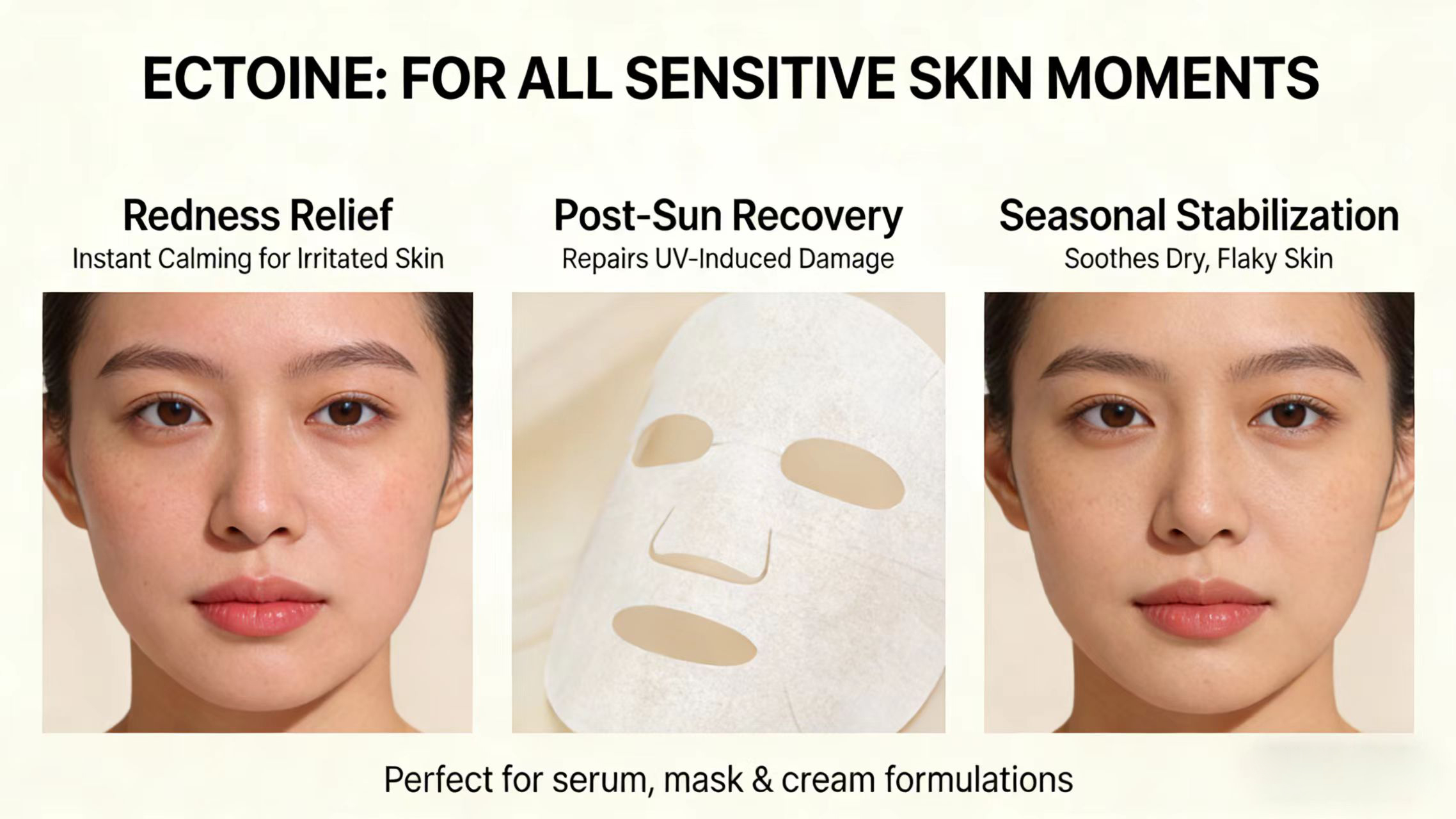
- Both compounds are used in the pharmaceutical and cosmetic industries. Ectoine is often used in formulations aimed at protecting skin from dryness, inflammation, and UV radiation, while hydroxyectoine is frequently included in anti-aging and hydration products due to its enhanced ability to retain moisture.
In summary, hydroxyectoine is a modified form of ectoine with a hydroxyl group, which gives it improved hydrophilicity and moisture retention properties, making it particularly useful in skincare formulations.