
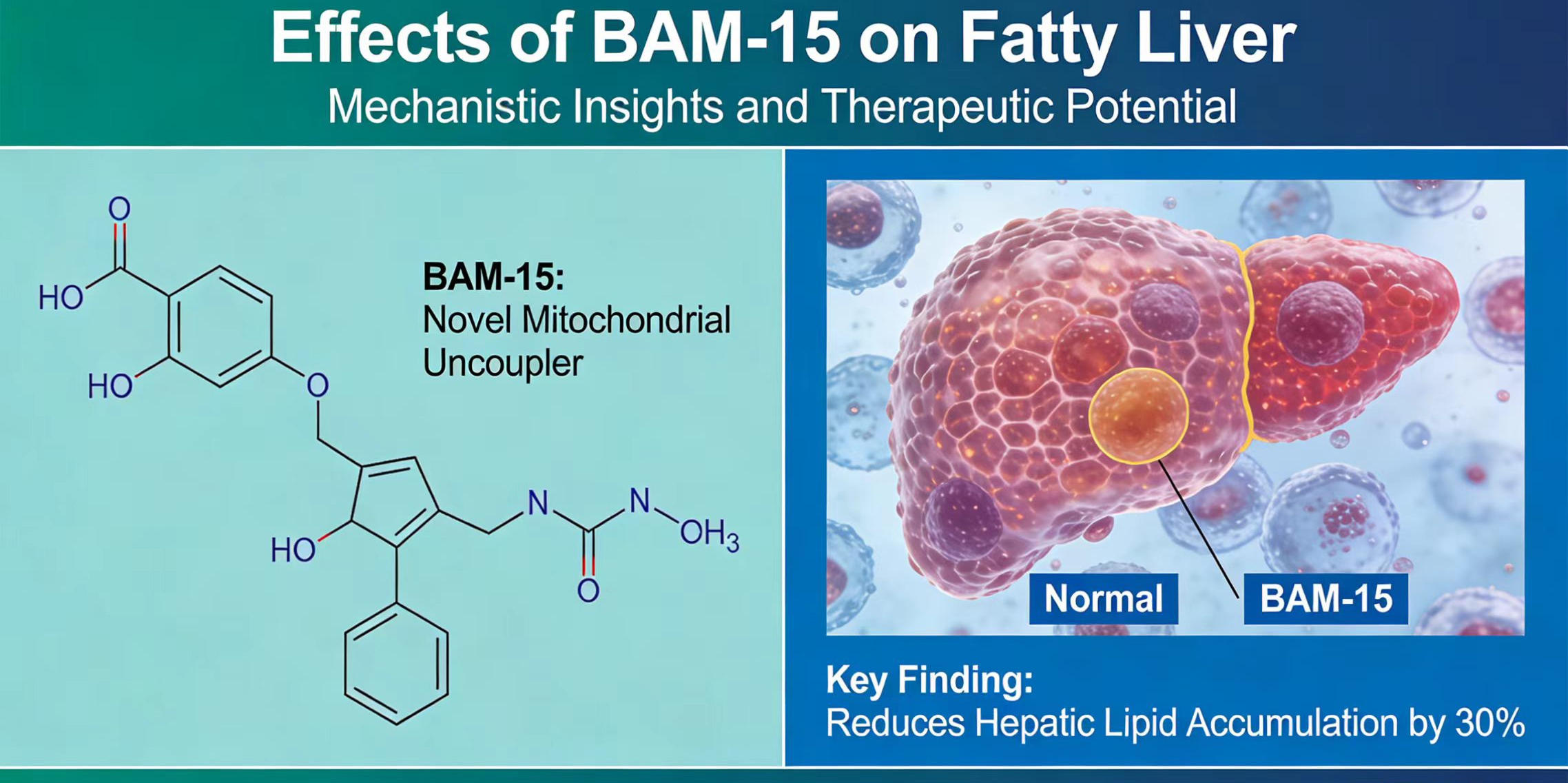
BAM-15, a mitochondrial uncoupler, has shown promising effects on fatty liver disease, particularly non-alcoholic fatty liver disease (NAFLD). Here’s a detailed breakdown:
Mechanism of Action in Fatty Liver
1. Mitochondrial Uncoupling
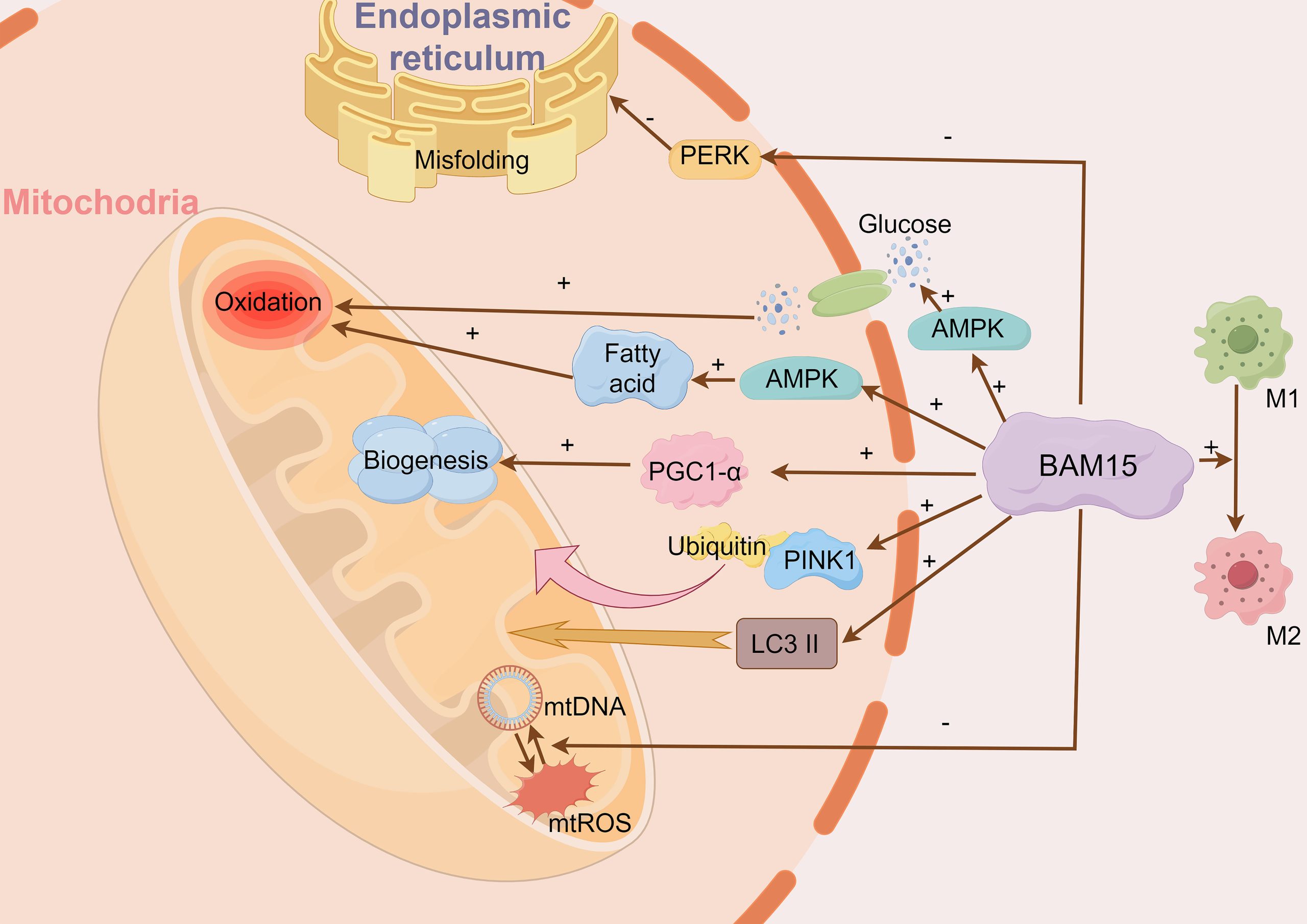
- BAM-15 increases proton leak across the mitochondrial inner membrane.
- This boosts energy expenditure without producing ATP efficiently, leading to increased fat oxidation.
- In the liver, this can reduce triglyceride accumulation, a hallmark of fatty liver.
2. Enhanced Lipid Metabolism
- Studies show BAM-15 reduces hepatic lipid content by increasing β-oxidation of fatty acids.
- It shifts energy utilization from glucose to fat, which helps in lowering liver fat.
3. Reduction of Insulin Resistance
- Fatty liver is closely linked to insulin resistance.
- By improving mitochondrial efficiency and reducing lipid overload, BAM-15 enhances hepatic insulin sensitivity.
- This indirectly lowers de novo lipogenesis (new fat formation in the liver).
4. Anti-Inflammatory Effects
- BAM-15 reduces liver inflammation associated with steatosis.
- This helps prevent progression from simple fatty liver to non-alcoholic steatohepatitis (NASH).
Experimental Evidence
In mouse models of diet-induced obesity, BAM-15 supplementation:
- Reduced liver weight and hepatic triglyceride levels.
- Improved liver histology, showing less fat accumulation.
- Lowered circulating markers of liver injury (ALT and AST).
These effects are achieved without significant toxicity or weight loss from reduced appetite.
Clinical Implications
- BAM-15 is still preclinical, so human studies are limited.
- Its potential for treating NAFLD or NASH is promising because it targets the root metabolic dysfunction rather than just symptoms.
- Future research may explore combination therapy with diet, exercise, or other metabolic drugs.
If you want, I can also create a diagram showing how BAM-15 acts on the liver and fat metabolism, which makes the mechanism very clear.
Do you want me to make that diagram?