
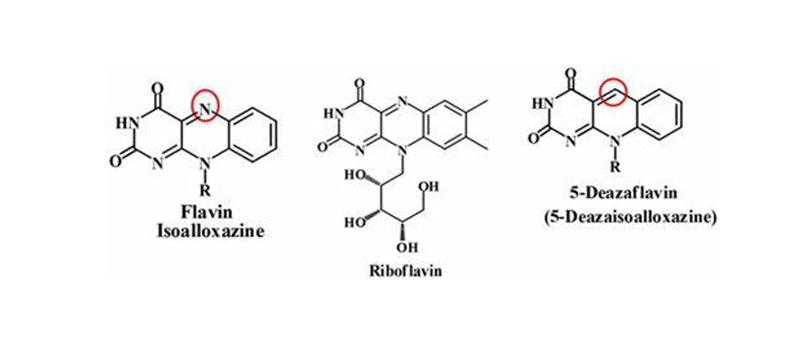
5-Deazaflavin (5-DF) is a synthetic derivative of flavin mononucleotide (FMN), which is involved in various biochemical processes, including those related to NAD+ (nicotinamide adenine dinucleotide) production. The connection between 5-Deazaflavin and NAD+ production lies primarily in its role as a potential activator of the NAD+ biosynthetic pathway. Here’s a simplified overview of how it works:
1. Flavonoid Derivative:
5-Deazaflavin is structurally similar to flavin mononucleotide (FMN), which is a cofactor in several enzymes that catalyze redox reactions. By mimicking FMN, 5-Deazaflavin could enhance certain enzymatic reactions, indirectly influencing NAD+ metabolism.
2. Influence on NAD+ Precursor Pathways:
NAD+ is primarily synthesized through two main routes in cells:
- De novo synthesis from tryptophan.
- Salvage pathway, where NAD+ is recycled from nicotinamide (NAM) or nicotinic acid (NA).
5-Deazaflavin, by mimicking FMN, might support enzymes that are involved in these pathways, particularly those linked with NAD+ salvage or de novo synthesis. This can enhance the overall NAD+ pool in cells.
3. Enzyme Activation:
Specific enzymes involved in NAD+ biosynthesis, such as nicotinamide phosphoribosyltransferase (NAMPT), could be influenced by 5-Deazaflavin, either directly or indirectly. NAMPT plays a critical role in the NAD+ salvage pathway by converting nicotinamide into nicotinamide mononucleotide (NMN), a direct precursor to NAD+.
4. Potential NAD+ Boost:
By enhancing the activity of these enzymes or pathways, 5-Deazaflavin might increase NAD+ production, which is vital for cellular processes, especially those related to energy metabolism, DNA repair, and aging.
In short, 5-Deazaflavin might promote NAD+ production by supporting the enzymes involved in NAD+ biosynthesis, particularly in the salvage and de novo synthesis pathways. However, much of its exact mechanism is still an area of active research.