
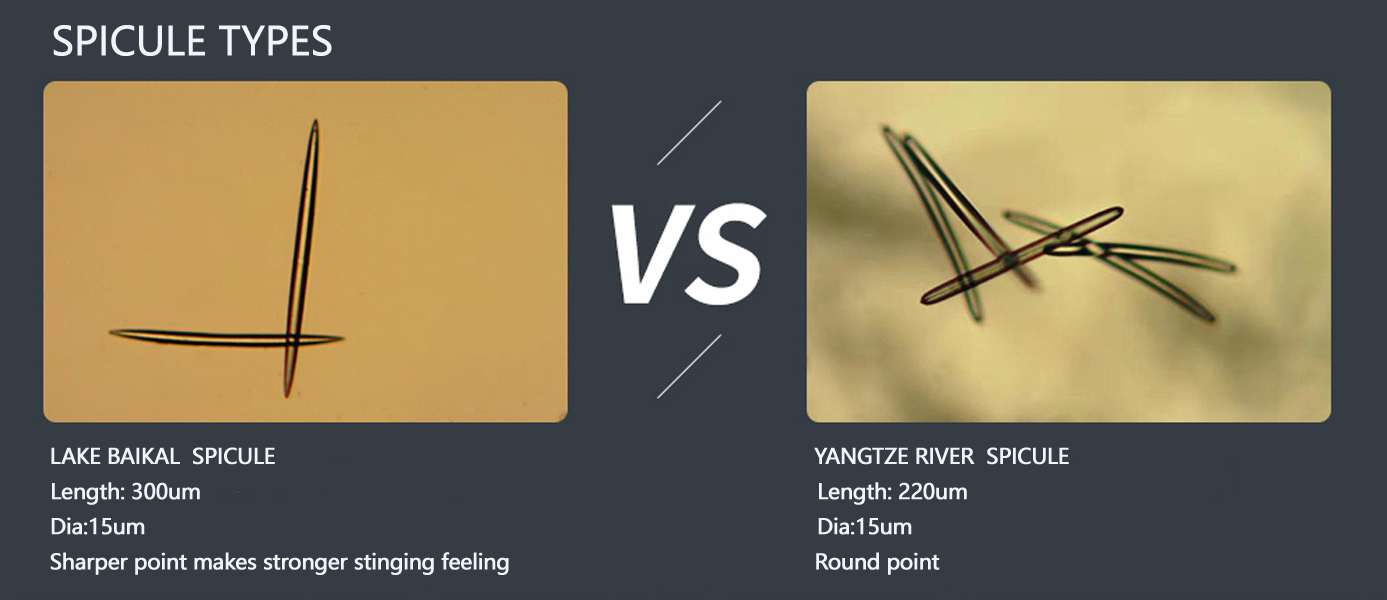
Hydrolyzed Sponge is obtained by processing natural marine sponge into microscopic siliceous or calcium-based spicules and protein fragments.I’ll focus on the typical scientific approach, which is used in cosmetics, biomedical, or environmental applications.
Materials of Hydrolyzed Sponge
Primary Ingredients
- Natural sponge (demospongiae species) – the raw marine sponge source
- Enzymes for hydrolysis (optional) – e.g., protease, papain, or pepsin, depending on desired molecular size
- Water – deionized or distilled, for extraction and hydrolysis
- Solvents (if required) – ethanol, methanol, or acetone, for purification steps
Chemical Reagents
- Acids or bases – e.g., hydrochloric acid (HCl) or sodium hydroxide (NaOH) for pH adjustment
- Salts – e.g., sodium chloride (NaCl) for extraction or stabilization
- Antioxidants or preservatives – to prevent degradation during storage
Equipment
- Blender or homogenizer – to reduce sponge to small particles
- Filtration system – e.g., filter paper or centrifuge
- Heating/stirring equipment – water bath, magnetic stirrer
- pH meter – for accurate pH adjustments
- Freeze dryer (lyophilizer) or spray dryer – for producing dry Hydrolyzed Sponge powder
- Analytical instruments – e.g., UV-Vis spectrophotometer, HPLC, or FTIR for characterization
Methods of Hydrolyzed Sponge
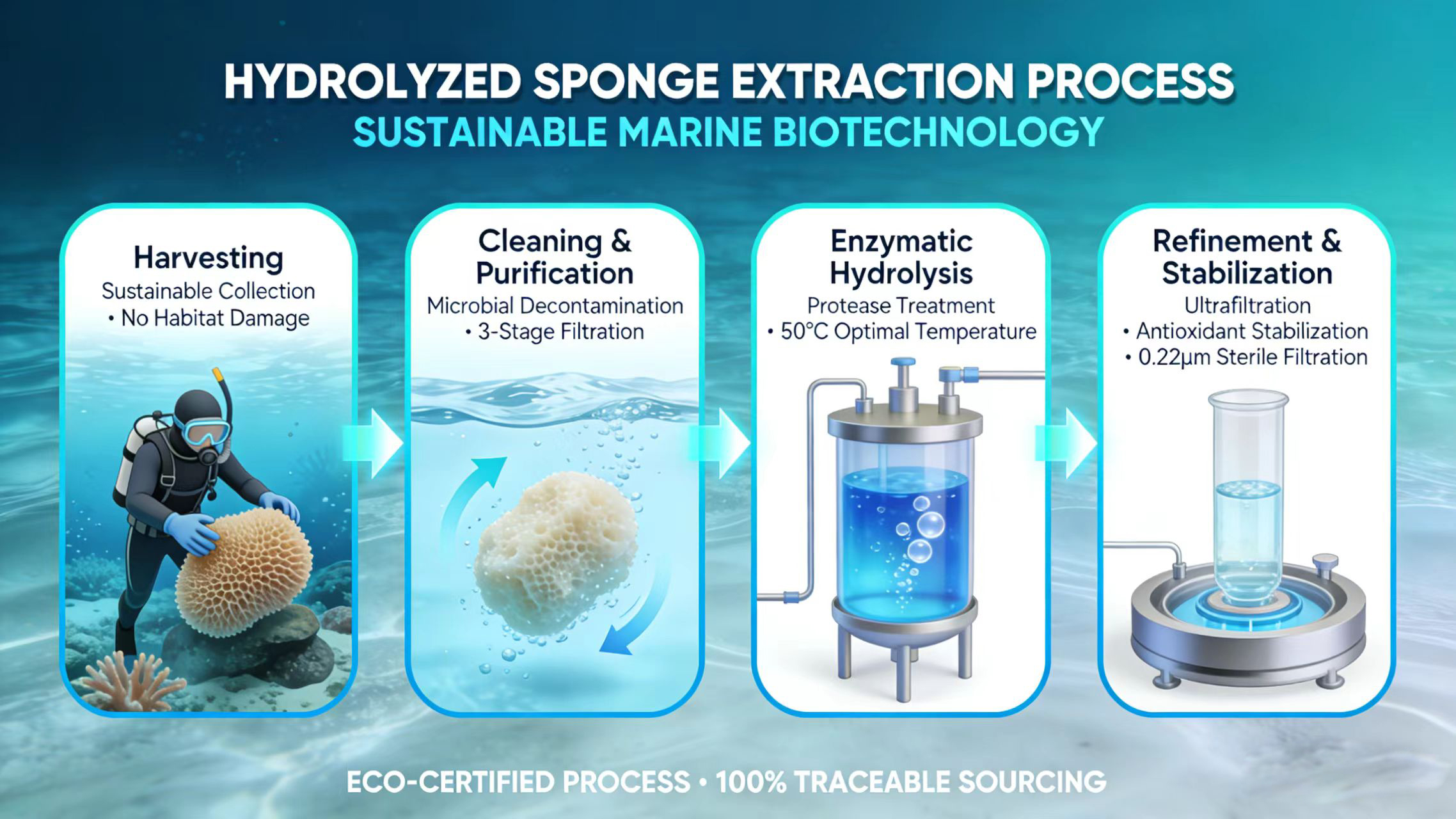
Step 1: Pre-treatment
1. Wash the sponge thoroughly with water to remove salts, sand, and impurities.
2. Optionally, treat with dilute NaOH or HCl to remove residual minerals.
3. Rinse until neutral pH is achieved.
4. Dry the sponge at low temperature (40–50°C) or freeze-dry for further processing.
Step 2: Hydrolysis
Hydrolysis converts sponge proteins into smaller peptides and amino acids.
Enzymatic Hydrolysis (common method):
1. Cut or grind the dried sponge into small pieces.
2. Suspend in distilled water (1:10 w/v ratio is typical).
3. Adjust pH to optimal enzyme activity (e.g., 6–7 for neutral proteases).
4. Add the chosen enzyme (concentration varies, e.g., 1–5% of sponge weight).
5. Incubate at optimal temperature (30–50°C) for several hours (2–24 h).
6. Stop the reaction by heating (e.g., 95°C for 10 min) or adjusting pH.
Chemical Hydrolysis (alternative method):
1. Mix sponge with dilute acid (e.g., 0.1 M HCl) or base (e.g., 0.1 M NaOH).
2. Heat at 60–100°C for several hours.
3. Neutralize the solution after hydrolysis.
Step 3: Filtration and Purification
1. Filter the hydrolysate to remove insoluble residues.
2. Optionally, use centrifugation for fine particle removal.
3. Concentrate the solution by evaporation or membrane filtration.
Step 4: Drying and Storage
1. Freeze-dry (lyophilize) or spray-dry the hydrolysate to produce a stable powder.
2. Store in airtight containers at low temperature (4–25°C) to maintain activity.
Step 5: Characterization
1. Molecular weight analysis – SDS-PAGE or GPC
2. Chemical composition – amino acid analysis, FTIR, UV-Vis spectroscopy
3. Functional properties – water retention, antioxidant activity, or bioactivity assays
Notes:
- Enzymatic hydrolysis is preferred for cosmetic and biomedical applications due to mild conditions and preservation of bioactivity.
- The exact protocol (enzyme type, hydrolysis time, temperature) depends on whether the sponge is being used for skincare, medical, or environmental purposes.
- Safety and sterility are crucial if the hydrolysate is intended for topical or internal use.
If you want, I can also make a flowchart showing the entire Hydrolyzed Sponge preparation process, which is handy for lab protocols or presentations. It would make this whole method visually easy to follow.