
Ergothioneine is a naturally occurring amino acid derivative with notable antioxidant and cytoprotective properties. It’s often classified as a nutraceutical or a “longevity vitamin” due to its potential role in protecting cells and tissues from oxidative stress and inflammation.
Pharmacological Actions of Ergothioneine:
1.Antioxidant Activity:
- Scavenges reactive oxygen species (ROS) and reactive nitrogen species (RNS).
- Protects mitochondrial function and DNA from oxidative damage.
- Works in synergy with other antioxidants like glutathione and vitamin C.

2.Cytoprotective Effects:
- Accumulates in tissues exposed to high oxidative stress (e.g., liver, kidneys, brain, and eyes).
- May protect cells from apoptosis and necrosis in stress conditions.
3.Anti-inflammatory Action:
- Downregulates pro-inflammatory cytokines and pathways (e.g., NF-κB).
- May inhibit the activation of inflammatory cells like macrophages.
4.Metal Ion Chelation:
- Binds and neutralizes redox-active metal ions (e.g., Fe²⁺, Cu²⁺), reducing Fenton reaction-mediated oxidative stress.
5.Neuroprotective Effects:
- May protect neurons from degeneration associated with aging and neurodegenerative diseases (e.g., Alzheimer’s, Parkinson’s).
- Crosses the blood-brain barrier via the OCTN1 transporter.
6.Role in Mitochondrial Health:
- Enhances mitochondrial efficiency and reduces mitochondrial damage in stress conditions.
- May support energy production by preserving mitochondrial integrity.
7.Possible Anti-Aging Effects:
- Proposed to extend cellular lifespan by reducing cumulative oxidative damage.
- May influence gene expression linked to stress response and longevity.
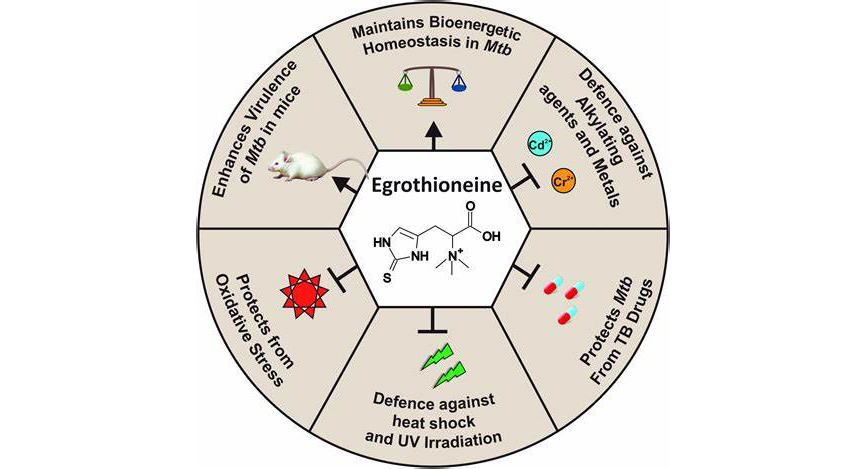
Transport and Distribution:
Ergothioneine is taken up into cells via the OCTN1 transporter (SLC22A4), which is highly expressed in various tissues. The body does not synthesize it; it must be obtained through diet (e.g., mushrooms, some legumes).
Would you like the molecular mechanism in more detail or info on therapeutic applications?