
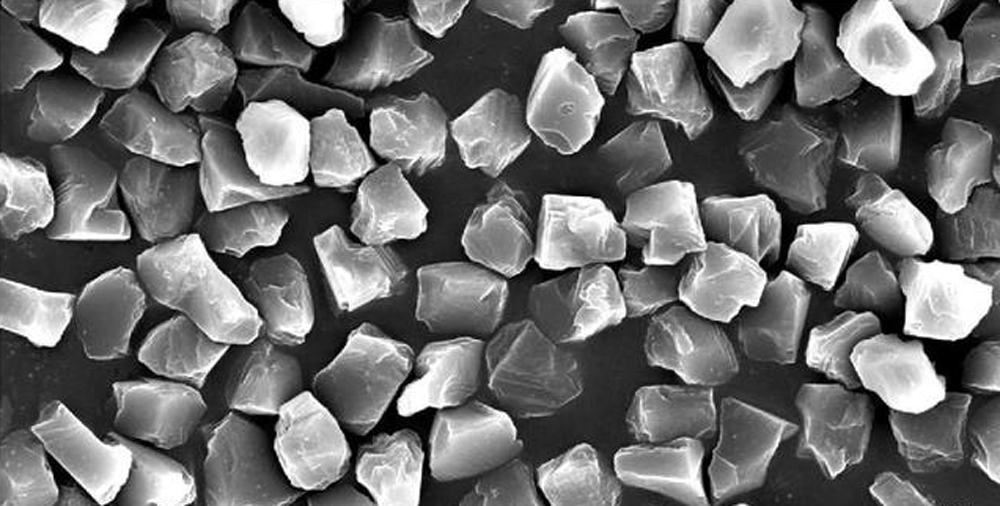
Boron Nitride exists in several forms—Hexagonal Boron Nitride (h-BN), Cubic Boron Nitride (c-BN), Wurtzite Boron Nitride (w-BN), and Amorphous Boron Nitride (a-BN). The synthesis method strongly influences which phase is produced.
1. Direct Reaction of Boron and Nitrogen
Method
Heat elemental boron with nitrogen gas (N₂) or ammonia (NH₃) at high temperature.
Reaction
- With nitrogen: 2B + N₂ → 2BN
- With ammonia: B + NH₃ → BN + 3/2 H₂
Conditions
- Temperature: 1000–1500 °C
- Atmosphere: N₂, NH₃, or vacuum
- Used mainly for Hexagonal Boron Nitride (h-BN) synthesis.
Advantages
- Simple and relatively low-cost
- Produces high-purity Boron Nitride (BN)
2. Reaction of Boron Oxide with Ammonia or Nitrogen
This is one of the most common industrial methods.
Reaction
- Convert boric acid → boron oxide: 2 H₃BO₃ → B₂O₃ + 3 H₂O (dehydration)
- React B₂O₃ with ammonia: B₂O₃ + 2 NH₃ → 2 BN + 3 H₂O
Conditions
- Temperature: 900–1200 °C
- Atmospheric or flowing NH₃
Advantages
- Uses inexpensive precursors
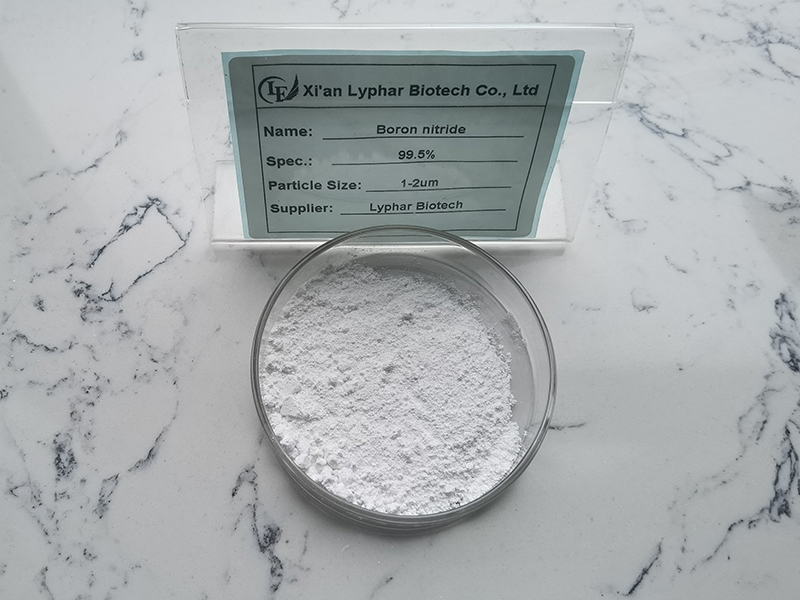
- Good for mass production of Hexagonal Boron Nitride (h-BN) powder
3. Carbothermal Reduction–Nitridation
Method
Mix boron oxide (B₂O₃) with carbon and heat in nitrogen.
Reaction
B₂O₃ + 3C + N₂ → 2BN + 3CO
Conditions
- Temperature: 1400–1800 °C
Advantages
- Low-cost and scalable
- Common for industrial Boron Nitride powder
Disadvantages
- Carbon contamination may occur
4. Chemical Vapor Deposition (CVD)
Used to make thin films of high-quality Boron Nitride.
Precursors
- BCl₃ + NH₃
- B₂H₆ + NH₃
- B-trichloroborazine (B₃N₃Cl₃)
General Reaction
BCl₃ + NH₃ → BN + 3HCl
Conditions
- Temperature: 600–1200 °C
- Used to make: Hexagonal Boron Nitride (h-BN) films, coatings, 2D Boron Nitride (“white graphene”)
Advantages
- High-purity, uniform films
- Suitable for electronics and coatings
5. Solvothermal or Polymer-Derived Ceramic (PDC) Method
Use borazine (B₃N₃H₆) or polyborazylene precursors.
Steps
- Polymer formation (cross-linking)
- Pyrolysis at ~1000 °C
- Crystallization into Boron Nitride (BN)
Advantages
- Produces high-purity Hexagonal Boron Nitride (h-BN)
- Good control over morphology (fibers, spheres, nanosheets)
6. High-Pressure High-Temperature (HPHT) Synthesis — For Cubic Boron Nitride (c-BN)
Cubic Boron Nitride (c-BN) requires extreme conditions similar to diamond synthesis.
Method
Heat Hexagonal Boron Nitride (h-BN) under:
- Pressure: 5–7 GPa
- Temperature: 1500–2000 °C
- Catalyst: alkali metals, nitrides, or carbonates
Reaction
- Hexagonal Boron Nitride (h-BN) → Cubic Boron Nitride (c-BN) (phase transformation)
Products
Cubic Boron Nitride (c-BN) (superhard material comparable to diamond)
Summary Table
| Boron Nitride(BN) Form | Common Method | Key Conditions |
| Hexagonal Boron Nitride (h-BN) | Direct nitridation, B₂O₃ + NH₃, CVD, polymer-derived | 900–1500 °C |
| Cubic Boron Nitride (c-BN) | HPHT transformation | ~5–7 GPa, 1500–2000 °C |
| Boron Nitride (BN) Films | CVD, PVD, ALD | 600–1200 °C |