
Ergothioneine and glutathione are both important antioxidants in the body, but they are distinct molecules with different structures, functions, and mechanisms of action. Here’s a breakdown of their relationship and roles:
1. Structural Differences
- Glutathione (GSH): A tripeptide made of glutamate, cysteine, and glycine. It is found in almost every cell and is synthesized endogenously.
- Ergothioneine (EGT): A thiol derivative of histidine, acquired through the diet (mainly from mushrooms). Humans cannot synthesize it but have a specific transporter (OCTN1) to accumulate it in tissues.
2. Function and Antioxidant Activity
Glutathione:
- Acts as a primary cellular antioxidant.
- Neutralizes reactive oxygen species (ROS) and helps regenerate other antioxidants like vitamin C and E.
- Plays a role in detoxification and maintaining redox balance.
- A potent scavenger of ROS and reactive nitrogen species (RNS).
- Protects mitochondria and cellular components from oxidative stress.
- More stable than glutathione in oxidative environments.
3. Relationship and Interaction
While they are not directly dependent on each other, they are complementary in the antioxidant defense system:
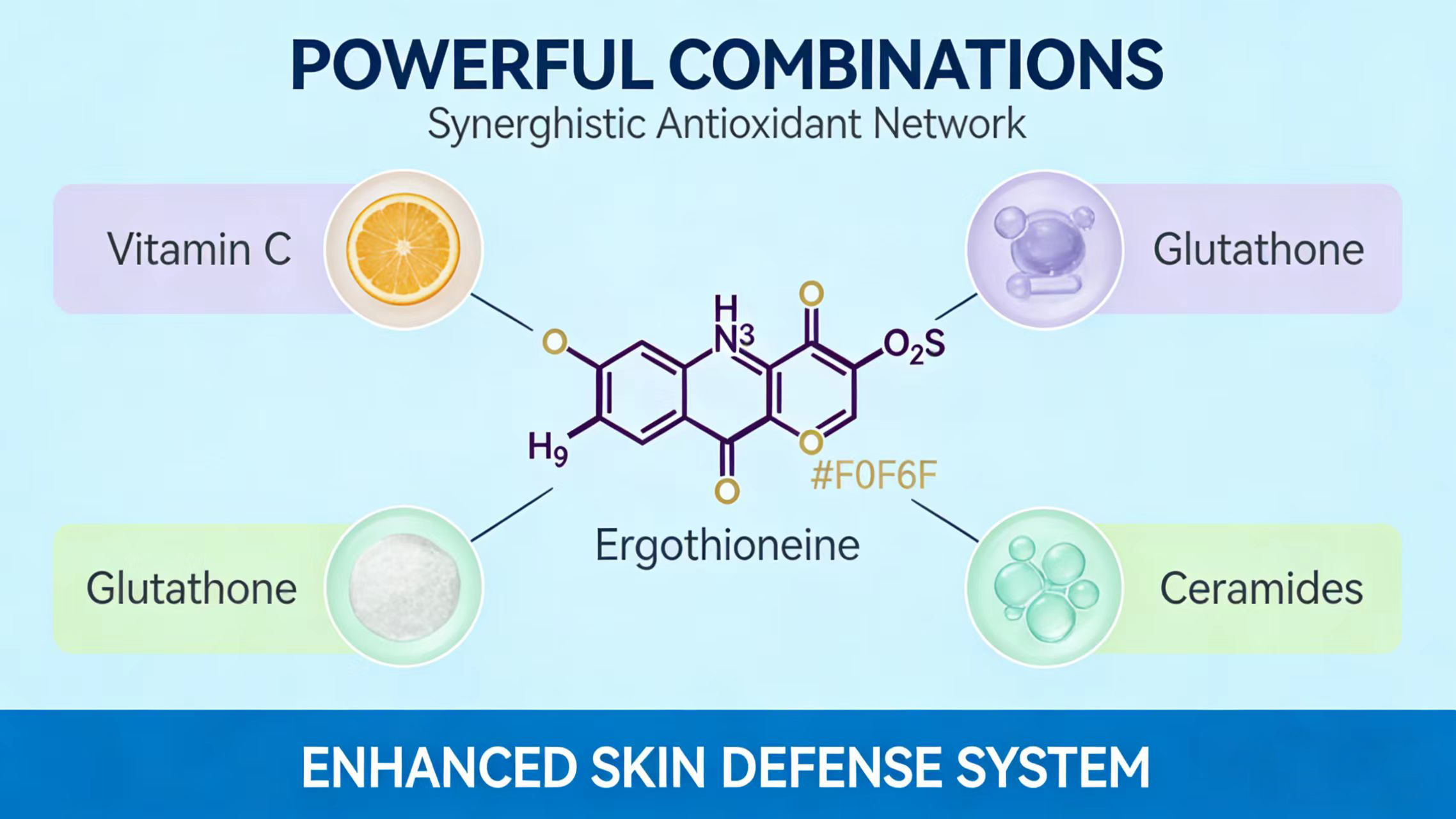
- Synergistic Roles: Both contribute to reducing oxidative stress, but in slightly different ways. Ergothioneine is particularly good at protecting cells under chronic oxidative conditions and may help preserve glutathione levels indirectly.
- Protective Redundancy: If glutathione is depleted due to high oxidative stress, ergothioneine may provide a backup layer of defense.
- Transport and Localization: Ergothioneine is actively transported and accumulates in specific tissues prone to oxidative stress (brain, liver, bone marrow), where it may support or protect cells with high glutathione turnover.
In Summary
- Not the same, but complementary antioxidants.
- Glutathione is ubiquitous and versatile; Ergothioneine is more targeted and stable.
- Both work together to protect against oxidative stress, inflammation, and cellular damage, but via different pathways and mechanisms.
Would you like to see a diagram comparing their pathways or how they interact in specific tissues (e.g., brain or liver)?