
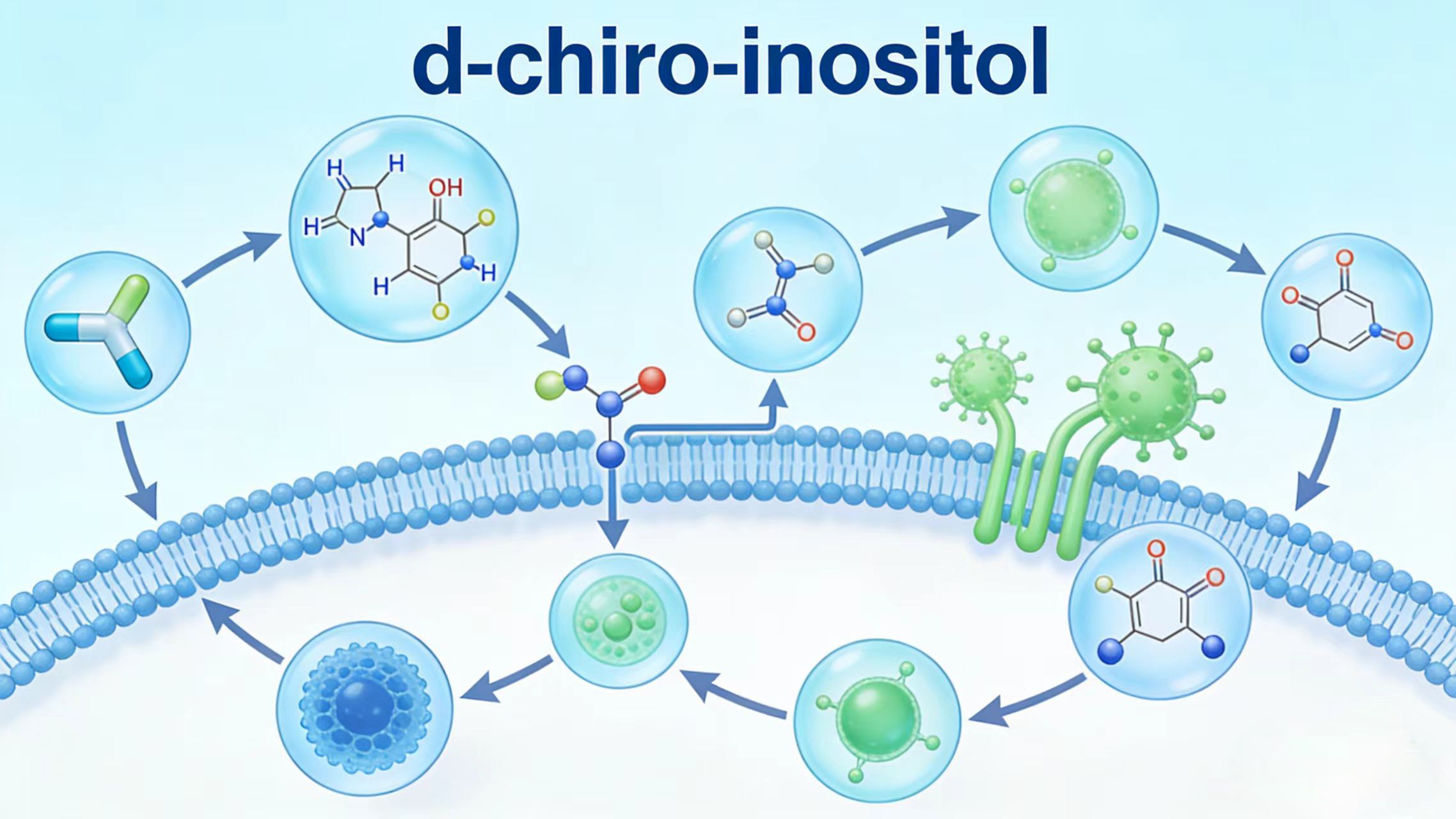
D-Chiro-Inositol is a biologically active form of inositol that acts as a secondary messenger in insulin signaling pathways. It helps regulate how cells use glucose and store glycogen. The body can convert myo-inositol (the most abundant form) into DCI via an insulin-dependent process.
Key Functions
1. Insulin Signal Regulation
- Enhances insulin sensitivity
- Promotes proper glucose uptake
- Helps convert glucose into glycogen (storage form)
2. Hormone Modulation (especially in women)
- Plays a role in ovarian function
- Modulates androgen levels
- Works together with myo-inositol for hormonal balance
Main Uses & Benefits
✔ PCOS (Polycystic Ovary Syndrome)
D-Chiro-Inositol is widely studied for:
- Reducing high insulin levels
- Lowering androgen levels (testosterone)
- Improving ovulation when used in balanced ratio with myo-inositol, typically 40:1 (MI:D-Chiro-Inositol)
✔ Blood Sugar & Metabolic Health
- Helps improve insulin resistance
- May lower fasting blood sugar
- Sometimes used as a complementary supplement for metabolic syndrome
✔ Reproductive Health
- Supports ovarian response
- Helps regulate menstrual cycles when combined with MI
Food Sources
Although D-Chiro-Inositol is present in small amounts in foods, higher natural sources include:
- Buckwheat
- Soy lecithin
- Carob
- Some nuts and seeds
Still, dietary intake is typically low—supplements are the main source.
How It Differs From Myo-Inositol
| Feature | Myo-Inositol (MI) | D-Chiro-Inositol (DCI) |
| Abundance | Most common form | Much lower |
| Main role | Improves cellular insulin sensitivity | Converts glucose to glycogen |
| In ovaries | Higher in healthy ovaries | Lower, but important |
| Use in PCOS | Primary supplement | Supportive in small proportions |
Safety
Generally well-tolerated.
Possible mild side effects:
- Nausea
- Headache
- Gastrointestinal upset
High doses of D-Chiro-Inositol (>600 mg/day) may negatively affect ovarian function in some women, so balance matters.