
Citrus pectin is a versatile ingredient in the food industry due to its gelling, thickening, stabilizing, and emulsifying properties. Here’s a detailed breakdown of its applications:
1. Gelling Agent
- Jams, jellies, and marmalades: Citrus pectin reacts with sugar and acid to form gels, giving these products their characteristic texture.
- Fruit preserves: Helps maintain shape and consistency, preventing separation of fruit and syrup.
2. Thickening Agent
- Desserts and confectionery: Used in puddings, custards, and gummy candies to achieve desired viscosity.
- Soups and sauces: Enhances thickness without affecting flavor.
3. Stabilizer
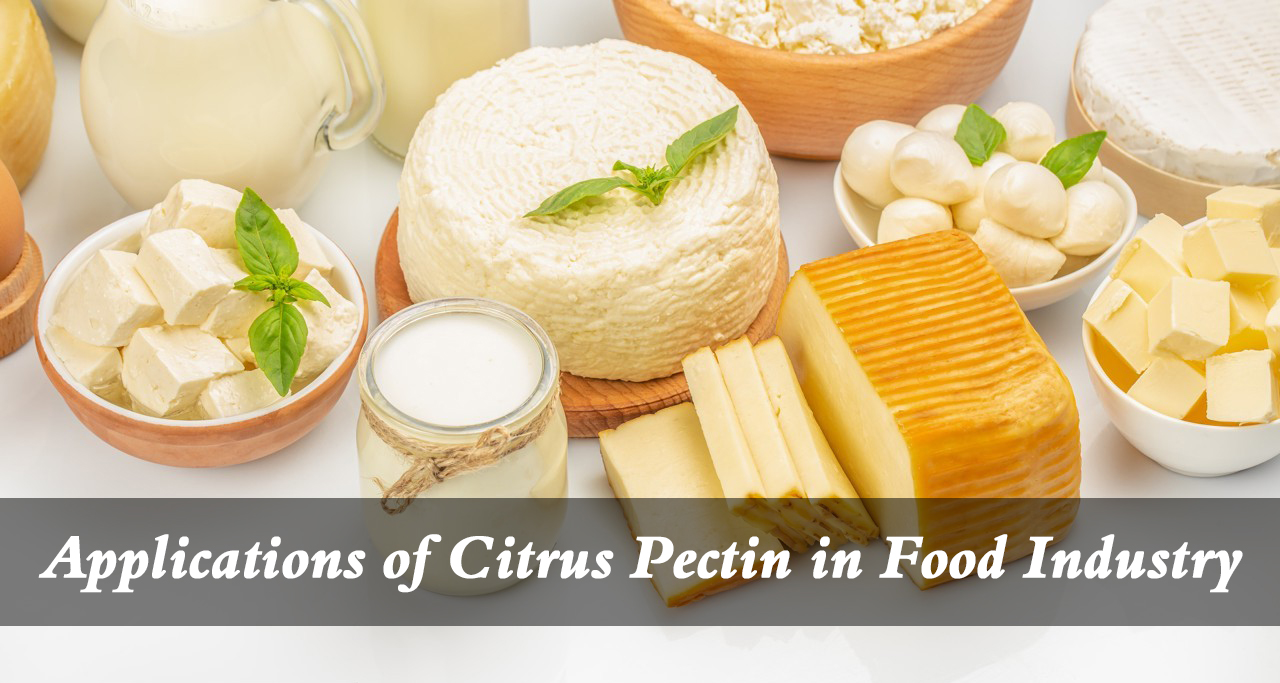
- Dairy products: Prevents whey separation in yogurts, flavored milk, and cream-based drinks.
- Beverages: Maintains uniform dispersion of fruit particles and pulp in juices and smoothies.
4. Fat Replacer / Texture Modifier
- Low-fat products: Adds mouthfeel and creaminess in low-fat or reduced-calorie foods such as dressings, sauces, and ice creams.
5. Emulsifier
- Fruit drinks and beverages: Helps stabilize oil-in-water emulsions, preventing separation of fruit oils or flavoring agents.
6. Encapsulation & Controlled Release
- Functional ingredients: Used to encapsulate flavors, vitamins, or probiotics in food products, ensuring stability and controlled release.
7. Dietary Fiber Supplement
- Functional foods: Citrus pectin can be added to baked goods, cereals, or snacks as a source of soluble fiber, which supports digestion and cholesterol management.
8. Anti-crystallization Agent
- Confectionery: Prevents sugar crystallization in candies, fondants, and syrups, improving texture and shelf life.
Summary
Citrus pectin is prized in the food industry for its natural origin, biocompatibility, and multifunctionality, making it ideal for improving texture, stability, and nutritional value across a wide range of products.