
Dimethylmethoxy Chromanol (DMC) is a synthetic antioxidant compound often used in cosmetics and skincare. Its basic chemical structure is based on a chromanol nucleus (similar to vitamin E derivatives) with specific substitutions. The key ingredients or building blocks for DMC synthesis typically include:
- Chromanol core – The central structure, which is a benzopyran ring (chroman) with a hydroxyl group.
- Methoxy group (-OCH₃) – Attached to the chromanol ring to form the “methoxy” part.
- Methyl groups (-CH₃) – Two methyl groups are substituted on the chromanol ring to form the “dimethyl” part.
- Phenolic hydroxyl group (-OH) – Provides the antioxidant activity by donating hydrogen atoms to neutralize free radicals.
So essentially, Dimethylmethoxy Chromanol is 2,2,5,7,8-pentamethyl-6-chromanol with a methoxy modification. The synthesis usually involves starting from a hydroxychromanol derivative and introducing the methoxy and methyl groups through chemical reactions.
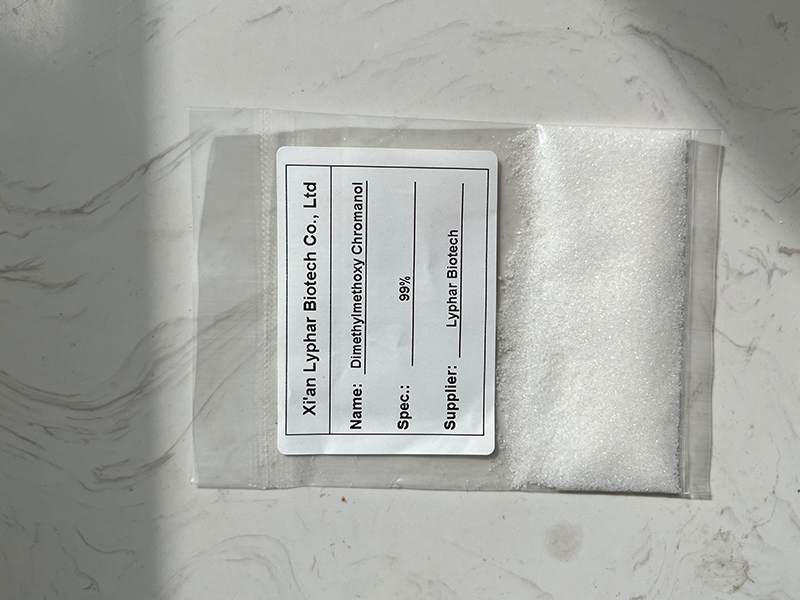
Adverse effects of Dimethylmethoxy Chromanol
Dimethylmethoxy Chromanol (DMC) is primarily known as a potent antioxidant, often used in skincare and sometimes in medical or nutritional applications. While it is generally considered safe, there are some potential adverse effects and considerations to keep in mind:
1. Skin Irritation
- Topical use: Some individuals may experience redness, itching, or mild irritation when using Dimethylmethoxy Chromanol-containing creams or serums, especially those with sensitive skin.
- Allergic reactions: Rarely, Dimethylmethoxy Chromanol may trigger contact dermatitis in susceptible individuals.
2. Photosensitivity
- Although Dimethylmethoxy Chromanol is an antioxidant, in rare cases, it may increase sensitivity to sunlight when used in high concentrations, potentially leading to mild sunburn or irritation.
3. Systemic Effects (if ingested)
- Data on oral or systemic intake is limited. High doses could theoretically affect cellular redox balance, though this is mainly speculative and not well-documented in humans.
4. Interaction with Other Ingredients
- Dimethylmethoxy Chromanol may interact with other potent antioxidants (like vitamin C or E) in formulations, potentially reducing efficacy or increasing irritation in sensitive skin.
5. Long-Term Safety
- Long-term studies in humans are limited. While short-term topical use is generally safe, extended use at high concentrations hasn’t been fully evaluated for systemic absorption or cumulative effects.
Summary: Dimethylmethoxy Chromanol is largely safe, especially in topical applications at standard concentrations, but mild skin irritation, allergic reactions, or rare photosensitivity are possible. Oral or systemic effects are not well-studied.