
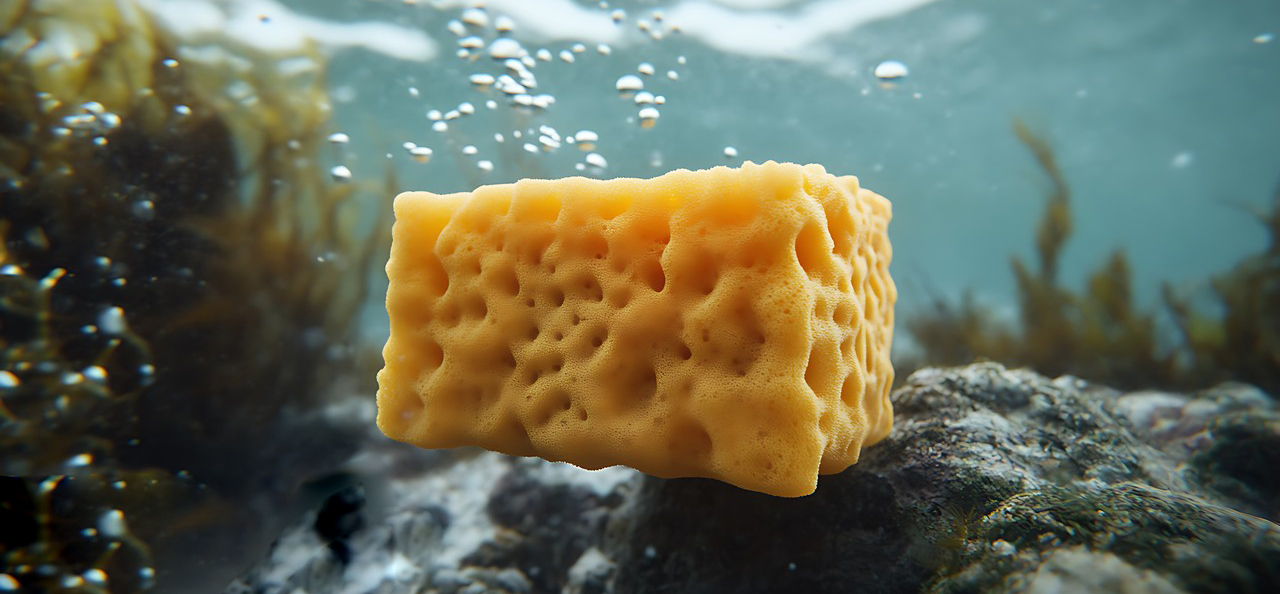
Hydrolyzed Sponge refers to a product derived from natural marine sponges that have been broken down through hydrolysis (a process where water or enzymes break the sponge’s proteins into smaller peptides and amino acids).
1. Definition & Origin
Hydrolyzed Sponge refers to sponge-derived biomaterial processed so that the natural structural components (especially spicules) are isolated and preserved in a powdered form. It is not a synthetic chemical; rather it’s obtained from real sponge skeletal material (often freshwater sponges like Spongilla species) and processed via hydrolysis to isolate the insoluble siliceous spicules.
- Core Structure: Needle-like siliceous spicules composed predominantly of silicon dioxide with trace natural proteins.
- Form: Fine white to off‑white powder with good flow properties.
- INCI Name: Hydrolyzed Sponge (used in cosmetic ingredient lists).
2. Physical & Chemical Properties
Physical Structure:
- Microscopic spicules: tens of micrometers in diameter and ~150–320 µm long, naturally hollow and rigid.
- High surface area and mechanical strength due to silicon dioxide skeleton.
Chemical Nature:
- Silicon dioxide (SiO₂) is the dominant component; proteins and organic residues may also be present in trace amounts.
- Insoluble in organic solvents, water‑insoluble, but dispersible in formulations when processed properly.
3. Mechanism of Action (How It Works)
Hydrolyzed Sponge acts through a physical, not chemical, mechanism that enhances skin treatment efficacy:
3.1 Physical Micro‑Channels
- The spicules create micro‑channels across the stratum corneum (outermost skin layer) without penetrating deeply enough to damage living tissues.
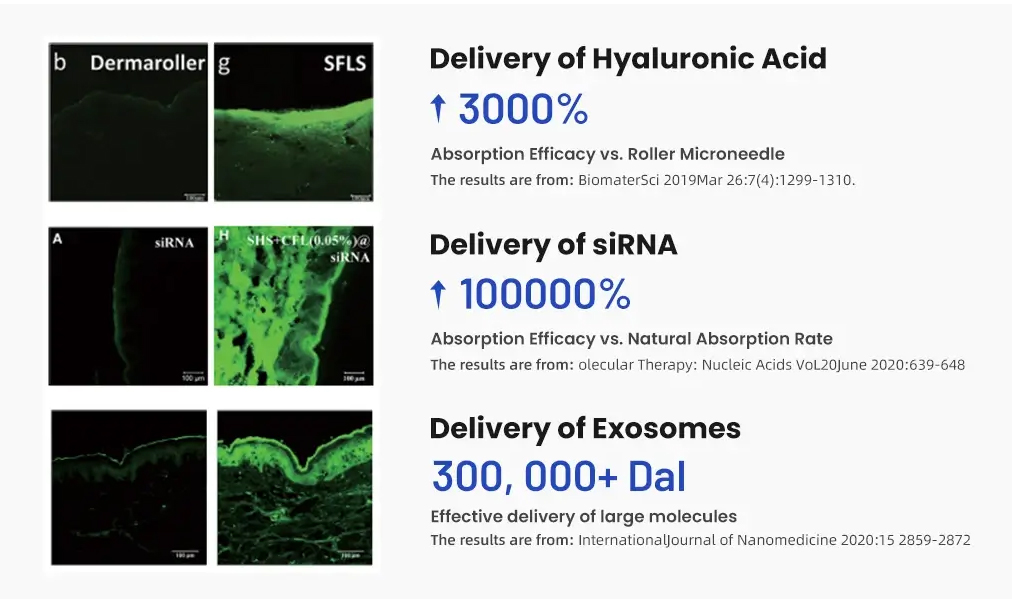
- These channels improve penetration of active ingredients (e.g., vitamins, peptides) into deeper epidermal layers.
3.2 Gentle Exfoliation
- As physical microneedles, the spicules produce controlled frictional exfoliation, removing aged or compacted cells to facilitate ingredient absorption.
3.3 Skin Repair Stimulation
- The physical micro‑stimulus may activate repair responses (enhanced microcirculation, accelerated metabolism, and collagen synthesis).
4. Applications
4.1 Cosmetics & Skincare
Hydrolyzed Sponge is widely used as a functional and delivery ingredient in:
- Serums, creams, and masks for improved hydration and ingredient delivery.
- Products targeting enlarged pores, dullness, and uneven complexion.
- Enhancing makeup adherence via exfoliation‑based prep.
4.2 Professional Aesthetic Treatments
- Used as a non‑invasive exfoliation step before advanced treatments (e.g., peptide or growth factor introduction).
- Alternative to traditional microneedling in salons due to milder recovery and lower risk.
4.3 Transdermal Delivery
- Serves as a carrier for active ingredients, potentially enabling improved drug or bioactive compound delivery in topical therapies.
5. Benefits
| Category | Benefit |
| Penetration | Improved delivery of large molecules (vitamins, peptides). |
| Exfoliation | Gentle removal of dead cells without harsh chemicals. |
| Hydration & Texture | Increased absorption and skin smoothness. |
| Barrier Support | Improved barrier function with less damage than strong acids. |
| Safety | Generally low comedogenicity; suitable for many skin types. |
6. Safety & Side Effects
General Tolerance:
- Hydrolyzed Sponge is generally regarded as safe for topical use in cosmetics.
- Allergic reactions and irritation are uncommon but possible, especially in sensitive individuals, which is why patch testing is advisable.
Considerations:
- Very sensitive or compromised skin (eczema, dermatitis) may react; consult a professional if unsure.
- Data on use during pregnancy/breastfeeding is limited.
Quality & Purity Issues:
- Low‑grade material with larger or irregular spicules can cause friction injury. Quality control is critical.
7. Research & Evidence
Clinical Evidence
- Academic studies (e.g., Srinakharinwirot University) support enhanced macromolecule penetration with hydrolyzed sponge carriers.
Mechanistic Studies
- Penetration improvement and micro‑exfoliation mechanisms have been experimentally observed.
Purity & Residue
- Laboratory evaluation shows properly processed spicules dissolve or clear from skin model surfaces over hours, reducing concerns about residue.
8. Summary & Future Directions
Hydrolyzed Sponge represents a unique biophysical tool in skincare and topical delivery science:
- It combines micro‑exfoliation with enhanced penetration of active agents.
- Its effectiveness depends on particle size, purity, and formulation context.
- Ongoing research aims to refine delivery mechanisms (e.g., sustained‑release systems).
Future Opportunities:
- Expanding into medical dermatology or transdermal drug delivery.
- Sustainability and marine‑biomaterial innovations.
- Clinical trials that measure long‑term effects and comparative efficacy versus traditional microneedling.