
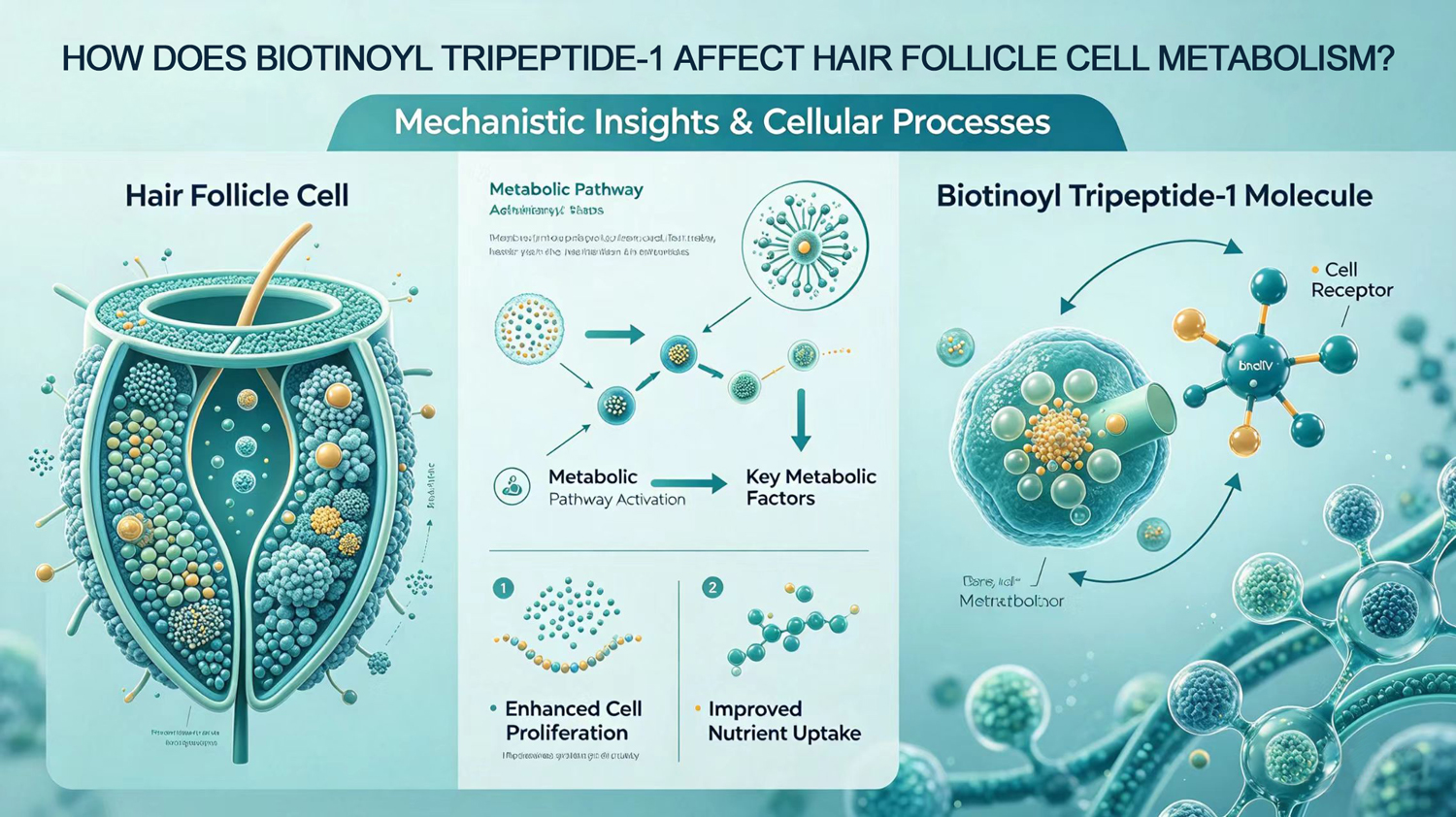
Biotinoyl Tripeptide-1 (also called biotinyl-GHK) is a peptide used in many topical hair-care formulations because it appears to modulate hair follicle cell behavior at the molecular and metabolic level. Research is still largely preliminary (mostly in vitro and ex-vivo), but the mechanisms studied so far relate directly to hair follicle cell metabolism and function rather than just cosmetic coating of hair fibers.
Here’s how it’s thought to affect follicle cells:
1. Stimulates Follicle Cell Proliferation and Metabolism
Biotinoyl Tripeptide-1 has been shown in cultured human hair follicles to increase proliferation of follicular keratinocytes and dermal papilla cells, which are the metabolically active cells at the hair bulb that drive hair growth. This means it boosts the cell division and metabolic activity in these cells, evidenced by increases in proliferation markers like K-67.
Increased keratinocyte activity is linked to higher rates of protein synthesis and energy usage in the bulb, which supports a longer and stronger anagen (growth) phase of the hair cycle.
2. Enhances Extracellular Matrix (ECM) and Structural Protein Production
Biotinoyl Tripeptide-1 promotes the production of extracellular matrix proteins like laminin-5 and collagen IV, which are critical for the structural support of the hair follicle and its anchoring in the scalp. Strengthening this matrix may indirectly improve the microenvironment and nutrient exchange around the follicle cells, supporting metabolic health.
3. Improves Cellular Communication and Metabolic Signaling
The GHK tripeptide (glycine-histidine-lysine) part of the molecule is known as a signaling peptide. In hair follicles it may help modulate key signaling pathways (e.g., Wnt/β-catenin) that regulate hair cycle progression and cell metabolism (transcriptional programs that govern growth vs rest). While direct human data is limited, peptide‑mediated signaling is thought to shift cells into a more active metabolic state rather than a quiescent one.
4. Potential Effects on Local Blood Supply and Oxidative Stress
Some supplier literature suggests biotinoyl tripeptide-1 can improve scalp microcirculation and reduce oxidative stress around the follicle, which indirectly supports metabolic functions by improving nutrient and oxygen delivery to metabolically demanding cells.
What It Isn’t Established To Do
- There’s no strong evidence that it directly inhibits systemic DHT or acts hormonally like finasteride. Any DHT modulation claims come from cosmetic suppliers and are not well-validated in peer-reviewed research.
- The evidence is largely preclinical—there’s no robust clinical data showing clear metabolic changes in vivo in human follicles attributable solely to biotinoyl tripeptide-1.

In summary:
Biotinoyl Tripeptide-1 appears to enhance hair follicle cell metabolism by stimulating cell proliferation and protein synthesis, strengthening the extracellular matrix, and possibly improving nutrient and oxygen delivery. These effects collectively support the metabolic activity needed for a robust anagen growth phase, anchoring of hair, and healthier follicle function.
If you want, I can explain how this metabolic stimulation compares with how other hair growth agents like minoxidil or finasteride act at the cellular level.