
Magnesium glycinate is a compound made of magnesium and the amino acid glycine. It is known for its high bioavailability and is commonly used in various applications, including:
1. Improving Sleep Quality
- Magnesium glycinate supports GABA activity, a calming neurotransmitter.
- Often used for insomnia, difficulty falling asleep, or restless sleep.
- Gentle on the stomach, making it suitable for nighttime use.
2. Reducing Stress & Anxiety
- Glycine and magnesium both have calming effects on the nervous system.
- Commonly used to support relaxation, reduce irritability, and improve stress resilience.
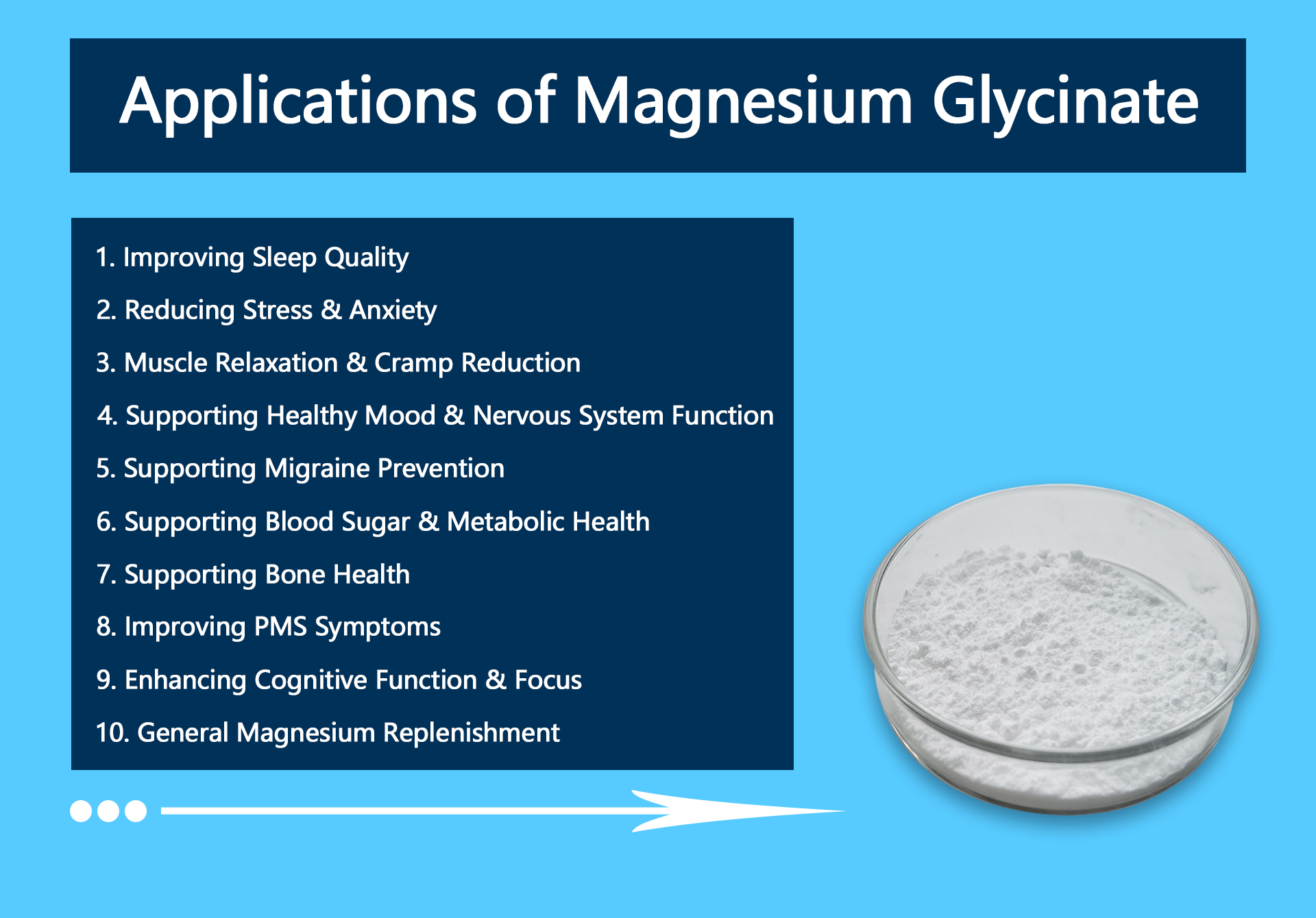
3. Muscle Relaxation & Cramp Reduction
Helps reduce:
- Muscle cramps
- Spasms
- Muscle tension or twitching
Used by athletes and people experiencing nighttime leg cramps.
4. Supporting Healthy Mood & Nervous System Function
- Magnesium is important for neurotransmitter balance.
- Sometimes used as supportive care in mood regulation due to its calming effect.
5. Supporting Migraine Prevention
- Magnesium deficiency is linked to migraine frequency.
- Magnesium glycinate is often preferred because it is well-absorbed and less likely to cause stomach upset.
6. Supporting Blood Sugar & Metabolic Health
- Magnesium plays a role in insulin sensitivity.
- Used to support stable blood sugar in general wellness (not as a treatment for medical conditions).
7. Supporting Bone Health
- Magnesium is required for vitamin D activation and calcium metabolism.
- Used in combination with calcium and vitamin D for overall bone support.
8. Improving PMS Symptoms
Can help reduce:
- Mood swings
- Cramps
- Bloating
- Breast tenderness
Magnesium’s muscle-relaxing and calming effects are beneficial.
9. Enhancing Cognitive Function & Focus
- May help improve calm-alert focus.
- Supports healthy brain function through improved neurotransmitter balance.
10. General Magnesium Replenishment
Commonly used to correct low magnesium levels, especially in people with:
- High stress
- Poor diet
- Digestive issues
- Medication-related magnesium loss