
Matrixyl 3000 is a popular peptide-based ingredient in skincare, primarily known for its anti-aging and skin-repairing properties. Its main components are palmitoyl oligopeptide and palmitoyl tetrapeptide-7, which work synergistically to stimulate collagen production, reduce wrinkles, and improve skin elasticity. Here’s a detailed breakdown of its applications:
1. Anti-Aging / Wrinkle Reduction
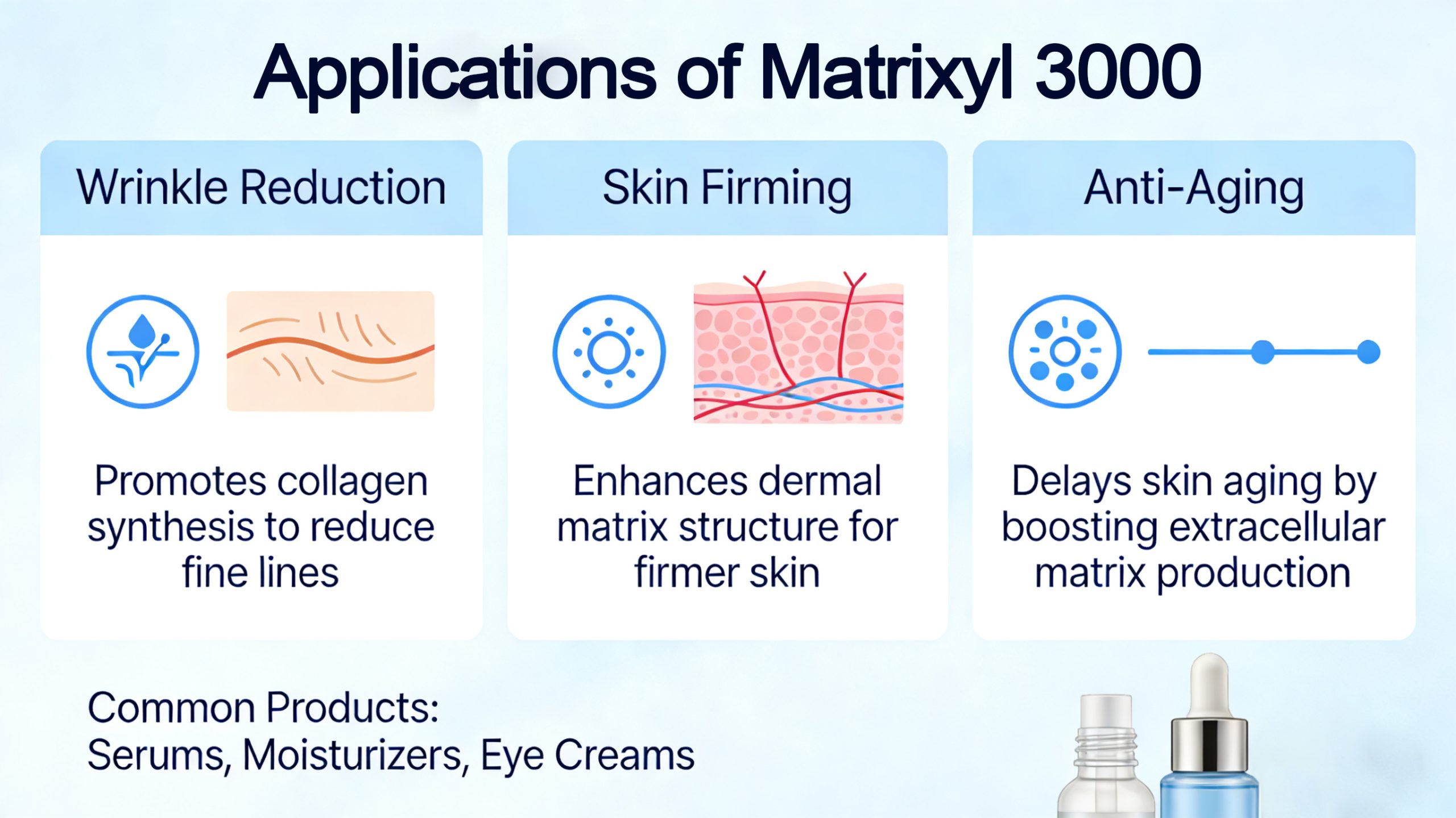
- Stimulates collagen (types I, III, and IV) and fibronectin synthesis, helping to firm the skin.
- Reduces the appearance of fine lines and deep wrinkles, especially around the eyes and mouth.
- Often included in anti-aging creams, serums, and eye treatments.
2. Skin Firming and Elasticity
- Improves skin elasticity and density, giving skin a more youthful appearance.
- Helps counter skin sagging, particularly on cheeks and jawline.
3. Skin Repair and Regeneration
- Promotes healing of damaged skin and strengthens the extracellular matrix (ECM).
- Supports wound repair and reduces the appearance of scars over time.
4. Hydration and Skin Barrier Support
- Enhances skin’s moisture retention, improving overall texture.
- Can reduce skin roughness and dryness.
5. Anti-Inflammatory Effects
- Palmitoyl tetrapeptide-7 has anti-inflammatory properties, which can reduce skin redness and irritation.
- Useful in formulations for sensitive or stressed skin.
Common Product Forms
- Serums and ampoules: for targeted anti-aging treatments.
- Creams and lotions: for daily hydration and wrinkle prevention.
- Eye creams: to reduce crow’s feet and under-eye fine lines.
- Sheet masks: combined with other peptides for intensive care.
Typical Concentration
- Usually 2–4% in formulations, though some products may have slightly lower concentrations to ensure stability and efficacy.
If you want, I can also make a table of specific Matrixyl 3000 applications vs skin concerns, which is easier to visualize for product formulation or personal use. Do you want me to do that?