
Pro-Xylane is a skincare ingredient widely used for its anti-aging and skin-repair properties. Its primary uses focus on improving skin hydration, elasticity, and reducing visible signs of aging.
Chemical Structure of Pro-Xylane
Chemical Name: 1,2,3,4-tetrahydroxybutyl D-glucoside
Molecular Formula: C₁₀H₂₀O₉
Molecular Weight: ~276.25 g/mol
Structure Description:
- Pro-Xylane is a sugar derivative, specifically a glucoside.
- It consists of a D-glucose unit bound via a glycosidic bond to a tetrahydroxybutyl moiety.
- The structure has multiple hydroxyl (-OH) groups, making it highly hydrophilic.
- The molecule is linear in the butyl part but cyclic in the glucose moiety.
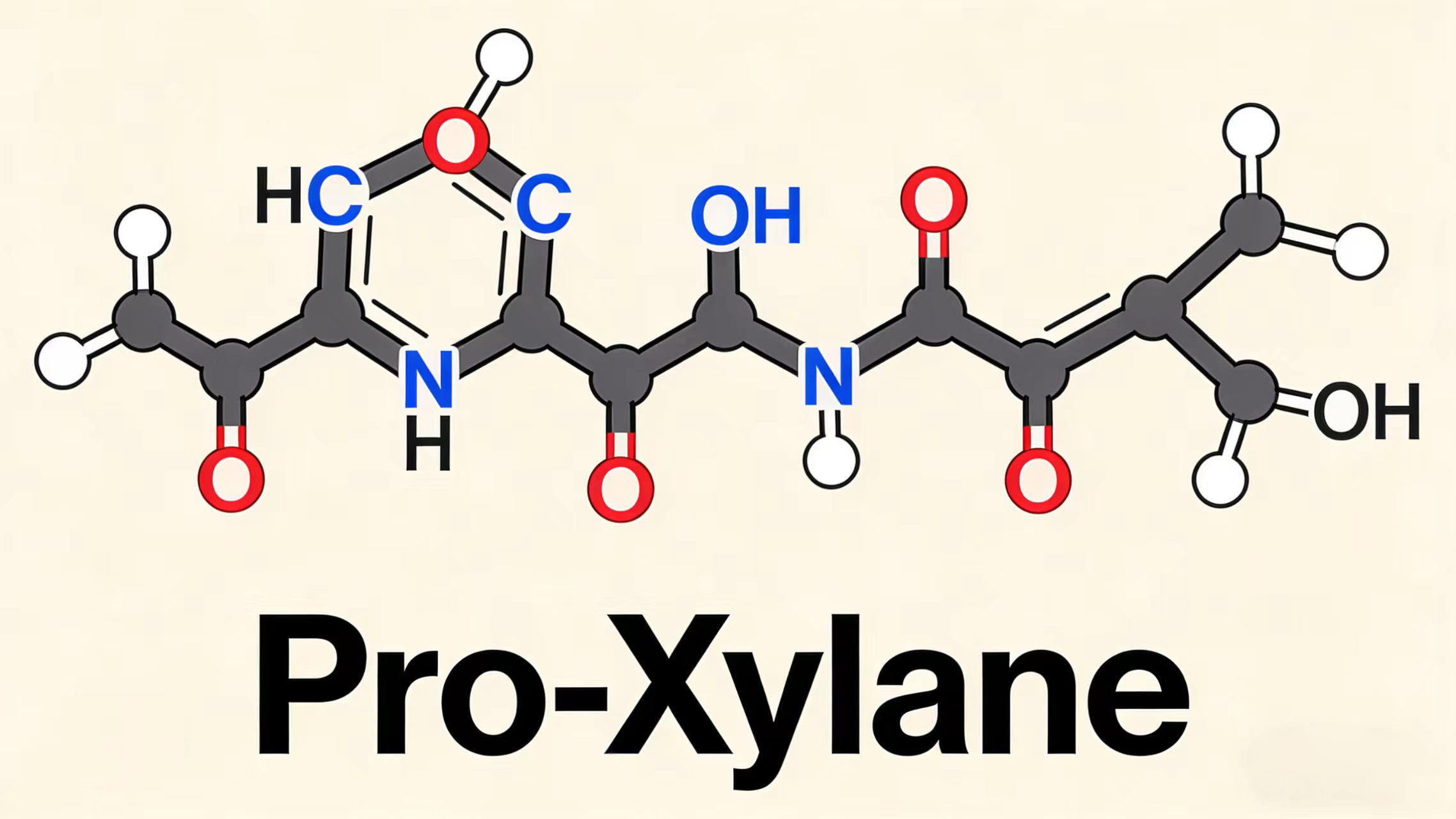
Visually, it can be depicted as:
HOCH2-CH(OH)-CH(OH)-CH2-O-Glucose
Where the glucose is a standard D-glucose ring (pyranose form), and the butyl chain has hydroxyl groups at positions 1, 2, and 3.
Physical Properties of Pro-Xylane
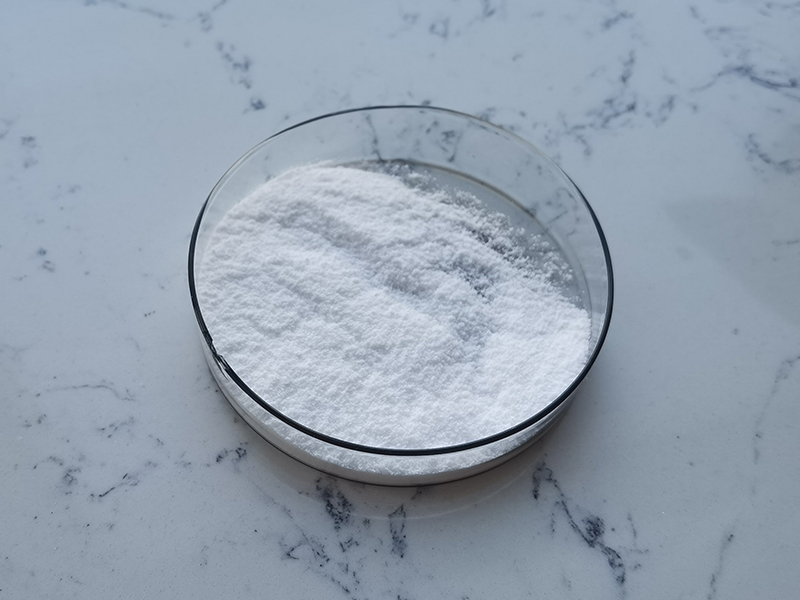
Appearance: Colorless to pale yellow liquid or crystalline powder, depending on formulation.
Solubility:
- Highly soluble in water due to multiple hydroxyl groups.
- Poorly soluble in nonpolar organic solvents (e.g., hexane).
Hygroscopicity: Tends to absorb moisture from the air.
Stability:
- Stable under neutral pH and low temperatures.
- Sensitive to strong acids or bases, which can hydrolyze the glycosidic bond.
Melting/Boiling Point:
- Exact melting point varies (~120–130°C for crystalline form).
- Decomposes before boiling; typically used in solution form.
Viscosity: Slightly viscous in concentrated aqueous solutions.
Implications of Structure and Properties
- The hydrophilic nature allows Pro-Xylane to penetrate the skin’s extracellular matrix, which is why it’s effective in anti-aging cosmetics.
- Its stability in aqueous solutions and compatibility with other skincare ingredients make it versatile for serums, creams, and lotions.
- The multiple hydroxyl groups are also responsible for moisturizing properties, as they can bind water effectively.
If you want, I can also draw a clear 2D chemical structure diagram of Pro-Xylane so you can see the hydroxyl placements and glucose connection—it’s much easier to understand visually.
Do you want me to do that?