
Pro-Xylane (INCI: Hydroxypropyl Tetrahydropyrantriol) is a cosmetic active ingredient originally developed by L’Oréal via green chemistry from xylose, a sugar found abundantly in beech wood.
Origin of Pro-Xylane
Pro-Xylane (also known as Hydroxypropyl Tetrahydropyrantriol) was developed by L’Oréal Research & Innovation.
- Source of inspiration: Pro-Xylane is inspired by xylose, a naturally occurring sugar derived from beech wood.
- Development goal: L’Oréal aimed to create a molecule that could restore skin structure and density by targeting the extracellular matrix (ECM), rather than only providing surface hydration.
- Intellectual property: Pro-Xylane is a patented active ingredient and is widely used in premium anti-aging skincare, especially in L’Oréal group brands (e.g., Lancôme, Vichy).
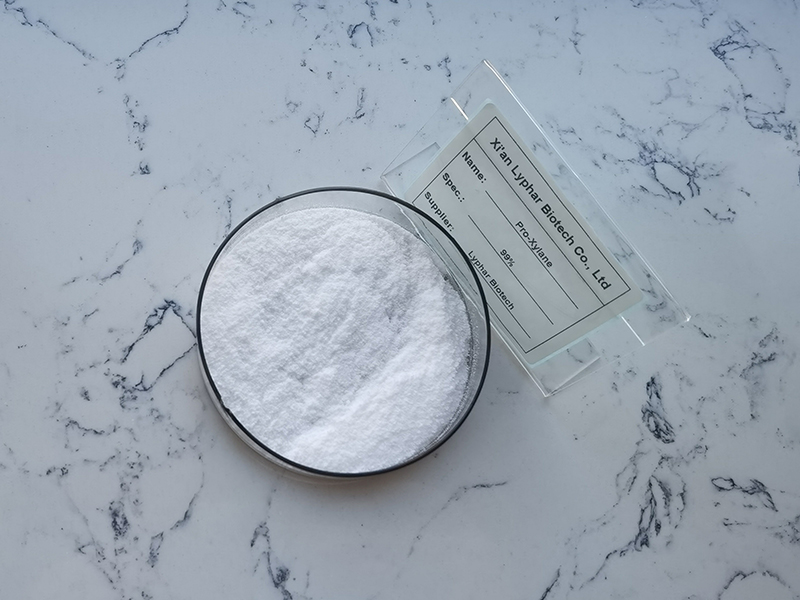
Nature of Pro-Xylane
1. Chemical Nature
INCI name: Hydroxypropyl Tetrahydropyrantriol
Molecular type: Small sugar-derived biomimetic molecule
Structure: Modified xylose with hydroxypropyl groups, enhancing stability and bioactivity
2. Physical and Chemical Properties
Appearance: Colorless to pale yellow liquid
Solubility: Highly water-soluble
Stability:
- Stable across a wide pH range (≈ 4–8)
- Good thermal and formulation stability
Skin compatibility: Excellent; suitable for sensitive skin
3. Biological Nature
Acts as a biomimetic skin-matrix regulator
Targets glycosaminoglycan (GAG) synthesis, especially hyaluronic-acid-related pathways
Non-hormonal and non-cytotoxic
Introduction to Pro-Xylane
Pro-Xylane is an anti-aging and skin-density-restoring active ingredient designed to reinforce the structural components of skin.
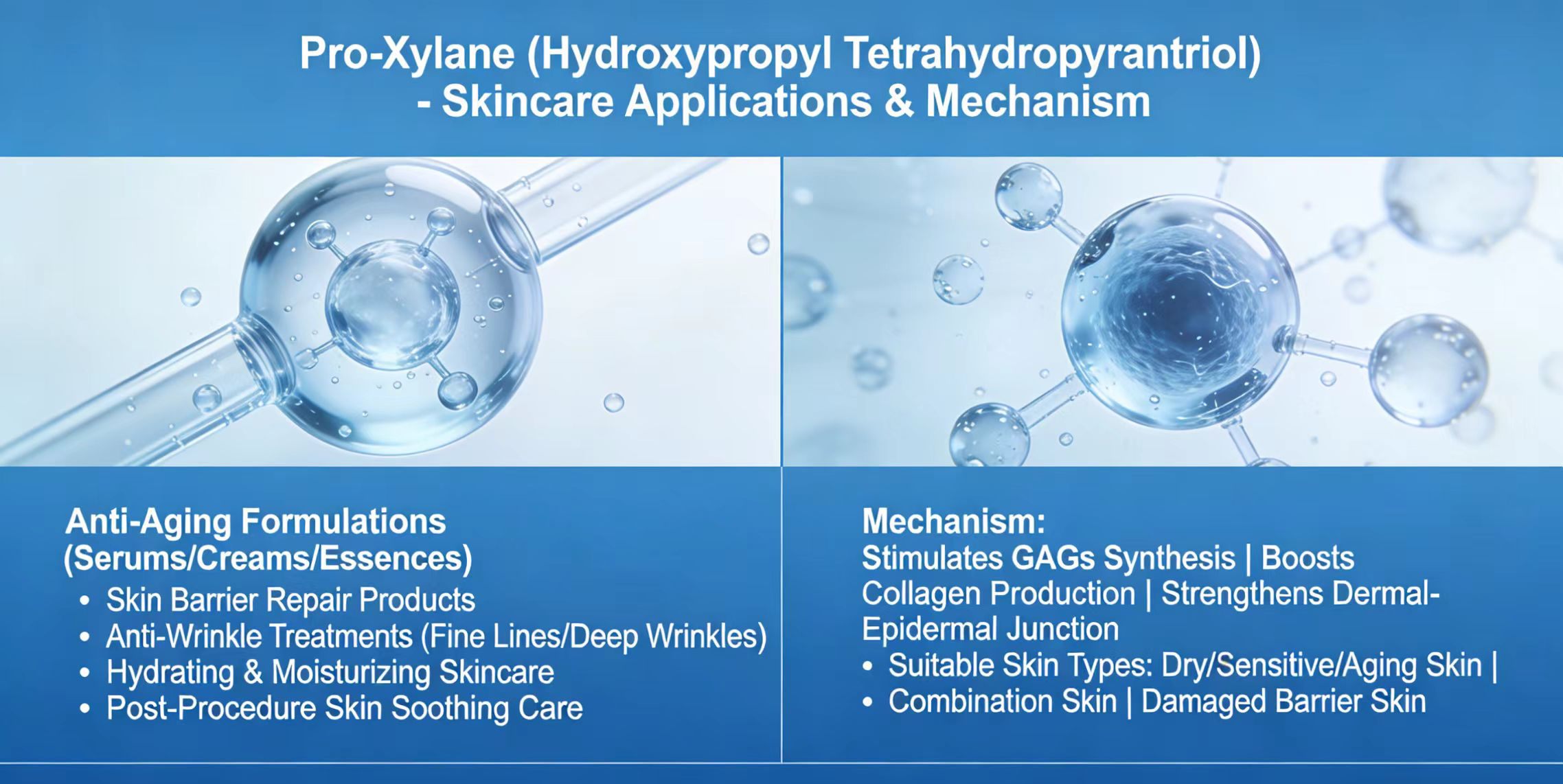
1. Mechanism Overview
Pro-Xylane works by:
- Stimulating proteoglycan and GAG production
- Improving dermal–epidermal junction (DEJ) integrity
- Enhancing skin hydration from within
- Supporting collagen network organization (indirectly)
2. Key Skin Benefits
- Improves skin firmness and elasticity
- Reduces the appearance of wrinkles and sagging
- Enhances skin thickness and density
- Provides long-lasting deep hydration
3. Typical Applications
- Anti-aging creams and serums
- Firming and lifting products
- Eye and neck care
- Post-menopausal skin care
- Sensitive-skin formulations
4. Safety Profile
- Dermatologically tested
- Non-irritating and non-sensitizing
- Suitable for long-term daily use
Positioning Summary
| Aspect | Description |
| Origin | Xylose-derived, developed by L’Oréal |
| Nature | Sugar-based, biomimetic, water-soluble |
| Core Function | Skin matrix rebuilding & density restoration |
| Target Users | Aging, dry, sensitive, or thinning skin |
| Market Role | Premium, science-backed anti-aging active |
If you want, I can also:
- Compare Pro-Xylane vs Matrixyl 3000
- Explain its molecular mechanism in fibroblasts
- Help you write raw-material or marketing documentation
- Provide formulation usage levels and compatibility
Just say the word