
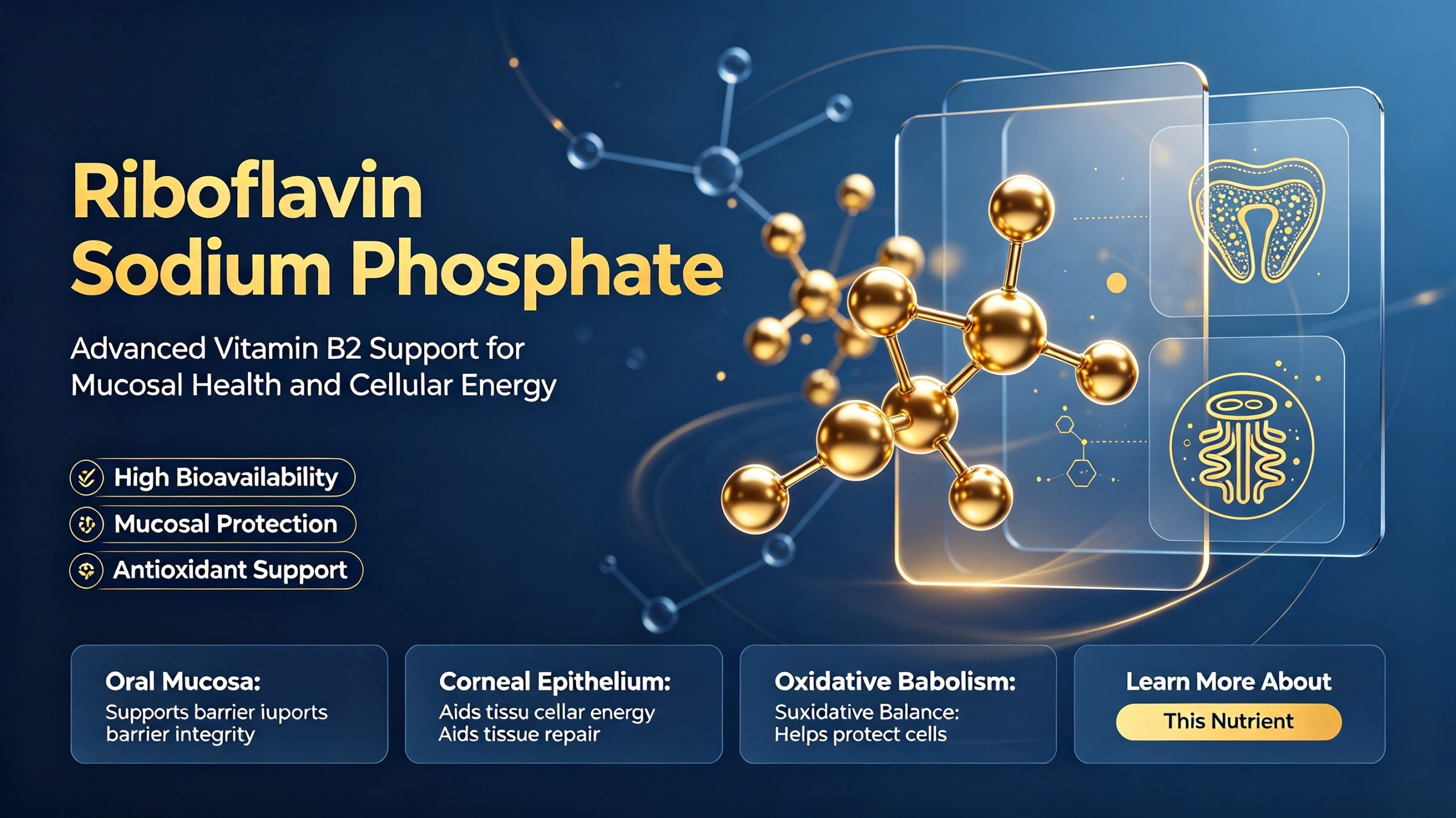
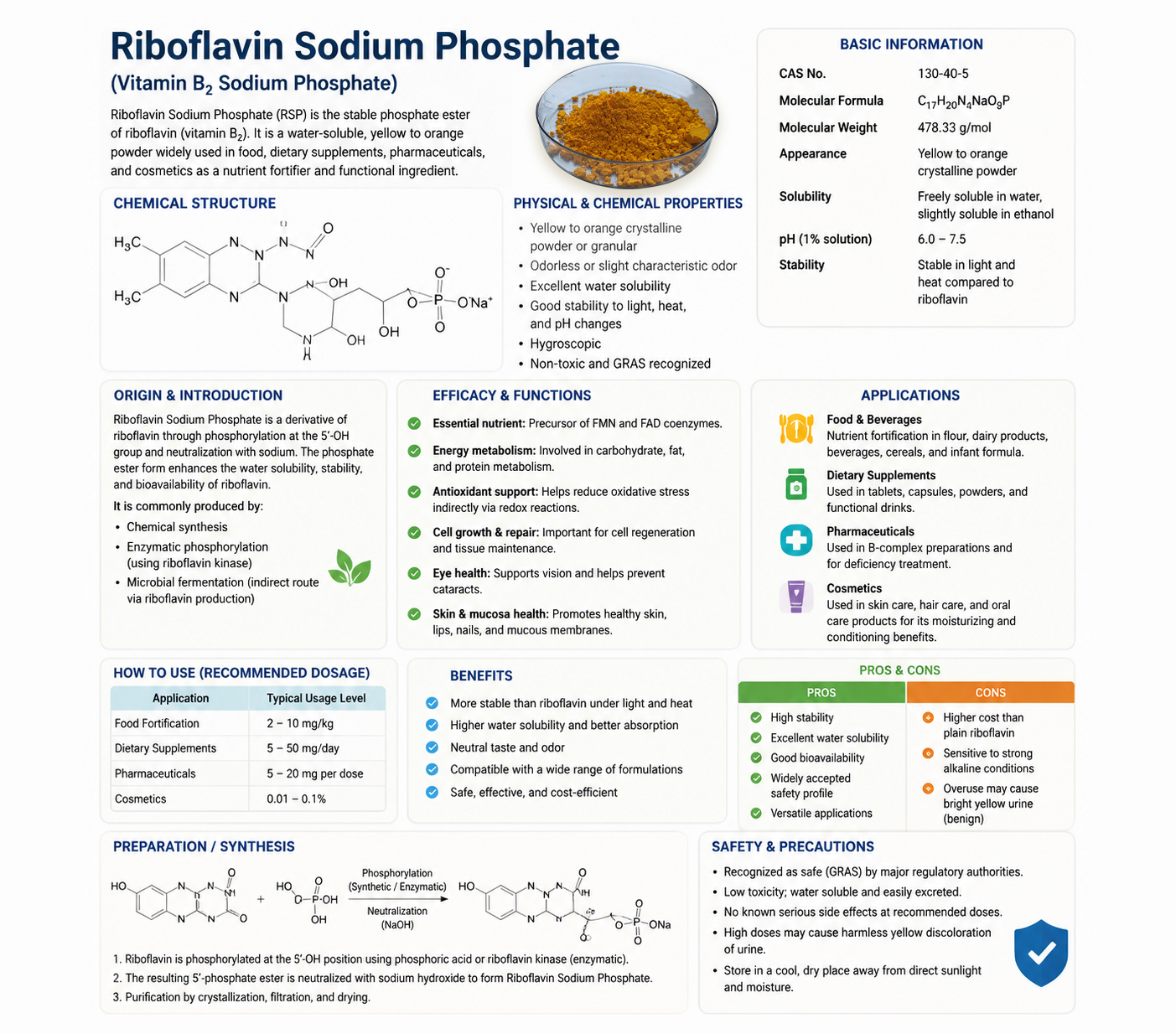
Riboflavin Sodium Phosphate is a pharmaceutical-grade, water-soluble derivative of vitamin B2 (riboflavin) designed primarily for injectable administration and clinical nutrition use. It is widely used in hospitals as part of multivitamin infusions and parenteral nutrition systems because of its stability and rapid conversion into biologically active cofactors.
1. Identity and classification
- Chemical class: Flavin derivative (vitamin B2 family)
- Type: Phosphorylated vitamin (riboflavin-5′-phosphate sodium salt)
- Therapeutic category: Nutritional supplement / parenteral vitamin
- Functional category: Metabolic coenzyme precursor
2. Chemical and structural overview
Core structure
Built on an isoalloxazine ring system
- This is the reactive redox-active nucleus of all flavins
Attached to a ribitol sugar chain
Key modification
- Ribitol hydroxyl group is phosphorylated → riboflavin-5′-phosphate
- Converted into sodium salt → improves solubility and injectability
Functional consequence
After administration:
Dephosphorylated → riboflavin
Converted into:
- FMN (Flavin Mononucleotide)
- FAD (Flavin Adenine Dinucleotide)
These are essential enzymatic cofactors in metabolism.
3. Physical and physicochemical properties
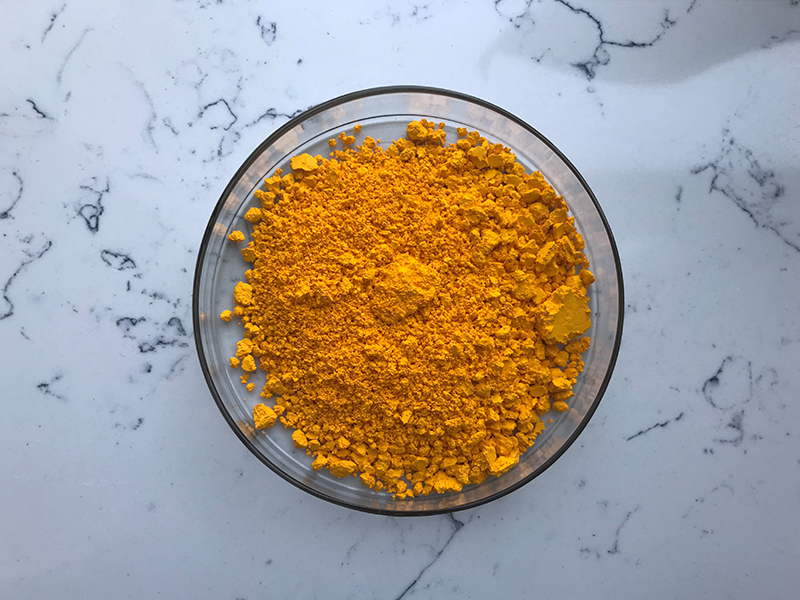
Appearance
- Yellow to orange-yellow crystalline powder
- Also available as sterile injectable solution
Solubility
- Highly soluble in water
- Insoluble in most organic solvents
Stability
- More stable than riboflavin in aqueous solutions
- Light-sensitive (photodegradation risk)
Optical property
- Strong natural fluorescence under UV light (yellow-green emission)
pH behavior
- Stable in mildly acidic to neutral aqueous conditions
4. Pharmacokinetics and metabolism
Absorption
- IV/IM administration bypasses gastrointestinal absorption limits
- Rapid systemic availability
Conversion pathway
- Riboflavin sodium phosphate → riboflavin
- Riboflavin → FMN → FAD
Elimination
- Excess excreted in urine (bright yellow coloration is common and harmless)
5. Mechanism of biological action
Its effects are mediated through FMN and FAD, which act as cofactors for:
A. Energy metabolism
- Electron transport chain (ATP production)
- Mitochondrial oxidative phosphorylation
B. Redox reactions
- Oxidation-reduction enzyme systems
- Fatty acid β-oxidation
- Amino acid metabolism
C. Antioxidant system support
- Indirect support via flavin-dependent enzymes
- Helps regenerate antioxidant capacity (e.g., glutathione system support)
D. Cellular repair
- Supports epithelial turnover and tissue regeneration under deficiency or stress conditions
6. Clinical applications
6.1 Hospital nutrition (primary use)
Included in:
- IV multivitamin formulations
- Total parenteral nutrition (TPN)
Used for:
- ICU patients
- Post-surgical recovery
- Burn and trauma cases
- Severe malnutrition
6.2 Treatment of vitamin B2 deficiency
Corrects ariboflavinosis, presenting as:
- Cheilosis (cracked lips)
- Glossitis (inflamed tongue)
- Dermatitis (especially facial lesions)
- General fatigue and mucosal breakdown
6.3 Neurological support (adjunct use)
- Used in some migraine prevention protocols
- Supports neuronal mitochondrial energy metabolism
6.4 Support in high metabolic stress states
- Sepsis recovery support
- Severe infection
- Chronic disease catabolic states
7. Efficacy profile
Strongest evidence-based effects:
- Rapid correction of riboflavin deficiency
- Reliable metabolic support in hospitalized patients
- Essential micronutrient maintenance in TPN
Moderate evidence:
- Migraine prophylaxis support (mainly oral riboflavin data extrapolated)
- General oxidative stress support
Limitations:
- Not a standalone therapeutic drug
- Benefits depend heavily on baseline deficiency or metabolic stress
8. Safety and side effects
Common
- Bright yellow urine (harmless)
- Mild injection site irritation (IV/IM use)
Rare
- Hypersensitivity reactions (very uncommon)
- Mild gastrointestinal discomfort (rare in injectable form)
Toxicity
- Very low toxicity (excess excreted rapidly in urine)
9. Advantages over riboflavin
- Much higher water solubility
- Suitable for IV/IM administration
- Faster and more reliable bioavailability
- Stable in pharmaceutical solutions
- Rapid conversion to active cofactors
10. Limitations
- Light-sensitive (requires protection during storage/handling)
- Requires medical administration in injectable form
- Not intended for high-dose pharmacologic therapy beyond nutritional use
11. Summary conclusion
Riboflavin Sodium Phosphate is a clinically optimized vitamin B2 derivative designed for parenteral nutrition and medical supplementation. Its primary value lies in its ability to rapidly restore riboflavin-dependent metabolism by supplying precursors for FMN and FAD, making it essential in hospital nutrition, deficiency treatment, and metabolic support during illness or stress.
If you want, I can next break down:
- its industrial manufacturing process, or
- a comparison with riboflavin vs FMN vs FAD in biochemical pathways, or
- its role inside the electron transport chain step-by-step.