
Sialic acid is a family of acidic nine-carbon monosaccharides that occur mainly at the outermost ends of cell-surface glycans and glycoproteins. The most common form in humans is N-acetylneuraminic acid (Neu5Ac).
1. Basic information
| Property | Description |
| Common name | Sialic acid |
| Principal human form | N-Acetylneuraminic acid (Neu5Ac) |
| Molecular formula | C₁₁H₁₉NO₉ |
| Molecular weight | 309.27 g/mol |
| Chemical class | Nine-carbon acidic monosaccharide |
| Structural family | Neuraminic-acid derivatives |
| Charge | Negatively charged at physiological pH |
| Occurrence | Glycoproteins, glycolipids, mucins and cell membranes |
| Main biological role | Cell recognition, signaling, protection and molecular interactions |
Strictly speaking, “sialic acid” is a group of related molecules, whereas Neu5Ac is one specific and predominant member.
2. Where is it found?
Sialic acids are widely distributed in animals and are particularly abundant on the surface of human cells. They are commonly attached to the terminal positions of:
- Glycoproteins
- Glycolipids
- Gangliosides
- Mucins
- Cell-surface oligosaccharides
Because Sialic acid is frequently the terminal sugar of these structures, it is positioned at the interface between the cell and its surrounding environment.
3. Why is sialic acid important?
A. Cell recognition
Sialylated glycans participate in interactions between cells and between cells and extracellular molecules. They can influence immune-cell recognition and cell–cell adhesion.
B. Immune regulation
Sialic-acid-containing structures can interact with Siglec (sialic-acid-binding immunoglobulin-like lectin) receptors. These interactions help regulate immune-cell activation and tolerance.
C. Protection of cell surfaces
The negative charge of sialic acid contributes to the physicochemical properties of the glycocalyx and can help protect underlying glycan structures from certain enzymes and interactions.
D. Pathogen interactions
Some pathogens recognize sialylated glycans as attachment sites. Influenza viruses, for example, use hemagglutinin to recognize particular sialic-acid-containing receptors on host cells.
E. Protein and glycan lifespan
Terminal sialylation can influence how circulating glycoproteins are recognized and cleared from the bloodstream. Loss of terminal sialic acid can expose underlying sugars that promote hepatic clearance.
4. Chemical structure
Sialic acid contains:
- A nine-carbon backbone
- A carboxylic acid group
- A ketone-derived sugar structure
- An N-acetyl group
- Multiple hydroxyl groups
Its carboxyl group is largely ionized under physiological conditions, which gives Neu5Ac-containing glycans their characteristic negative charge.
Neu5Ac is generally present as part of a larger glycan rather than as a free sugar on the cell surface.
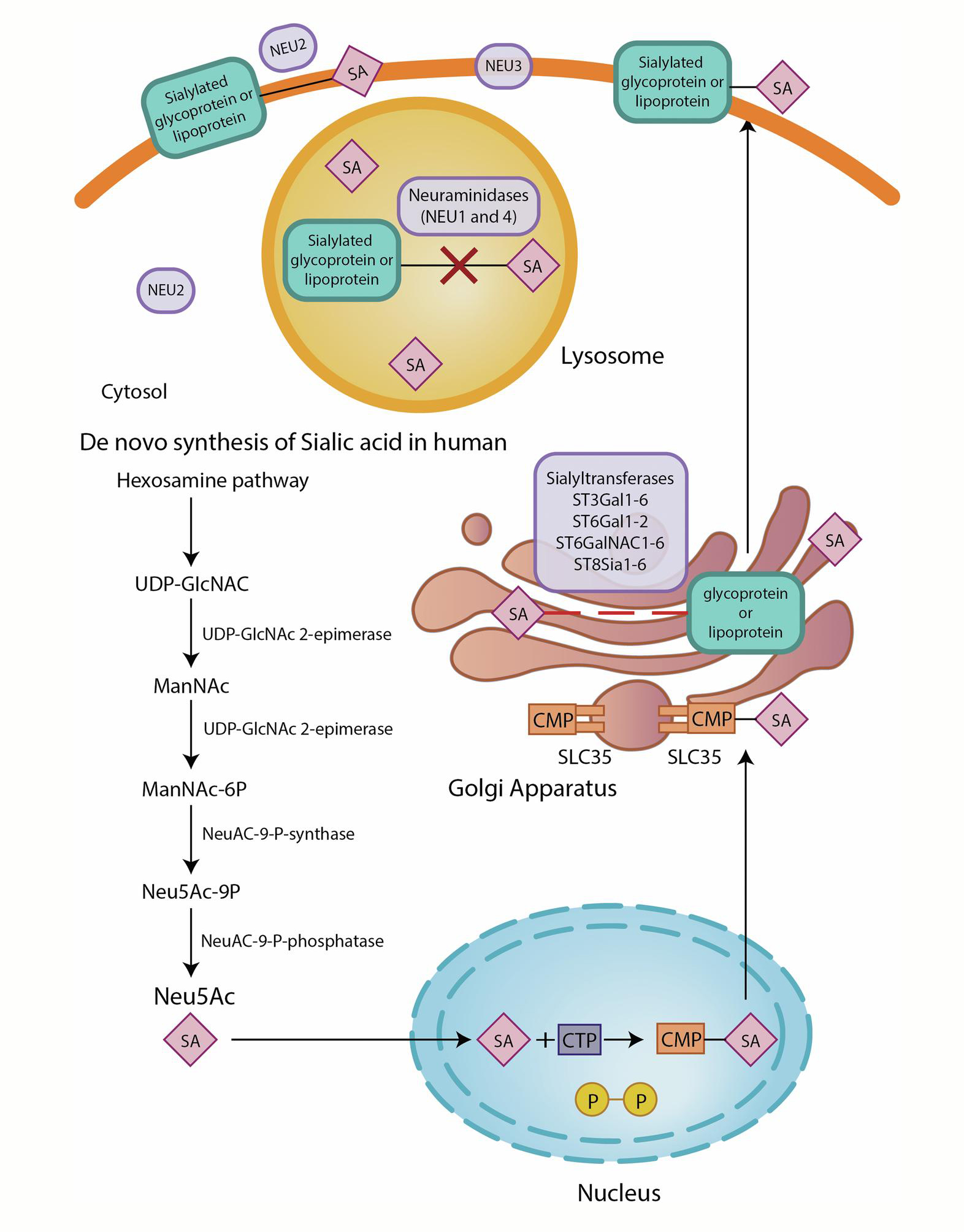
5. Biosynthesis in humans
Humans can synthesize Neu5Ac internally.
A simplified pathway is:
UDP-N-acetylglucosamine → ManNAc → Neu5Ac → CMP-Neu5Ac → sialylated glycoconjugates
The activated donor CMP-Neu5Ac is used by sialyltransferases to attach sialic acid to glycoproteins and glycolipids.
This is an important distinction from many ordinary dietary sugars: the biologically important sialic acid on human cell surfaces is largely produced through endogenous metabolic pathways.
6. Sialic acid and nutrition
Sialic acid is naturally present in foods of animal origin, particularly in milk and dairy products, where it occurs primarily as part of complex glycoconjugates.
It is also studied as a nutritional component, particularly in relation to:
- Brain development
- Neural membranes
- Ganglioside synthesis
- Infant nutrition
- Cell-surface glycosylation
However, evidence for specific benefits from oral free Neu5Ac supplementation in healthy adults is much less established than its fundamental biological importance as a cellular component.
7. Sialic acid vs. N-acetylneuraminic acid
A useful way to remember the terminology is:
Sialic acids = family
N-acetylneuraminic acid (Neu5Ac) = major member of that family
Other sialic-acid forms exist, such as N-glycolylneuraminic acid (Neu5Gc). Humans generally do not synthesize Neu5Gc because the responsible CMAH enzyme is inactive in humans.
8. Cosmetic and biotechnology relevance
Sialic acid and sialylated molecules are also of interest in:
- Skin biology
- Glycoprotein engineering
- Biopharmaceutical production
- Cell culture
- Biomaterials
- Drug-delivery research
- Glycoscience
- Nutritional research
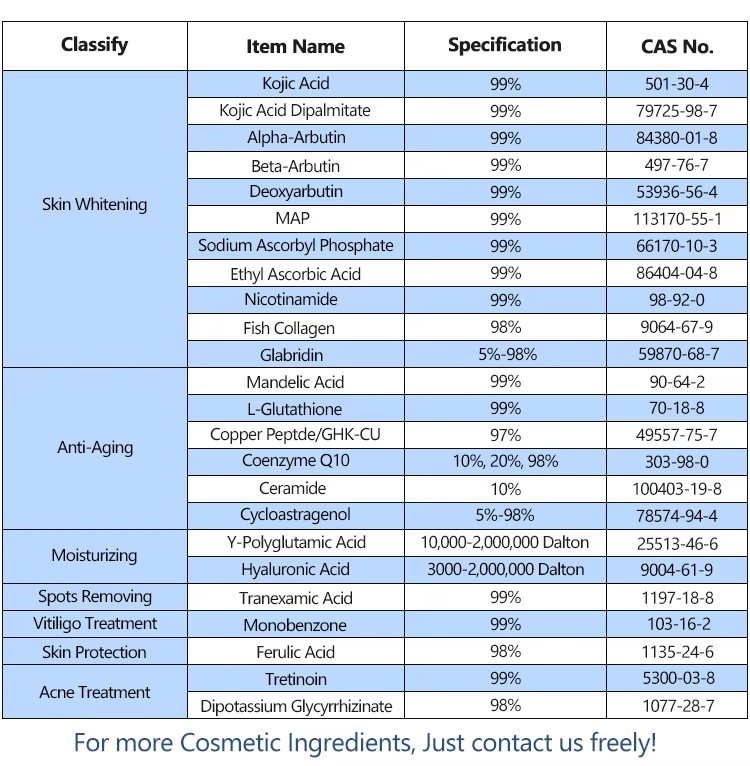
In cosmetics, sialic-acid-containing ingredients may be investigated for moisturizing, skin-conditioning and barrier-related applications, but the biological effects depend strongly on the specific ingredient, concentration, formulation, and whether the material actually delivers biologically available Neu5Ac.
Bottom line
Sialic acid is the principal sialic acid found in humans and an important terminal sugar of cell-surface glycans. It contributes to cell recognition, immune regulation, pathogen interactions, glycocalyx properties, and the biological behavior of glycoproteins and glycolipids.
If you’re studying it as a cosmetic or nutraceutical ingredient, the next useful topics are its chemical structure and physical properties, biological mechanism, sources/extraction, production methods, efficacy, safety, and applications.