
Saccharide Isomerate is a naturally derived carbohydrate complex widely used in skincare formulations as a long-lasting humectant and skin-conditioning agent. Unlike a single pure molecule, Saccharide Isomerate is a mixture of small sugar isomers and derivatives produced through enzymatic rearrangement of plant-derived sugars, mainly glucose and fructose.
1. Chemical Structure of Saccharide Isomerate
1.1 Chemical nature
- INCI name: Saccharide Isomerate
- Chemical category: Carbohydrate mixture / sugar-derived humectant
- CAS Number: 100843-69-4
- Chemical formula: Not represented by a single molecular formula because it is a mixture of saccharide isomers.
- Primary components: Isomerized monosaccharides and oligosaccharide derivatives
Saccharide Isomerate mainly contains:
- Glucose isomers
- Fructose isomers
- Mannose-like sugar structures
- Other rearranged hexose derivatives
The production process converts simple sugars into more stable configurations through enzymatic isomerization, creating carbohydrate structures that bind strongly to skin proteins.
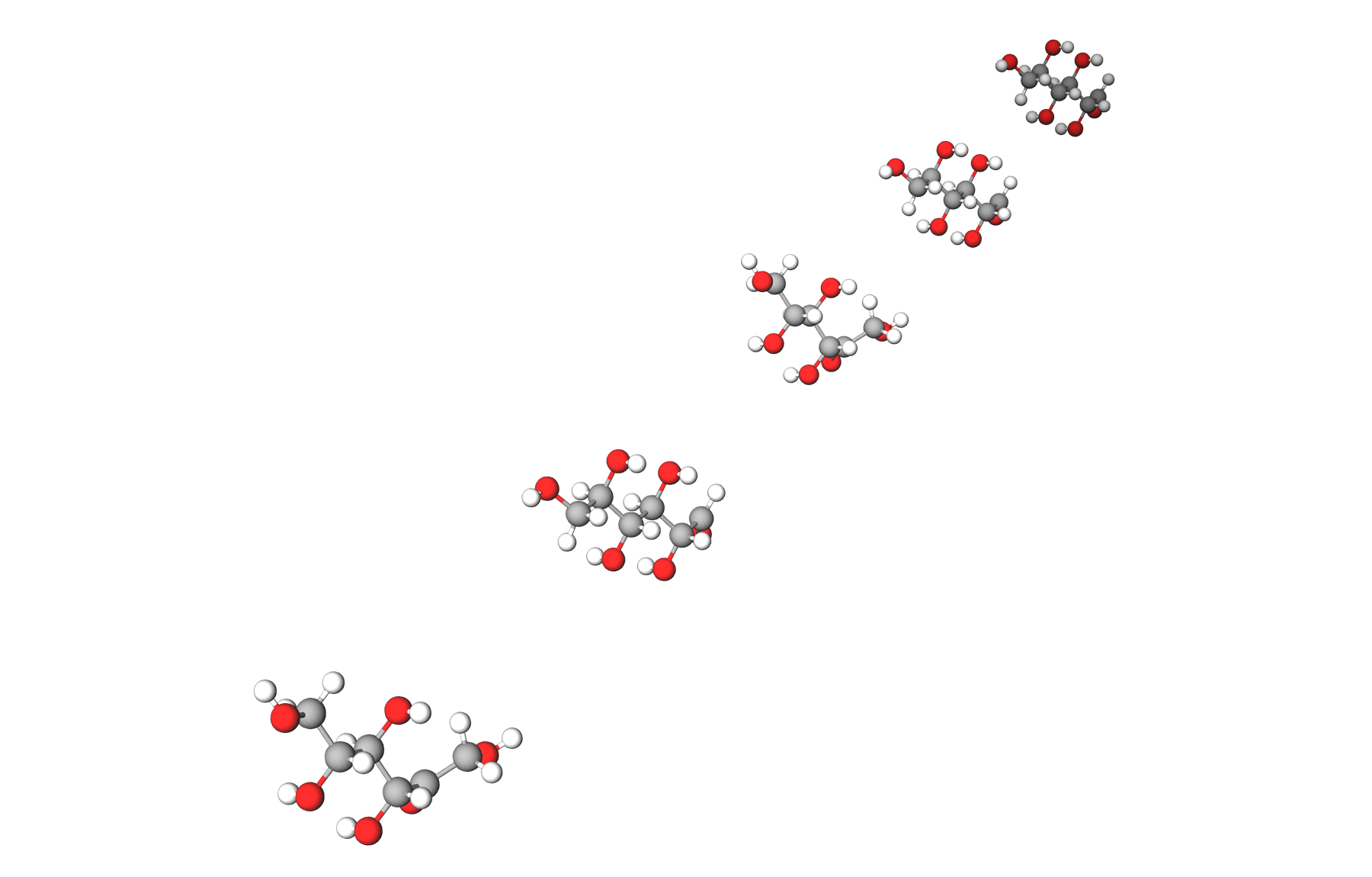
2. Molecular Structure Characteristics
2.1 Sugar backbone
Saccharide Isomerate molecules contain typical carbohydrate structural features:
Hydroxyl (-OH) groups
The abundant hydroxyl groups are responsible for:
- Strong hydrogen bonding with water molecules
- High water retention capacity
- Moisturizing effects on the stratum corneum
General carbohydrate structure:
(The exact stereochemistry varies among individual sugar isomers.)
2.2 Ring structures
Most saccharides exist mainly in cyclic forms:
- Pyranose rings (six-membered rings)
- Furanose rings (five-membered rings)
These cyclic sugar structures provide:
- High polarity
- Water compatibility
- Biological affinity with skin components
3. Chemical Properties
| Property | Description |
| Chemical class | Carbohydrate mixture |
| Molecular weight | Variable; generally low molecular weight sugars and derivatives |
| Polarity | Highly polar |
| Functional groups | Multiple hydroxyl groups (-OH) |
| Charge | Neutral (nonionic) |
| Solubility | Highly soluble in water |
| Hydrophilicity | Very high |
| Biodegradability | Readily biodegradable |
4. Physical Properties of Saccharide Isomerate
4.1 Appearance
Typical commercial Saccharide Isomerate:
- Clear to slightly yellow liquid
- Transparent aqueous solution
- Slightly viscous
Common specifications:
| Property | Typical Description |
| Form | Liquid solution |
| Color | Colorless to pale yellow |
| Odor | Mild characteristic odor |
| Texture | Smooth, non-sticky moisturizing feel |
4.2 Solubility
Saccharide Isomerate is:
Highly soluble in:
- Water
- Aqueous cosmetic systems
Poorly soluble in:
- Oils
- Nonpolar solvents
Its high water solubility makes it suitable for:
- Toners
- Essences
- Serums
- Moisturizing creams
- Facial masks
4.3 Hygroscopicity (Water Absorption Ability)
One of the most important physical properties is its hygroscopic nature.
The many hydroxyl groups allow Saccharide Isomerate to:
- Attract atmospheric moisture
- Bind water molecules
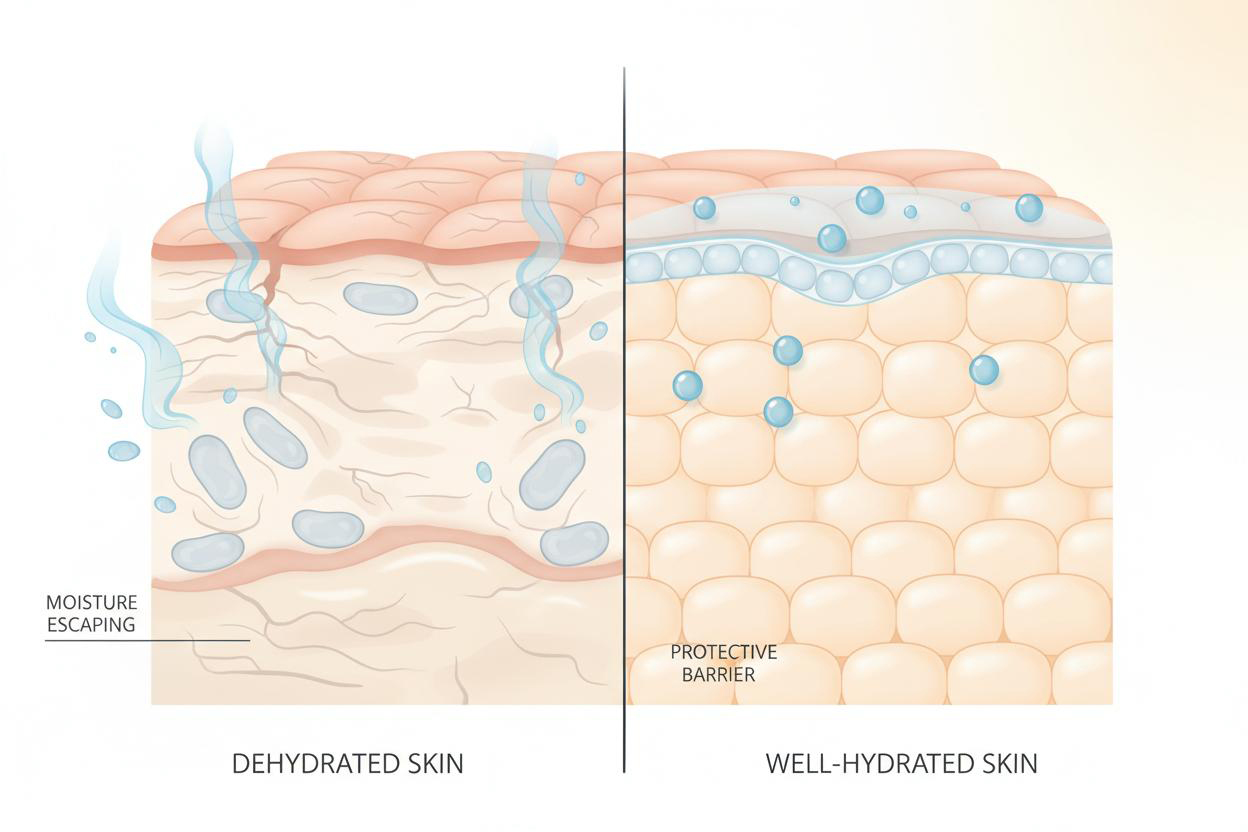
- Reduce transepidermal water loss (TEWL)
- Maintain hydration of the stratum corneum
It functions similarly to natural moisturizing factors (NMFs) found in skin.
4.4 Stability
Saccharide Isomerate has good formulation stability:
pH stability:
- Stable approximately in the range of pH 3–8
Temperature stability:
- Generally stable under normal cosmetic processing conditions
- Can tolerate moderate heating during manufacturing
Oxidation stability:
- More stable than many botanical extracts
- Does not readily oxidize
5. Interaction with Skin Components
Saccharide Isomerate has a special affinity for skin keratin proteins.
Mechanism:
- Sugar molecules penetrate the outer layers of the stratum corneum.
- Hydroxyl groups form hydrogen bonds with keratin.
- The sugars remain associated with the skin surface.
- Water retention is prolonged.
This explains why Saccharide Isomerate can provide hydration lasting longer than simple humectants.
6. Comparison With Common Humectants
| Ingredient | Structure | Main Feature |
| Saccharide Isomerate | Sugar isomer mixture | Long-lasting skin binding |
| Glycerin | Small polyol molecule | Strong water attraction |
| Hyaluronic Acid | Polysaccharide polymer | Water storage and film formation |
| Propanediol | Diol molecule | Humectant and solvent |
| Betaine | Amino acid derivative | Osmoprotective hydration |
Saccharide Isomerate differs because it combines water-binding ability with skin affinity.
7. Role of Chemical Structure in Cosmetic Performance
Multiple hydroxyl groups → Moisturization
- Increase hydrogen bonding
- Improve water retention
Small molecular size → Better surface interaction
- Allows effective interaction with corneocytes
Sugar structure → Skin compatibility
- Similar to natural carbohydrates in the epidermis
Stable carbohydrate framework → Long shelf stability
- Suitable for modern cosmetic formulations
Summary
Saccharide Isomerate is a water-soluble carbohydrate mixture composed of enzymatically modified sugar isomers. It does not have one fixed molecular structure but contains glucose/fructose-derived saccharide molecules rich in hydroxyl groups. Its key physical and chemical characteristics include:
- High polarity and water solubility
- Strong hygroscopicity
- Excellent skin compatibility
- Ability to bind with keratin in the stratum corneum
- Long-lasting moisturizing activity
- Good stability in cosmetic formulations
These structural features make Saccharide Isomerate a valuable advanced humectant and skin barrier-supporting ingredient in moisturizers, serums, and anti-aging skincare products.