
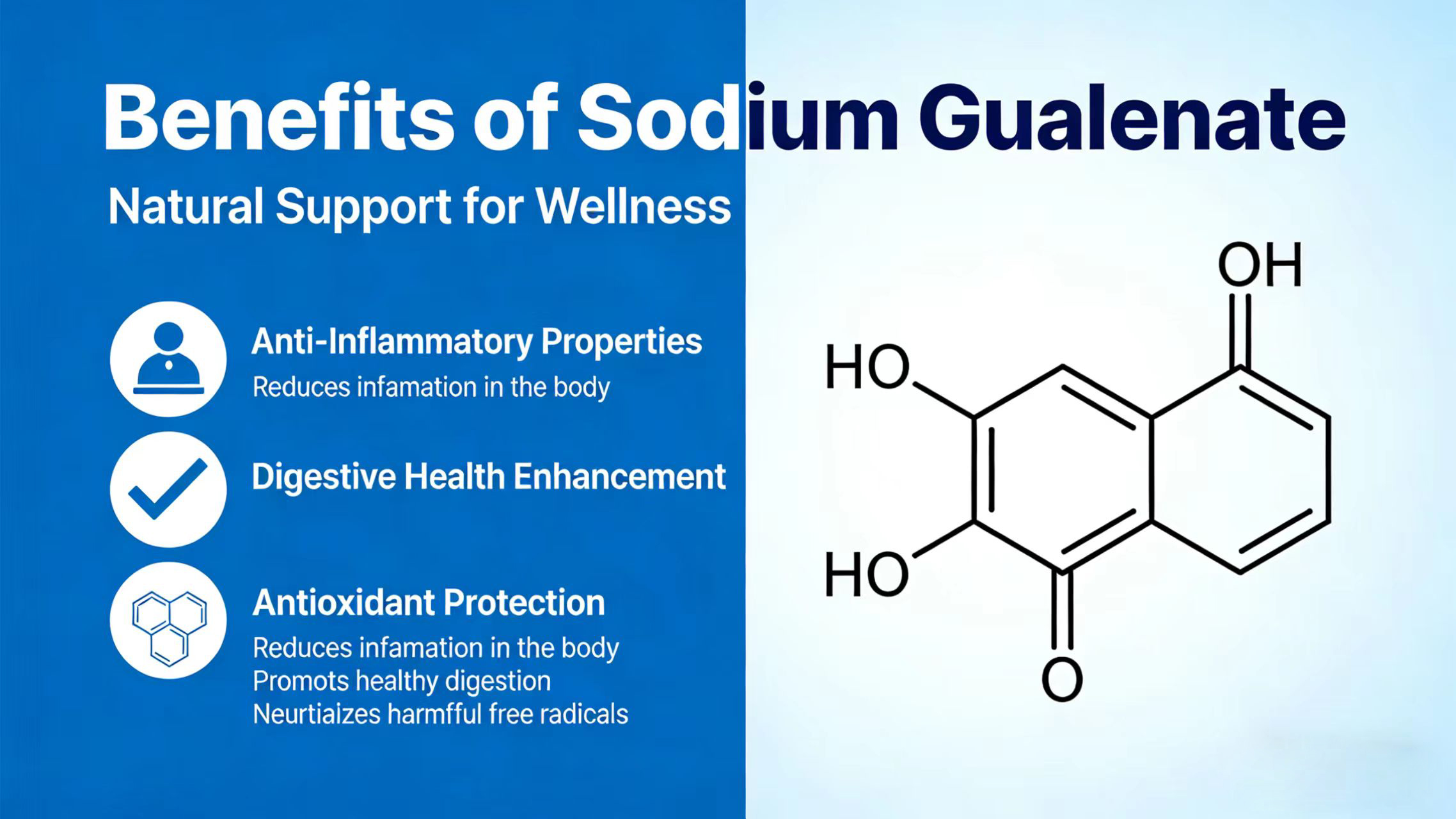
Sodium Gualenate is a compound primarily used for its anti-inflammatory, antimicrobial, and skin-healing properties. Its clinical indications generally revolve around dermatological and mucosal conditions, often related to infections, inflammation, or tissue repair. Here’s a detailed overview:
1. Wound Healing and Tissue Repair
- Promotes epithelial regeneration.
- Used in minor cuts, abrasions, burns, and post-surgical wounds to accelerate healing.
- Can reduce scarring by enhancing tissue repair mechanisms.
2. Dermatological Conditions
- Acne and folliculitis: Helps reduce bacterial load and inflammation.
- Eczema and dermatitis: Can soothe inflamed skin and support barrier repair.
- Fungal infections (superficial): Exhibits mild antifungal activity in topical formulations.
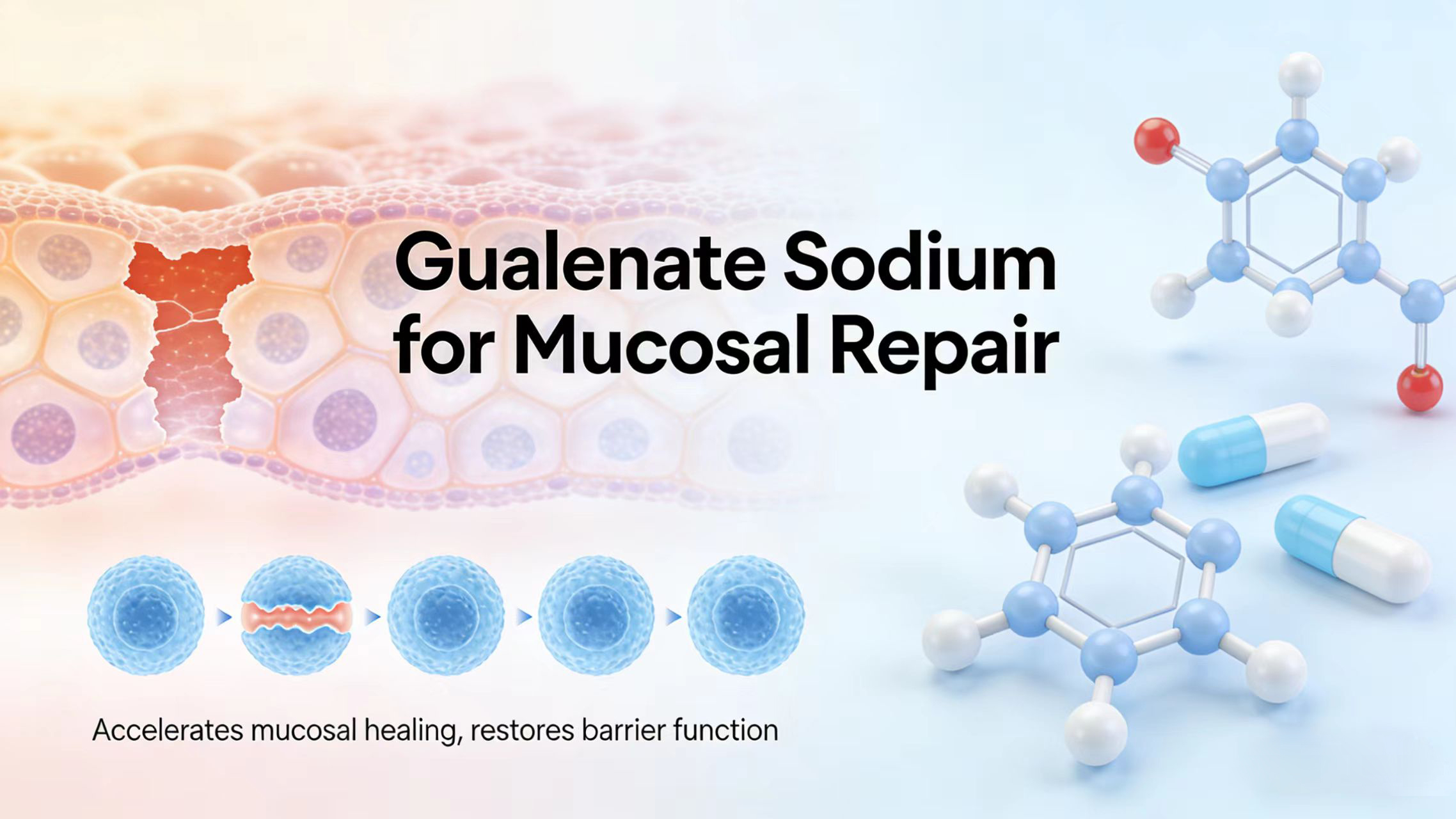
3. Oral and Mucosal Applications
- Gingivitis and stomatitis: Reduces inflammation and bacterial colonization in oral mucosa.
- Often formulated as mouthwashes or gels for oral care.
4. Anti-Infective Applications
- Works against Gram-positive bacteria like Staphylococcus aureus and some Gram-negative strains.
- May be included in topical creams for minor skin infections or prophylaxis in minor wounds.
5. Adjunct in Chronic Skin Conditions
- Sometimes used alongside other agents for psoriasis or chronic ulcer management, primarily to enhance healing and reduce infection risk.
Special Notes
- Mainly topical use; systemic administration is uncommon.
- Typically well-tolerated, but hypersensitivity reactions are possible.
- Not a first-line antibiotic but rather a supportive agent in wound care and skin therapy.
If you want, I can make a table summarizing all clinical indications with strength of evidence and common formulations, which is handy for clinical reference. Do you want me to do that?