
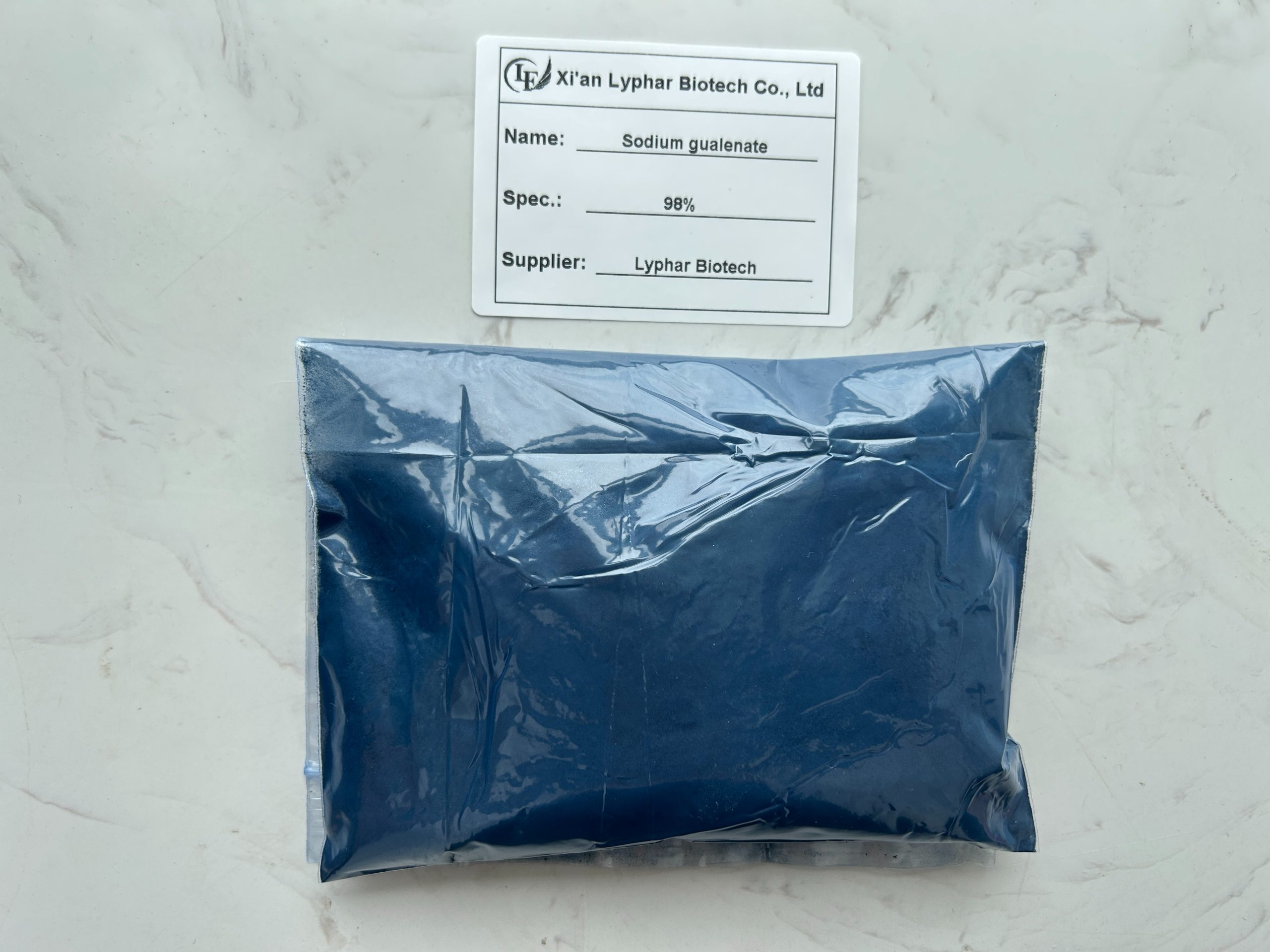
Sodium Gualenate, also called sodium guaiazulene sulfonate in some contexts, is a compound derived from guaiazulene, a natural azulene derivative obtained from chamomile or other plants. Here’s a detailed comparison between Sodium Gualenate and other common sulfonates, focusing on chemical, functional, and practical differences:
1. Chemical Structure
Sodium Gualenate:
- A sulfonate derivative with a specific aromatic or aliphatic backbone (depending on formulation).
- Its structure allows strong water solubility and stability in a range of pH levels.
Other Sulfonates (e.g., Sodium Lauryl Sulfonate, Sodium Dodecylbenzenesulfonate):
- Typically have linear or branched alkyl chains with a sulfonate (-SO₃⁻) group.
- Structure may affect foam production, solubility, and detergency.
Key Difference: Sodium Gualenate often has a more specialized backbone, giving it unique reactivity or mildness compared to standard linear sulfonates.
2. Surface Activity
Sodium Gualenate:
- Moderate to high surfactant activity.
- Often chosen for gentle detergency, e.g., in personal care formulations.
Other Sulfonates:
- Sodium Lauryl Sulfonate: Very strong surfactant, high foaming, but can be harsh on skin.
- Sodium Dodecylbenzenesulfonate: Strong cleaning, widely used in industrial detergents.
Key Difference: Sodium Gualenate tends to be milder, making it suitable for sensitive applications.
3. Foaming and Cleansing
Sodium Gualenate:
- Produces stable, creamy foam.
- Cleans without stripping oils excessively.
Other Sulfonates:
- May produce large foam quickly but can be more aggressive, leading to dryness or irritation.
Key Difference: Foam quality is smoother and less harsh with Sodium Gualenate.
4. Environmental and Safety Profile
Sodium Gualenate:
- Biodegradable and generally considered mild on skin and eyes.
- Lower irritation potential.
Other Sulfonates:
- Some linear alkylbenzene sulfonates (LAS) are biodegradable but can irritate skin at high concentrations.
- Industrial variants may have environmental persistence concerns.
Key Difference: Sodium Gualenate is more eco-friendly and gentle for personal care.
5. Applications
| Type | Typical Use |
| Sodium Gualenate | Shampoos, facial cleansers, body washes, mild detergents |
| Sodium Lauryl Sulfonate | Soaps, shampoos, bubble baths (more foaming) |
| Sodium Dodecylbenzenesulfonate | Laundry detergents, heavy-duty cleaners, industrial cleaning |
Key Difference: Sodium Gualenate is chosen for sensitive formulations, whereas other sulfonates may be for high-foam or industrial strength cleaning.
6. Cost and Availability
Sodium Gualenate: Often more expensive, niche, specialized applications.
Other sulfonates: Generally cheaper, mass-produced, widely available.
Summary:
Sodium Gualenate stands out among sulfonates for mildness, foam quality, skin compatibility, and eco-friendliness, whereas traditional sulfonates prioritize high detergency, foaming, and industrial cleaning efficiency. Choosing between them depends on whether the focus is safety and mildness or strong cleaning performance.
If you want, I can make a side-by-side chemical and functional comparison chart of Sodium Gualenate vs 3 common sulfonates—it makes these differences instantly clear. Do you want me to do that?