
Sodium Gualenate, also known as the sodium salt of gualenic acid, is primarily used in pharmaceuticals and cosmetics for its antimicrobial, anti-inflammatory, and skin-conditioning properties. Here’s a detailed breakdown of its efficacy and functions:
1. Antimicrobial Activity
- Sodium Gualenate exhibits broad-spectrum antimicrobial effects, including activity against bacteria, fungi, and some viruses.
- It is often included in topical formulations like creams, gels, and wound care products to reduce infection risk.
- Its mechanism involves disrupting microbial cell membranes, which inhibits microbial growth and biofilm formation.
2. Skin Protection and Conditioning
- It acts as a humectant, helping the skin retain moisture.
- Supports skin barrier function, which is beneficial in cosmetic products for maintaining healthy, hydrated skin.
- Often combined with other active ingredients to enhance overall skin soothing effects.
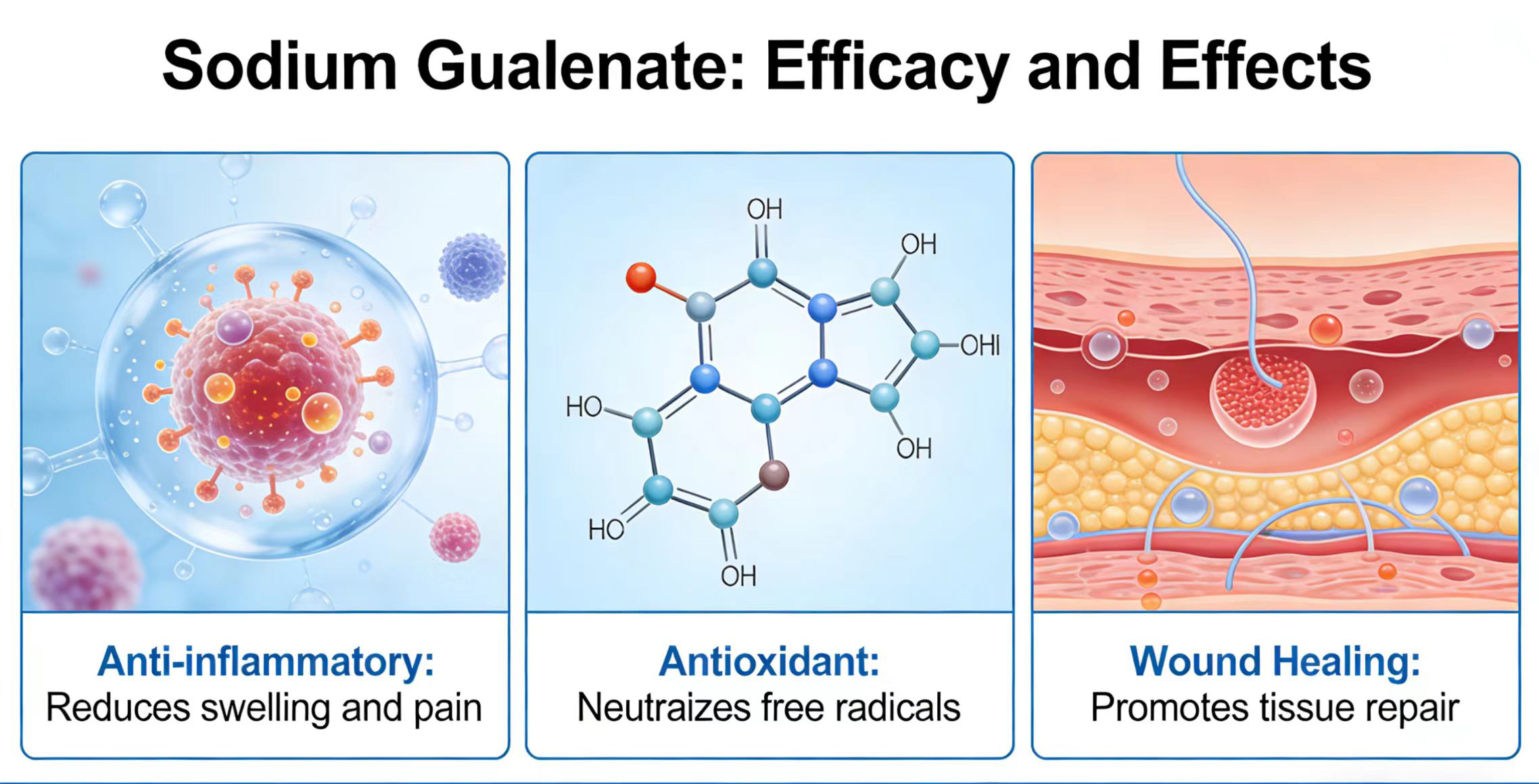
3. Anti-inflammatory Effects
- It can help reduce skin inflammation and irritation, making it useful in dermatological products for sensitive or damaged skin.
- Sodium Gualenate modulates inflammatory pathways, potentially by inhibiting pro-inflammatory mediators.
4. Medical and Pharmaceutical Applications
- Used in wound healing formulations due to its ability to reduce microbial load and inflammation.
- Sometimes included in oral care products for its antibacterial properties.
- Its low toxicity profile makes it suitable for repeated topical applications.
Summary
Sodium Gualenate functions primarily as an antimicrobial and anti-inflammatory agent, while also offering moisturizing and skin-conditioning benefits. It is effective in both preventing infection and supporting skin repair, making it valuable in dermatology, wound care, and cosmetic products.
If you want, I can also compare Sodium Gualenate with similar agents like sodium hyaluronate or silver nanoparticles, showing where it’s more effective and where it’s limited. Do you want me to do that?