
Nano Silver refers to silver particles with sizes typically between 1 nm and 100 nm. At this scale, silver exhibits unique physical, chemical, optical, and biological properties that differ significantly from bulk silver, largely due to the high surface‑to‑volume ratio of nanoparticles.
1. Synthesis Methods
A. Physical and Chemical Methods
- Chemical reduction (e.g., using NaBH₄, citrate)
- Physical methods (laser ablation, evaporation–condensation)
- Controlled precipitation in solvents
These methods allow precise control over size and shape.
B. Biological & Green Synthesis
“Green” biosynthesis uses plant extracts, microbes, or biomolecules to reduce silver ions into nanoparticles in an eco‑friendly way without harsh chemicals.
Examples include extracts from Curcuma longa or essential oils from Mentha species.
Benefits of green synthesis:
- Lower toxicity
- Biocompatibility
- Cost‑effectiveness
- Simpler processing than conventional methods.
2. Physicochemical Properties
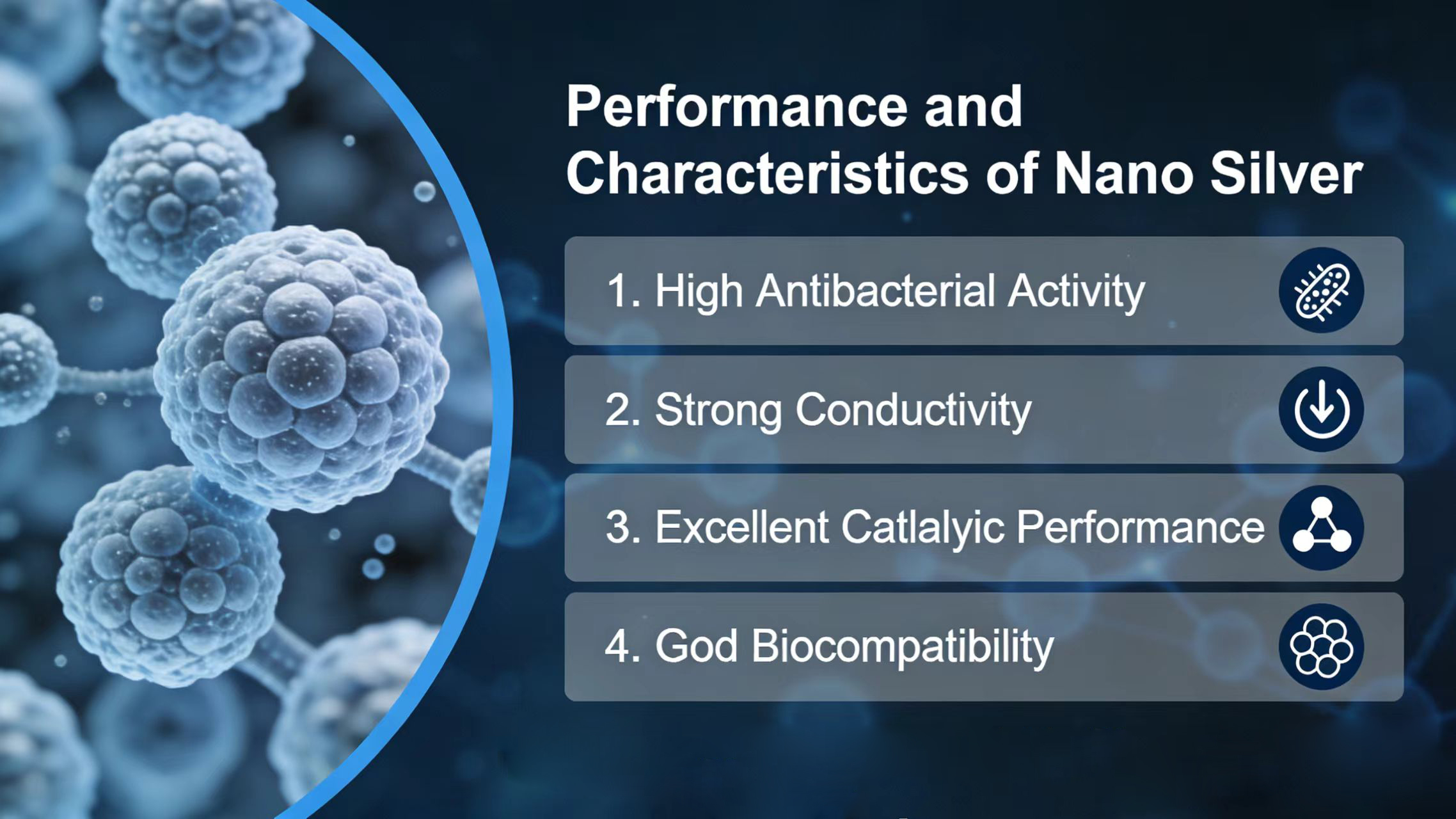
Nano Silver is behavior depends on:
- Size (smaller is often more reactive)
- Shape
- Surface chemistry / coating
- Crystallinity and dispersion in medium
At the nanoscale, silver exhibits:
- Distinct optical properties (e.g., surface plasmon resonance)
- Highly increased surface reactivity
- Catalytic and electrical enhancements compared to bulk silver.
3. Mechanisms of Action
A. Antibacterial / Antimicrobial
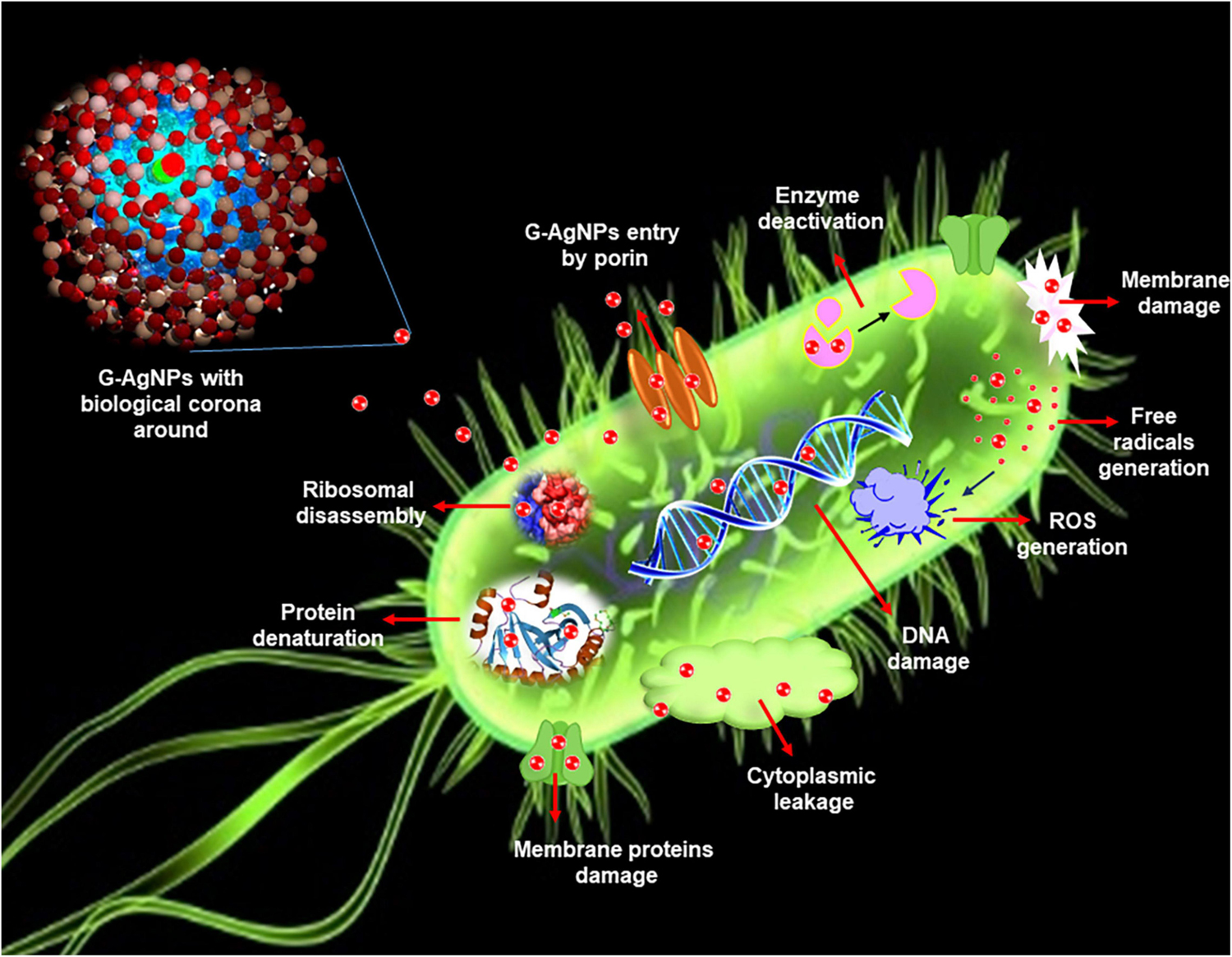
Nano Silver kills microbes through multiple pathways:
- Release of silver ions (Ag⁺) that interfere with cell components
- Generation of reactive oxygen species (ROS) that damage membranes
- Binding to DNA and proteins, disrupting replication and metabolism.
These multifaceted effects make Nano Silver potent against Gram‑positive and Gram‑negative bacteria.
B. Other Biointeractions
Nano Silver may also:
- Disrupt enzyme activity
- Affect intracellular signaling
- Act as anticancer agents in some cell lines
Research shows selective cytotoxicity against cancer cells, linked to ROS induction and apoptosis.
4. Key Applications
Biomedical
- Antimicrobial coatings for wound dressings, implants, dental plastics and catheters
- Antiviral and antifungal uses
- Cancer therapy research (as adjuvants or cytotoxic agents against certain tumors)
- Biosensors and diagnostics due to optical properties.
Industrial
- Coatings for textiles and surfaces (to reduce bacterial growth)
- Electronics (conductive inks, sensors)
- Environmental remediation processes (antimicrobial filters)
Nano Silver is versatility has driven its adoption in consumer products.
5. Toxicity and Safety
A. Mechanisms of Toxicity
Nano Silver toxicity is associated with:
- Excessive ROS generation
- Mitochondrial dysfunction
- DNA damage
- Inflammatory responses
These effects can lead to cell death (apoptosis/necrosis) and organ damage in high concentrations.
B. Dose & Size Dependence
- Smaller Nano Silver often show higher cellular uptake and toxicity than larger particles.
- Lower concentrations might be relatively benign, while higher doses are clearly toxic in vitro.
C. Exposure Routes
- Inhalation – respiratory impacts
- Ingestion – potential gastrointestinal effects
- Dermal – limited but possible local reactions
Toxicity arises both from particle effects and released silver ions.
D. Safety Guidelines
Occupational health bodies have recommended exposure limits for Nano Silver (e.g., 0.9 µg/m³ for airborne respirable nanosilver).
6. Environmental Impact
Nano Silver entering waterways can be toxic to aquatic organisms, reduce microbial diversity, and disrupt ecosystems. Studies show:
- Aquatic invertebrates like Daphnia are sensitive to AgNP exposure.
- Nano Silver can persist through wastewater treatment and bind in sediments.
7. Challenges and Future Research
Key research areas include:
- Improving safety (biocompatible coatings, safer synthesis)
- Understanding long‑term environmental behavior
- Regulation and standards for consumer products
- Clinical trials to validate therapeutic roles and safe dosing
Emerging work also explores novel silver forms like angstrom‑scale particles with potentially reduced toxicity.
Summary
| Area | Key Insights |
| Definition | Nano Silver = silver particles 1–100 nm with unique properties. |
| Synthesis | Physical, chemical, and green biological routes. |
| Mechanism of Action | Antimicrobial via Ag⁺ release and ROS. |
| Applications | Medical, industrial, environmental, electronics. |
| Safety/Toxicity | Dose‑ and size‑dependent toxicity; regulated exposure levels. |
| Environmental | Potential ecological risks, especially aquatic species. |
If you’d like, I can also provide citations in a specific academic format (APA/MLA/Chicago) or focus on regulatory status and risk assessments worldwide.