
Polydeoxyribonucleotide (PDRN) is generally considered well-tolerated, especially in dermatologic and regenerative medicine use, but it is not free of adverse effects. Most reactions are mild, localized, and procedure-related rather than systemic toxicity.
Below is a clear, evidence-based breakdown.
1. Most common adverse effects (especially injectable use)
These are usually mild and temporary:
Local injection-site reactions
- Redness (erythema)
- Swelling (edema)
- Mild pain or burning sensation
- Bruising (ecchymosis)
- Small nodules or papules (temporary)
Cause:
Mechanical injection trauma + local inflammatory response to foreign nucleotides.
2. Hypersensitivity / allergic reactions (rare)
Although uncommon, immune reactions can occur.
Possible symptoms:
- Itching
- Rash or urticaria (hives)
- Local dermatitis
- Rare systemic allergic response
Possible triggers:
- Fish-derived DNA sources (e.g., salmon sperm extraction)
- Impurities or protein residues in low-quality preparations
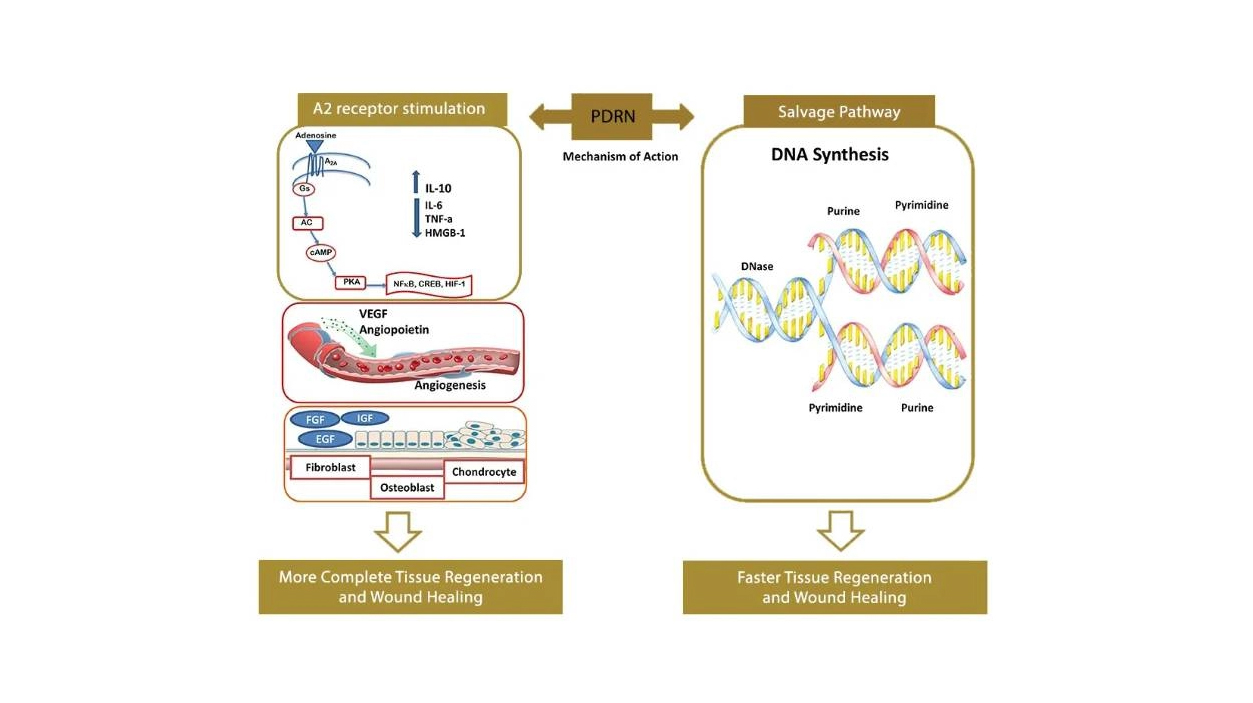
3. Inflammatory paradox reaction (transient)
In some cases, early treatment may cause:
- Temporary increased redness or swelling
- Mild inflammatory flare at treatment site
This is usually:
a short-lived immune activation phase before regenerative signaling dominates.
4. Infection-related risks (procedure-dependent, not drug-dependent)
Not caused by Polydeoxyribonucleotide (PDRN) itself, but by administration method:
- Bacterial infection at injection site
- Sterile abscess (rare)
- Folliculitis if poor skin preparation is used
Risk increases with:
- non-sterile technique
- repeated injections
- compromised skin barrier
5. Rare systemic effects
Very uncommon in clinical use:
- Headache
- Mild fatigue
- Dizziness (usually transient and non-specific)
No strong evidence of:
- organ toxicity
- endocrine disruption
- Carcinogenicity
6. Contraindications / caution groups
Polydeoxyribonucleotide (PDRN) is usually avoided or used cautiously in:
- Active infection at treatment site
- Severe hypersensitivity to fish-derived products
- Autoimmune conditions (relative caution, not absolute contraindication)
- Pregnancy/lactation (limited safety data → precautionary avoidance in many protocols)
7. Topical Polydeoxyribonucleotide (PDRN) adverse effects (if used in creams/serums)
Generally minimal, but may include:
- mild irritation
- transient redness
- sensitivity when combined with strong actives (retinoids, acids)
8. Key safety insight
Polydeoxyribonucleotide (PDRN) is safety profile is defined by this principle:
- The molecule itself has low intrinsic toxicity; adverse effects are mostly related to delivery method and individual immune sensitivity.
9. One-line summary
Polydeoxyribonucleotide (PDRN) is adverse effects are usually mild local injection reactions, rare hypersensitivity (often fish-derived), and occasional procedure-related complications, with very low systemic toxicity overall.
If you want, I can compare its safety profile directly with PRP, hyaluronic acid fillers, and biostimulatory peptides (like GHK-Cu or growth factors) so you can see how it ranks in regenerative treatments.