
Polydeoxyribonucleotide (PDRN) reduces inflammation mainly by modulating purinergic signaling and shifting immune activity from a pro-inflammatory state toward a tissue-repair phenotype.
Below is the mechanism in a clear, stepwise way.
1. Core Anti-inflammatory Pathway: Adenosine A2A Activation
Step 1: Polydeoxyribonucleotide (PDRN) breakdown
After administration, Polydeoxyribonucleotide (PDRN) is enzymatically degraded into deoxyribonucleotides and nucleosides.
Step 2: Adenosine supply increases
These breakdown products increase extracellular adenosine availability.
Step 3: A2A receptor activation
Adenosine binds to the A2A adenosine receptor on:
- Macrophages
- Neutrophils
- Endothelial cells
- Fibroblasts
Step 4: Anti-inflammatory switch
A2A activation triggers a cAMP-dependent anti-inflammatory cascade.
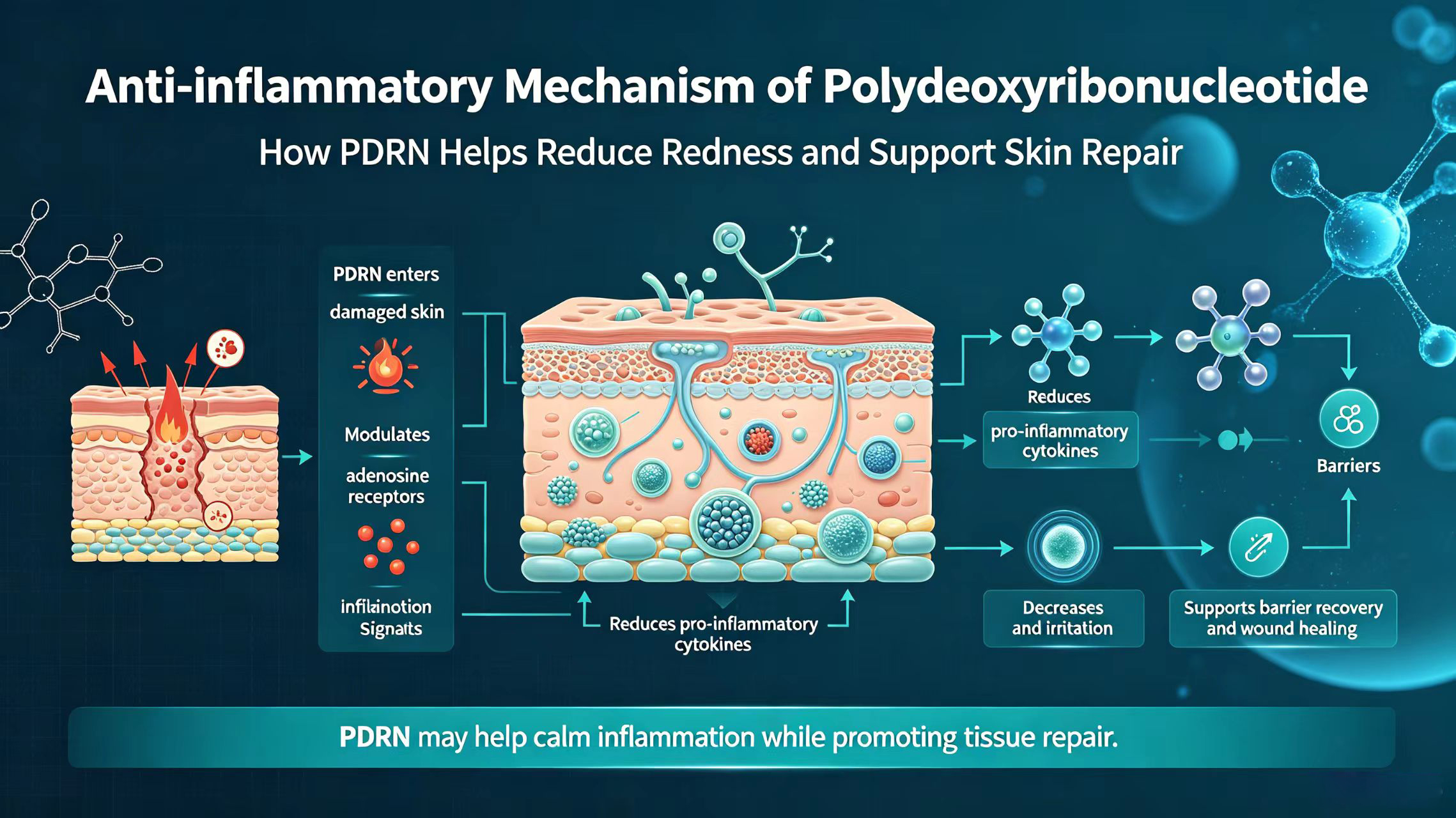
2. What changes inside immune cells
When A2A receptors are activated:
↓ Pro-inflammatory signals decrease
- Tumor necrosis factor-α (TNF-α)
- Interleukin-1β (IL-1β)
- Interleukin-6 (IL-6)
- Reactive oxygen species (ROS)
↑ Anti-inflammatory signals increase
- IL-10 (key anti-inflammatory cytokine)
- TGF-β (tissue repair cytokine)
3. Macrophage Polarization Shift (Key Mechanism)
Polydeoxyribonucleotide (PDRN) promotes a shift from:
| State | Role |
| M1 macrophages | Pro-inflammatory, tissue-damaging |
| M2 macrophages | Anti-inflammatory, repair-oriented |
Result:
- Reduced inflammation
- Enhanced tissue regeneration
- Faster wound healing
4. Endothelial and Vascular Effects
Polydeoxyribonucleotide (PDRN) also acts on blood vessel cells:
A2A activation in endothelium leads to:
- ↑ VEGF (vascular endothelial growth factor)
- ↑ angiogenesis (new blood vessel formation)
- Improved oxygen delivery to damaged tissue
This indirectly reduces inflammation by improving tissue recovery speed.
5. NF-κB Pathway Suppression (Indirect)
A key inflammatory transcription factor:
- NF-κB normally drives cytokine production
Polydeoxyribonucleotide (PDRN) (via A2A → cAMP signaling):
- inhibits NF-κB activation
- reduces transcription of inflammatory genes
6. Tissue Repair–Inflammation Coupling
Unlike classic anti-inflammatories that only suppress inflammation, Polydeoxyribonucleotide (PDRN):
- reduces harmful inflammation
- while simultaneously activating repair pathways
This dual action is important:
- Inflammation is not just blocked—it is biologically redirected toward healing.
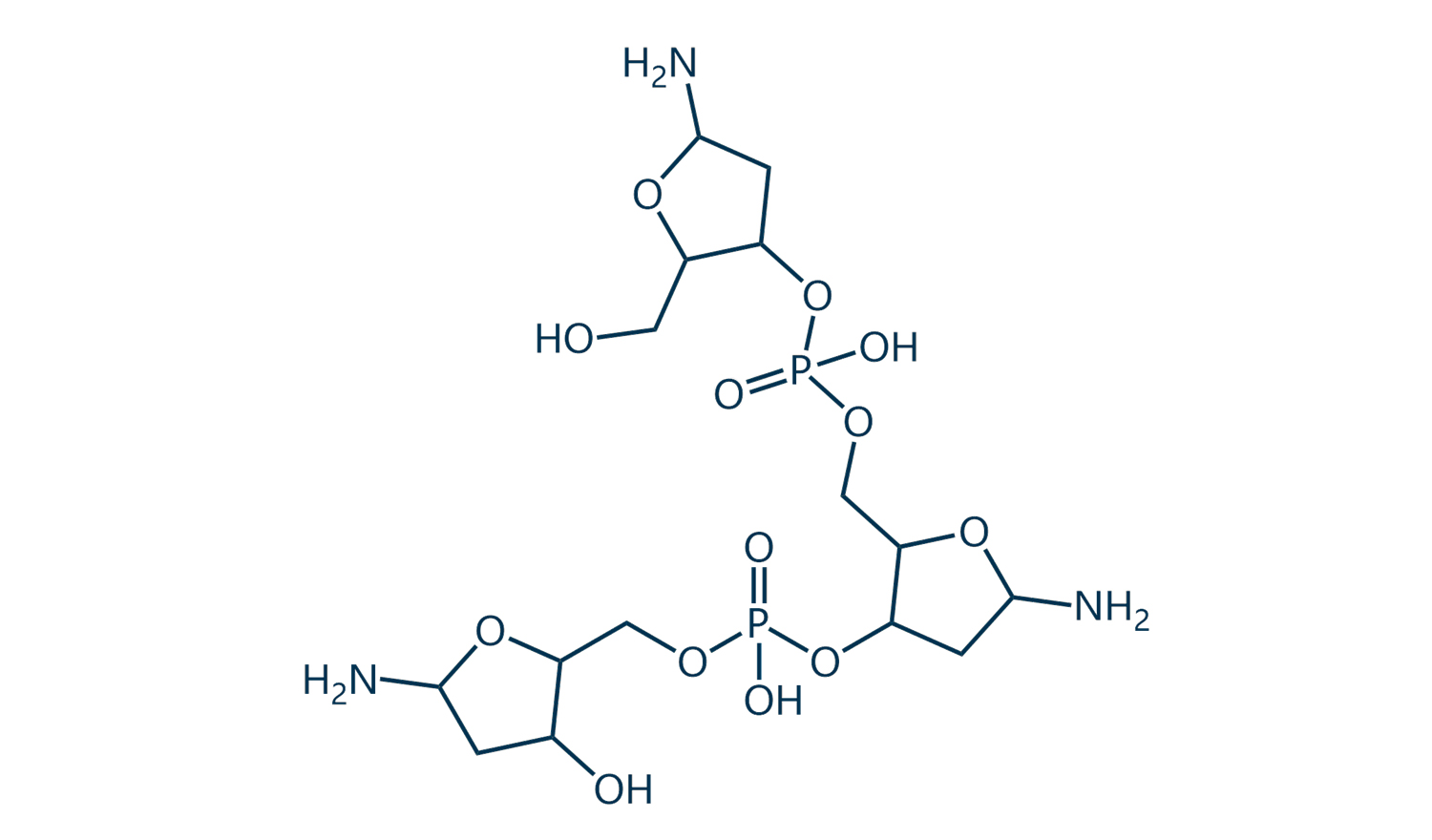
7. Summary of the Mechanism
Polydeoxyribonucleotide (PDRN) anti-inflammatory action can be summarized as:
- Polydeoxyribonucleotide (PDRN) → broken into nucleosides
- ↑ Adenosine signaling
- Activates A2A receptors
- ↑ cAMP pathway
- ↓ TNF-α, IL-6, IL-1β
- ↓ NF-κB activity
- ↑ IL-10, VEGF
- Macrophages shift M1 → M2
- Net effect: reduced inflammation + enhanced tissue repair
8. One-line explanation
Polydeoxyribonucleotide (PDRN) works as an anti-inflammatory by boosting adenosine A2A receptor signaling, which suppresses pro-inflammatory cytokines and shifts immune cells toward a regenerative (M2) healing state.
If you want, I can compare this directly with NSAIDs, corticosteroids, and peptides like BPC-157 in terms of inflammation pathways, which makes the differences very clear mechanistically.