
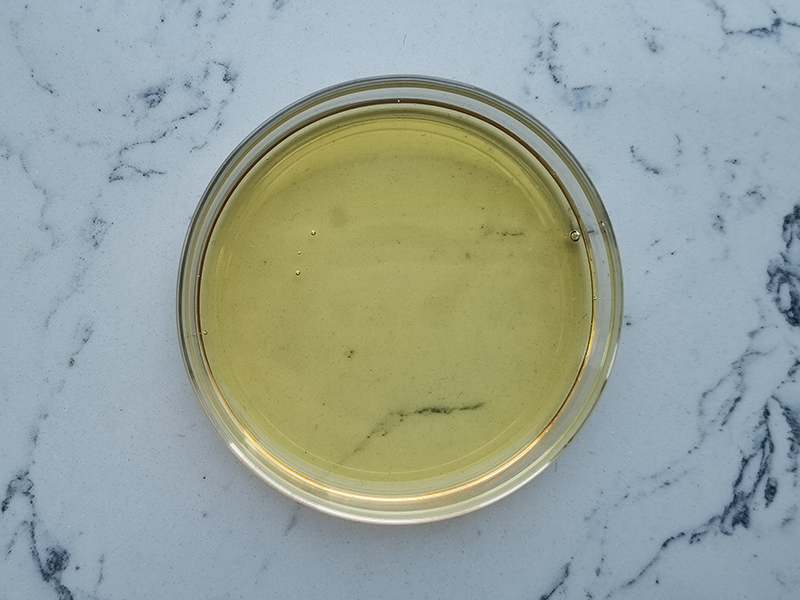
Saccharide Isomerate is a cosmetic moisturizing ingredient made from a mixture of sugar-derived carbohydrates that have been enzymatically rearranged (isomerized). It is best known as a long-lasting humectant and skin-conditioning agent.
1. Main carbohydrate components
The precise composition depends on the manufacturer and production process, but Saccharide Isomerate generally contains isomerized forms of simple sugars, particularly:
- Glucose-derived components
- Fructose-derived components
- Mannose-derived components
- Glucosamine-related or other sugar-derived fractions, depending on the raw material and specification
- Other low-molecular-weight saccharides and oligosaccharides
These sugars are chemically rearranged so that they have a strong affinity for the skin’s surface.
2. Typical raw-material basis
Saccharide Isomerate is commonly produced from plant-derived sugars, often using carbohydrate mixtures obtained from sources such as:
- Corn
- Wheat
- Other starch-rich plant materials
The starting carbohydrates are converted into a mixture of isomerized sugars through enzymatic processing.
3. Supporting ingredients in commercial formulations
Commercial Saccharide Isomerate is often supplied as an aqueous solution, rather than as a pure dry chemical. Depending on the supplier, the product may therefore contain:
| Component | Purpose |
| Saccharide Isomerate | Primary moisturizing/conditioning complex |
| Water | Solvent/carrier |
| Preservative | Protects the aqueous product against microbial growth |
| pH-adjusting agent | Maintains product stability |
| Other formulation aids | May improve stability or handling |
Important: These supporting ingredients are not necessarily part of the Saccharide Isomerate itself; they depend on the commercial grade.
4. What makes it different from ordinary sugars?
The important feature is isomerization. Enzymatic rearrangement changes the structure of the original sugars, producing carbohydrate molecules with particularly strong interaction with components of the stratum corneum. This contributes to its ability to remain associated with the skin and provide prolonged moisturization.
Simplified composition
Plant starch/sugars → hydrolysis → glucose/fructose-rich carbohydrate mixture → enzymatic isomerization → Saccharide Isomerate complex
In cosmetics, its principal role is therefore not as a nutrient, but as a skin-identical/skin-affinitive humectant and moisturizing ingredient.