
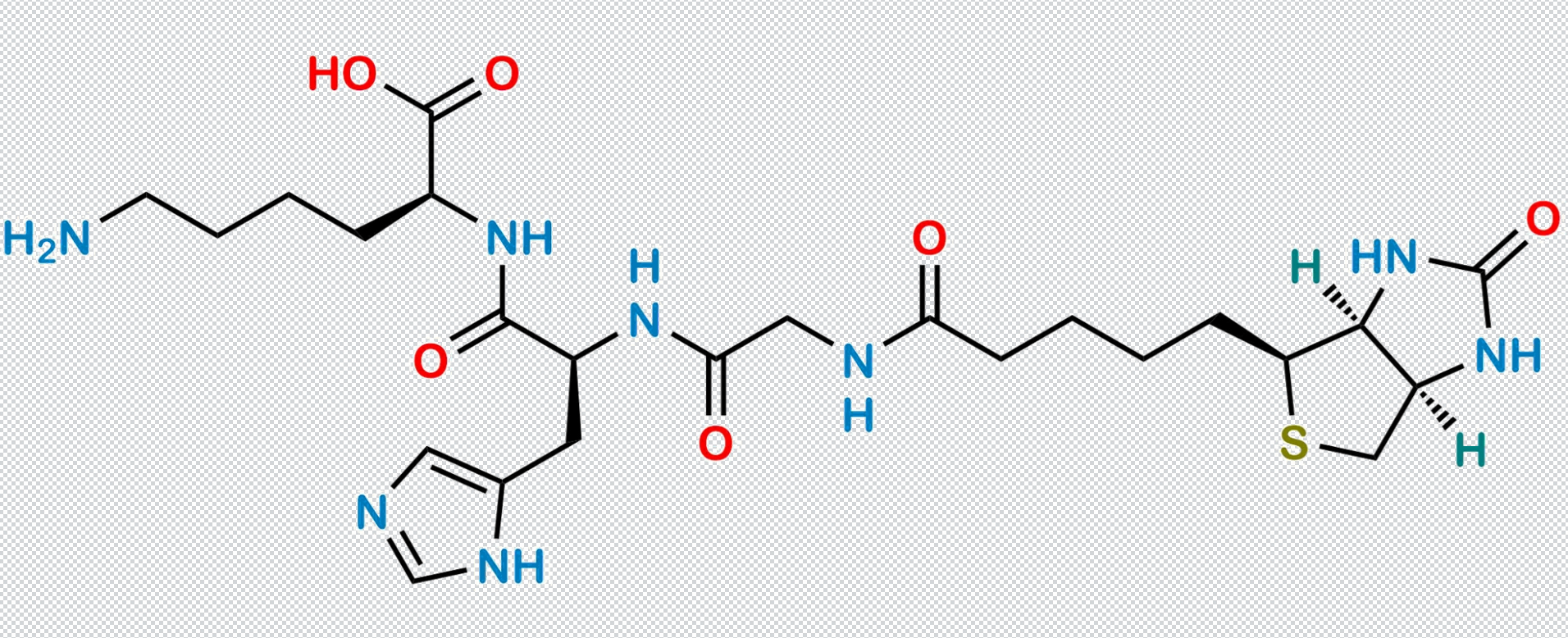
Biotinoyl Tripeptide-1 (also called Biotinyl-GHK) is a synthetic peptide—a short chain of three amino acids—conjugated with biotin (vitamin B7). Here’s a comprehensive, science-oriented study guide to Biotinoyl Tripeptide-1 (also known in the literature as Biotinyl-GHK) covering its chemistry, mechanisms of action, biological effects, current research evidence, and safety profile.
What Is Biotinoyl Tripeptide-1?
Biotinoyl Tripeptide-1 is a synthetic bioactive peptide formed by conjugating biotin (vitamin B7) with the tripeptide sequence Gly‑His‑Lys (GHK). Its chemical formula is approximately C₂₄H₃₈N₈O₆S and molecular weight ~566.7 g/mol.
- Biotin component enhances affinity to keratin‑rich structures and improves substantivity in tissue;
- Tripeptide (GHK) component is known from cosmetic science for signaling roles in tissue repair and regeneration.
The peptide is usually water‑soluble and stable in formulation pH 4–7.
Proposed Mechanisms of Action
➤ Cellular Proliferation & Hair Follicle Activation
Studies (in vitro) show that Biotinoyl Tripeptide-1 can stimulate proliferation of dermal papilla cells (HHDPCs) – the signaling centers in hair follicles that regulate growth cycles. In controlled exposure, cell growth increased significantly in cultures compared with untreated controls.
➤ Extracellular Matrix (ECM) Enhancement
The peptide promotes synthesis of structural proteins critical for follicle anchoring and stability:
- Laminin‑5 and Collagen IV levels increase in treated follicles, strengthening the dermal‑epidermal junction.
- This anchoring reduces premature shedding and supports hair follicle integrity.
➤ Anagen Phase Extension
Experimental data suggest prolongation of the anagen (growth) phase of the hair cycle, potentially via modulation of key signaling pathways such as Wnt/β‑catenin — a central regulator of hair follicle development.
➤ Oxidative Stress Reduction
Some cell studies note reduced reactive oxygen species (ROS) under peptide treatment, which may decrease follicular oxidative stress – a contributing factor to hair miniaturization.
➤ Potential 5α‑Reductase Modulation
Limited evidence suggests reductions in the enzyme 5α‑reductase, which converts testosterone to DHT — a hormone implicated in hair follicle miniaturization. However, this effect remains less established and may depend on formulation context.
Biological and Clinical Effects
➤ Hair Growth and Density
- Clinical applications of topical formulations containing Biotinoyl Tripeptide-1 have shown statistically significant improvements in hair density and thickness over several weeks or months of use.
- Some reports indicate up to ~34 % improvements in hair density in 12‑week use trials.
➤ Reduction in Hair Shedding
- Participants in clinical protocols often experience reduced shedding as evaluated by hair wash counts and self‑reports.
➤ Strength and Breakage
- The peptide’s influence on structural proteins and keratin production correlates with enhanced hair shaft strength and reduced breakage rates.
➤ Brows & Lashes
- Beyond scalp applications, Biotinoyl Tripeptide-1 is widely incorporated in brow and eyelash serums due to its keratin‑supporting properties and non‑hormonal mechanism.
Mechanistic Pathways and Molecular Targets
| Mechanism | Biological Effect |
| Dermal papilla cell stimulation | Encourages growth phase initiation and cell proliferation |
| ECM enhancement (Collagen IV, Laminin‑5) | Improves follicle anchoring and resilience |
| Wnt/β‑catenin modulation | Promotes hair follicle regeneration pathways |
| ROS suppression | Reduces oxidative damage in follicular microenvironment |
| 5α‑Reductase influence | Potential DHT pathway modulation (less substantiated) |
(Summarized from multiple biochemical and cell studies)
Research Limitations & Knowledge Gaps
Despite promising data, several important limitations remain:
- Many primary studies are in vitro, focusing on cell cultures rather than full clinical conditions.
- Published peer‑reviewed clinical trials are relatively few, often limited in scale or proprietary to cosmetic brands.
- Mechanisms like 5α‑reductase inhibition are suggested in commercial literature but are not universally supported by robust public data.
Thus, while effects on follicle biology are plausible and supported by early research, large independent clinical trials are still limited.
Safety Profile and Regulatory Views
➤ Topical Safety
- There are no well‑documented adverse reactions specific to Biotinoyl Tripeptide-1 in the published safety literature. It’s generally considered well‑tolerated and low‑irritation at recommended use levels.
- The Environmental Working Group (EWG) lists it with a low concern rating for typical cosmetic exposure.
➤ Biotin Component
- Biotin itself has a long history in nutrition and cosmetic use, with no known systemic toxicity in topical applications and low sensitization potential.
➤ Formulation Considerations
- As with most peptides, its effectiveness can depend on formulation, stability, and delivery system (e.g., penetration enhancers in serums).
- Concentration matters: excessive levels may not increase effect proportionally and can affect formulation stability.
Summary: What the Evidence Suggests
Biotinoyl Tripeptide-1 is an advanced bioactive peptide with credible mechanistic support for:
- Promoting hair follicle cell proliferation and growth phase activity,
- Enhancing structural integrity of hair anchoring tissues,
- Improving hair density and strength in consumer formulations,
- Supporting brow and eyelash growth without hormonal analog effects.
However, the body of evidence is currently mixed in strength, with strong in vitro and formulation data but fewer large, peer‑reviewed clinical studies. Its use remains promising in cosmetic science, especially in combination with other peptides and actives.
Key References (Summary)
- In vitro proliferation and oxidative stress reduction studies — dermal papilla cell models.
- Clinical hair density and shedding data — cosmetic product trials.
- Mechanistic insights (ECM proteins, Wnt signaling) — biochemical analyses.
- Safety assessment (EWG & cosmetic panels) — regulatory and toxicity context.
If you’d like, I can also provide citations to specific scientific papers or clinical trial identifiers on Biotinoyl Tripeptide-1 and related peptides—just let me know what depth you want!