
Matrixyl 3000 stimulates skin collagen synthesis through a biological signaling mechanism that encourages dermal fibroblasts (the cells that make collagen) to produce more extracellular matrix proteins, including collagen. It’s a cosmetic peptide complex made of two engineered peptides — palmitoyl tripeptide-1 and palmitoyl tetrapeptide-7 — that mimic natural skin repair signals.
How Matrixyl 3000 Works
1. Peptide Components & Mimicry
Matrixyl 3000 is a blend of two palmitoylated peptides — Palmitoyl Tripeptide-1 and Palmitoyl Tetrapeptide-7. These are short amino-acid chains linked to a fatty (palmitic) acid to improve skin penetration.
- Palmitoyl Tripeptide-1 mimics natural collagen breakdown fragments. The skin interprets these fragments as a signal that collagen is being lost or damaged, which activates repair pathways.
- Palmitoyl Tetrapeptide-7 helps reduce inflammation and protect existing collagen from degradation (while also supporting repair processes).
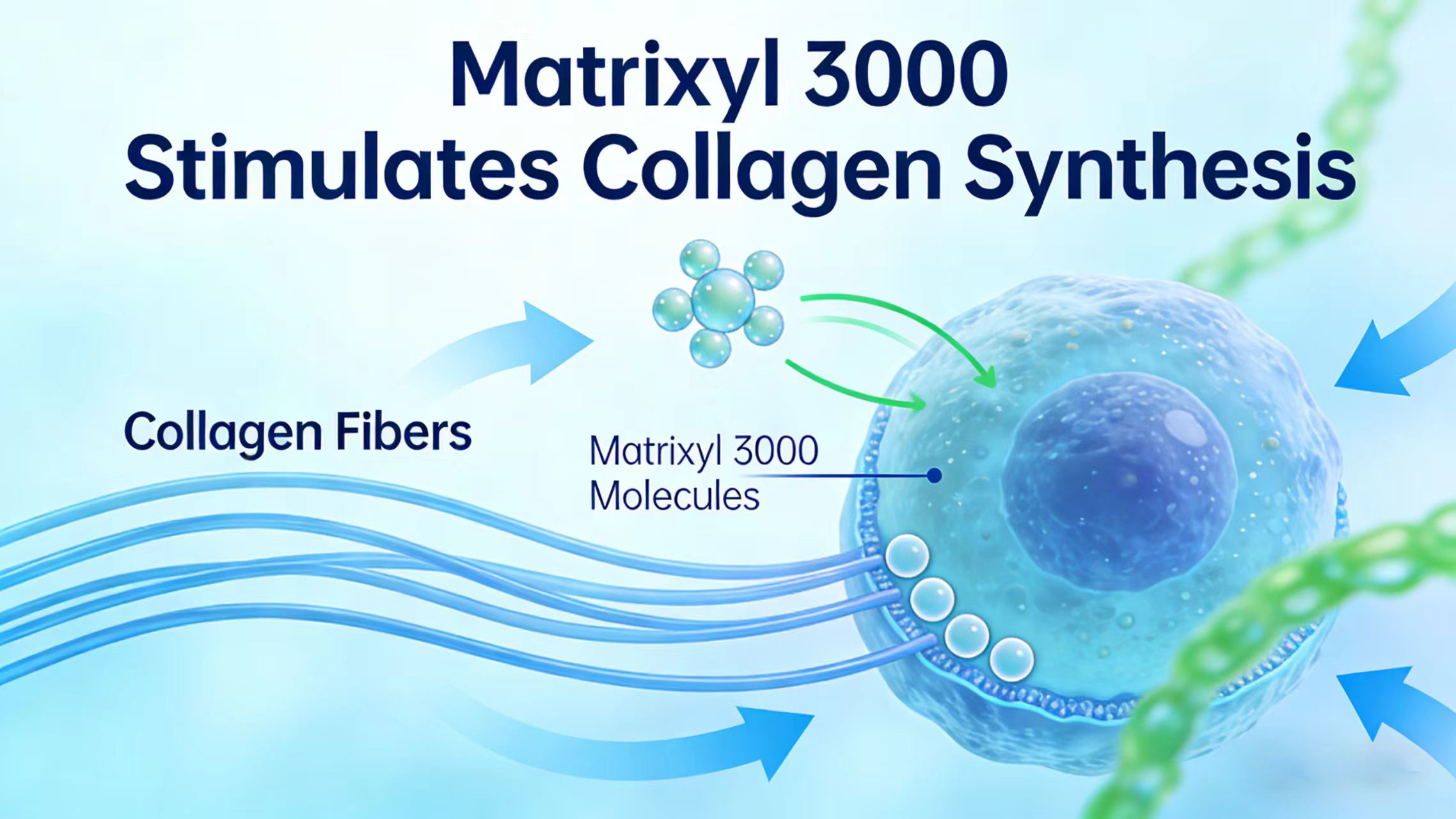
2. Activation of Fibroblasts & Gene Expression
These peptides interact with fibroblast cell surface receptors, triggering intracellular signaling pathways (including TGF-β-like mechanisms) that upregulate the transcription of collagen genes (especially types I and III) and other extracellular matrix proteins (e.g., fibronectin). This signaling encourages fibroblasts to produce more collagen rather than just maintaining baseline levels.
3. Mimicking Repair Signals (Matrikines)
Matrixyl works similarly to matrikines — naturally occurring peptides released during tissue remodeling. By acting like these endogenous messengers, Matrixyl tricks skin cells into activating repair programs, including collagen synthesis, elastin production, and glycosaminoglycan (like hyaluronic acid) synthesis.
4. Synergistic Effects
The combination of stimulating new collagen production and reducing inflammatory collagen breakdown creates a net increase in collagen content in the dermis, which can translate into smoother, firmer skin with reduced wrinkle appearance over time.
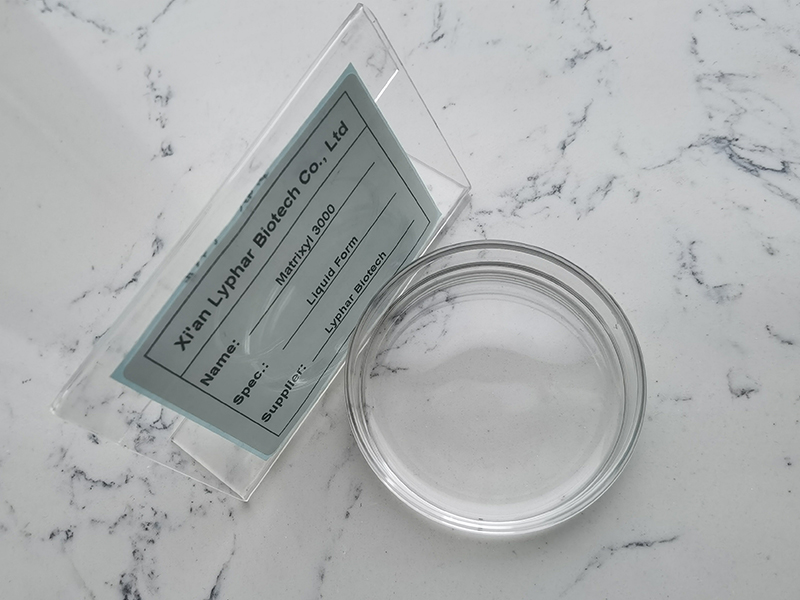
Summary Mechanism
- Signal mimicry: Peptides imitate fragments of broken-down collagen, prompting repair responses.
- Fibroblast activation: Stimulates gene expression for collagen and extracellular matrix proteins.
- Inflammation modulation: Reduces inflammatory signals that can accelerate matrix degradation.
- Net effect: More collagen synthesis + reduced breakdown → firmer and smoother skin over time.
Essentially, Matrixyl 3000 “signals” the skin to behave as if it needs to repair and rebuild, thereby increasing the production of collagen and other structural components that give skin strength and elasticity.