
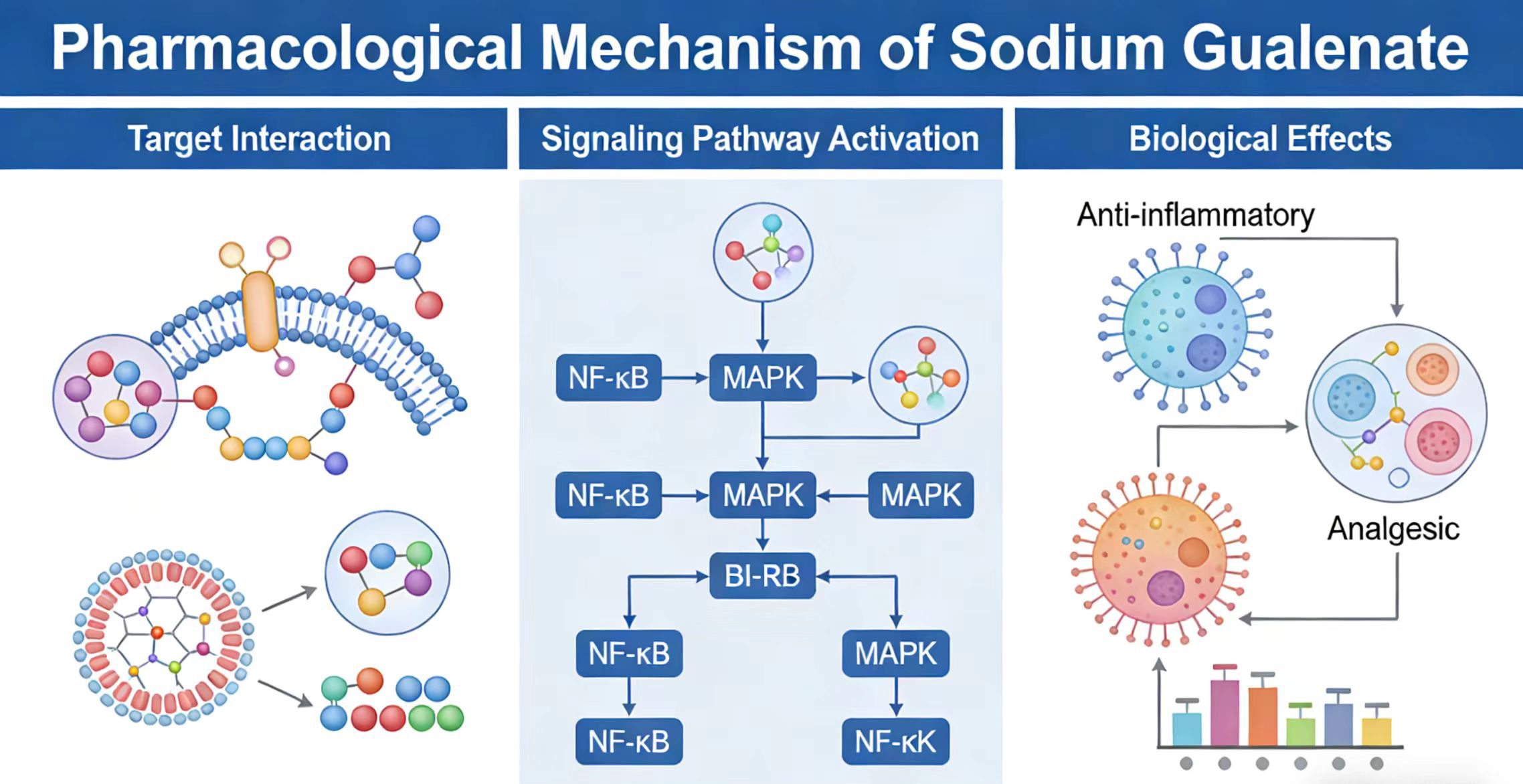
Sodium Gualenate can be explained based on its known biological and chemical activities. While detailed human pharmacodynamics data may be limited, the general mechanism is understood from its effects on tissues and cellular pathways:
1. Anti-inflammatory Action
- Sodium Gualenate is known to inhibit pro-inflammatory mediators, such as prostaglandins and cytokines (e.g., TNF-α, IL-1β).
- Mechanism: It may stabilize lysosomal membranes and reduce the release of inflammatory enzymes, decreasing tissue swelling and irritation.
- Result: Reduction in local inflammation and pain.
2. Antioxidant Effect
- It can scavenge reactive oxygen species (ROS), reducing oxidative stress at the site of injury or irritation.
- Mechanism: By neutralizing free radicals, it protects cells from lipid peroxidation and DNA damage.
- Result: Supports tissue repair and prevents further inflammatory damage.
3. Tissue Repair and Healing
- Sodium Gualenate promotes fibroblast activity and extracellular matrix formation.
- Mechanism: Enhances collagen synthesis and accelerates re-epithelialization.
- Result: Faster wound healing and recovery of damaged tissue.
4. Mucosal Protective Effects
- Particularly in oral or gastric applications, it can form a protective layer over mucosal surfaces, preventing irritation by acids or mechanical damage.
- Mechanism: Acts as a mucoadhesive and maintains hydration of the epithelium.
- Result: Reduced ulcer formation or lesion aggravation.
5. Potential Antimicrobial Action
- Some studies suggest mild antimicrobial activity against gram-positive and gram-negative bacteria.
- Mechanism: May interfere with microbial adhesion or local biofilm formation.
- Result: Helps prevent secondary infections in injured tissues.
Summary
Sodium Gualenate works mainly through anti-inflammatory, antioxidant, tissue-repair-promoting, and mucosal-protective mechanisms, with some potential antimicrobial effects. These combined actions make it useful in topical, oral, or mucosal formulations for wound healing, ulcer protection, or inflammation control.
If you want, I can draw a clear mechanism diagram showing Sodium Gualenate is action at the cellular level—it makes understanding these pathways much easier. Do you want me to do that?