
D-Chiro-Inositol (DCI): its potential benefits, limitations, and risks. Because research is still evolving, many of the “pros and cons” depend heavily on dosage, duration, and personal health context (e.g. insulin resistance, reproductive status, etc.).
Pros of D-Chiro-Inositol
- May improve insulin sensitivity and metabolic markers: Several studies and a recent meta‑analysis found that inositol supplements (including D-Chiro-Inositol) can lower fasting insulin, improve insulin resistance (HOMA‑IR), and improve lipid profiles (lower triglycerides and LDL, raise HDL).
- Could help with metabolic syndrome and related risks: Because of its insulin‑sensitizing and lipid‑lowering effects, D-Chiro-Inositol — or inositol supplementation in general — may contribute to reducing risk factors associated with metabolic syndrome, such as high TG, low “good” cholesterol, high blood pressure, and abdominal fat.
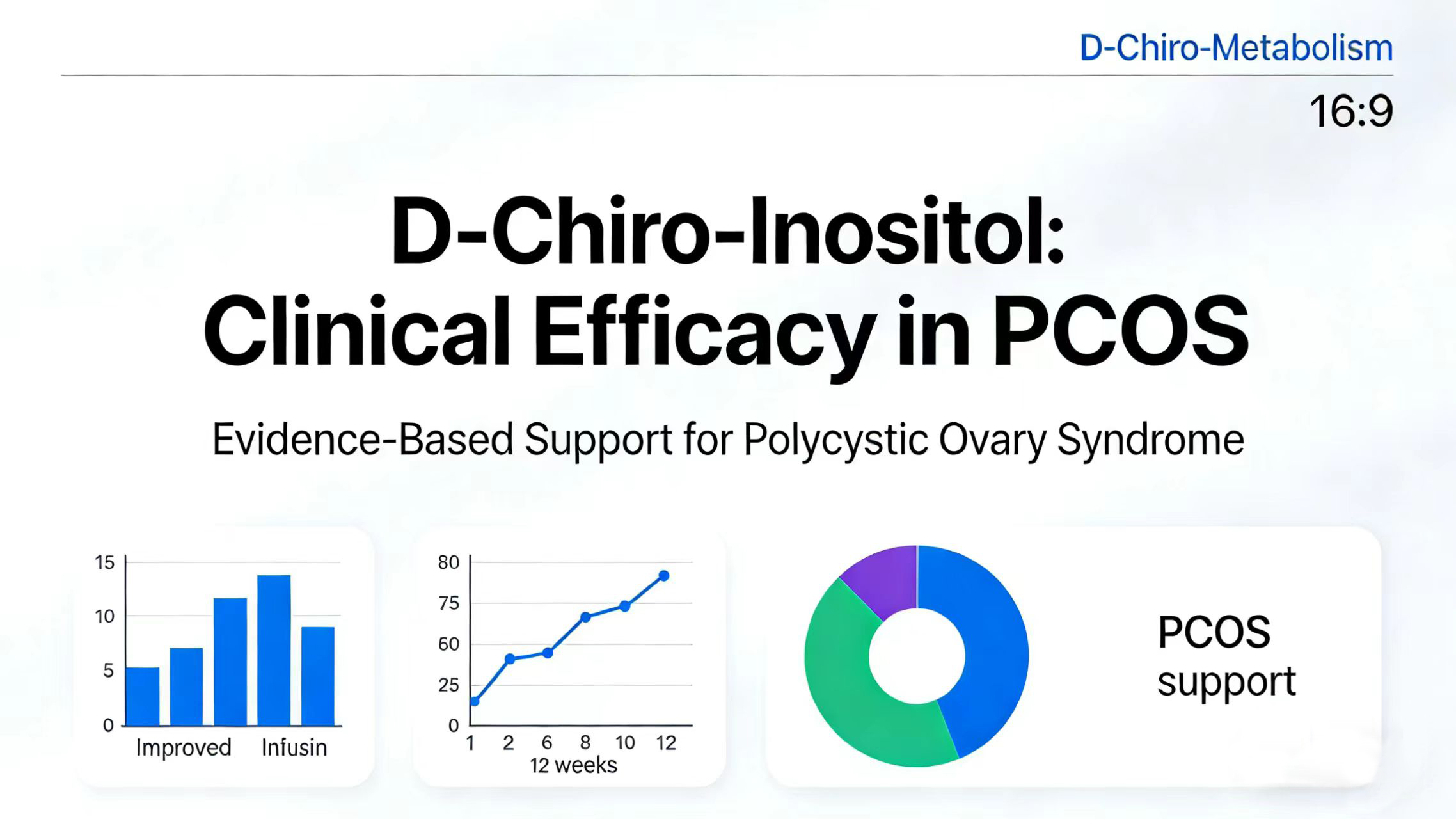
- In certain cases of Polycystic Ovary Syndrome (PCOS), may improve hormonal/metabolic balance: In lean women with PCOS, one double‑blind study showed that D-Chiro-Inositol improved glucose tolerance, reduced insulin release after glucose intake, and decreased serum androgen levels. Another 12 week study reported improvements in fasting insulin, HOMA IR, and total testosterone.
- May support weight / body‑composition changes when insulin resistance is present: In a study on inositol (including D-Chiro-Inositol), supplementation was associated with decreases in BMI, waist circumference, and waist-to-hip ratio.
- When used appropriately (often combined with another isomer), might support ovulation or fertility in certain PCOS cases: Some research suggests that inositols (though often the combination of isomers) help restore ovulation and regularize some hormonal imbalances in PCOS patients.
Cons of D-Chiro-Inositol
- Evidence is mixed and often of low or moderate certainty: The most recent meta‑analysis described the clinical effects of inositol supplementation (on metabolic outcomes) as “statistically significant” but “clinically small,” and rated the certainty of evidence as low to very low for some outcomes.
- Possible negative effects on ovarian function / egg quality under some conditions: The so‑called “ovarian paradox” has been described: while D-Chiro-Inositol may help insulin sensitivity in muscle and liver, excessive D-Chiro-Inositol — especially in the ovary — might disrupt normal ovarian signaling, impair follicle/oocyte quality, and reduce the number of mature oocytes or reduce embryo quality in fertility contexts.
- Long‑term or high-dose supplementation linked to hormonal & menstrual disturbances: A small prospective study found that healthy women taking 1200 mg/day of D-Chiro-Inositol developed increased testosterone and asprosin (a hormone), and some reported menstrual irregularities (oligomenorrhea or amenorrhea) over 6 months.
- Not necessarily effective (or even potentially harmful) for individuals without insulin resistance or metabolic dysfunction: Supplementing D-Chiro-Inositol when insulin sensitivity is already normal may disturb the natural balance of inositol isomers in tissues — especially ovaries — which could negatively affect reproductive hormone balance.
- Possible mild side effects, and uncertain long‑term safety: General inositol supplementation (and by extension D-Chiro-Inositol) may cause gastrointestinal discomfort (gas, nausea, diarrhea), headache, dizziness, fatigue. High doses are more likely to cause side effects. Also, there isn’t enough long-term data for consistent safety or efficacy over many years.
What Contexts Matter — Why “Pros” or “Cons” Depend on the Person
- If you have insulin resistance, metabolic syndrome, or PCOS with metabolic imbalance, D-Chiro-Inositol — in proper dose and possibly combined with its isomer Myo‑Inositol — may help improve insulin sensitivity, lower androgens, help regulate cycles, and improve metabolic markers.
- If you are metabolically healthy or have “normal” insulin sensitivity, adding D-Chiro-Inositol — especially in high doses — could disturb the natural inositol balance, with potential negative effects on ovarian/reproductive function (if applicable).
- Dose and duration matter a lot. Short-term or low-dose supplementation appears relatively safe and potentially beneficial, but long-term or high-dose use may increase risk of side effects and hormonal disruption.
What Researchers & Clinicians Suggest (and What’s Still Unclear)
- Some experts emphasize that the balance between Myo-Inositol and D-Chiro-Inositol is critical — it’s probably not ideal to take high doses of D-Chiro-Inositol alone, especially for long periods.
- More (and larger) randomized controlled trials are needed to better define: which populations truly benefit, what dosing regimens are safe, long-term effects, and whether D-Chiro-Inositol alone is better, worse, or the same as combinations (or as other metabolic treatments).
- Clinicians often caution that supplementation should be personalized — based on metabolic status, reproductive goals, baseline hormone levels, and under medical supervision.
My Take (Given the Evidence)
D-Chiro-Inositol is not a magic bullet or universally “good for everyone.” It has potential — especially for people with insulin resistance, metabolic syndrome, or certain PCOS profiles — but its benefits appear moderate, and its risks non-negligible, particularly with long‑term or high-dose use. If someone is considering D-Chiro-Inositol supplementation, it should ideally be after testing metabolic / hormonal baseline and under the guidance of a healthcare provider.