
Polydeoxyribonucleotide (PDRN) is widely used in regenerative medicine and dermatology, but like any biologically active material, it has both advantages and limitations.
Pros of Polydeoxyribonucleotide
1. Strong tissue regeneration support
- Promotes cell proliferation and repair
- Enhances fibroblast activity
- Supports skin and soft tissue healing
Useful in:
- Wound healing
- Post-procedure recovery (laser, microneedling)
- Ulcers and burns
2. Anti-inflammatory effects
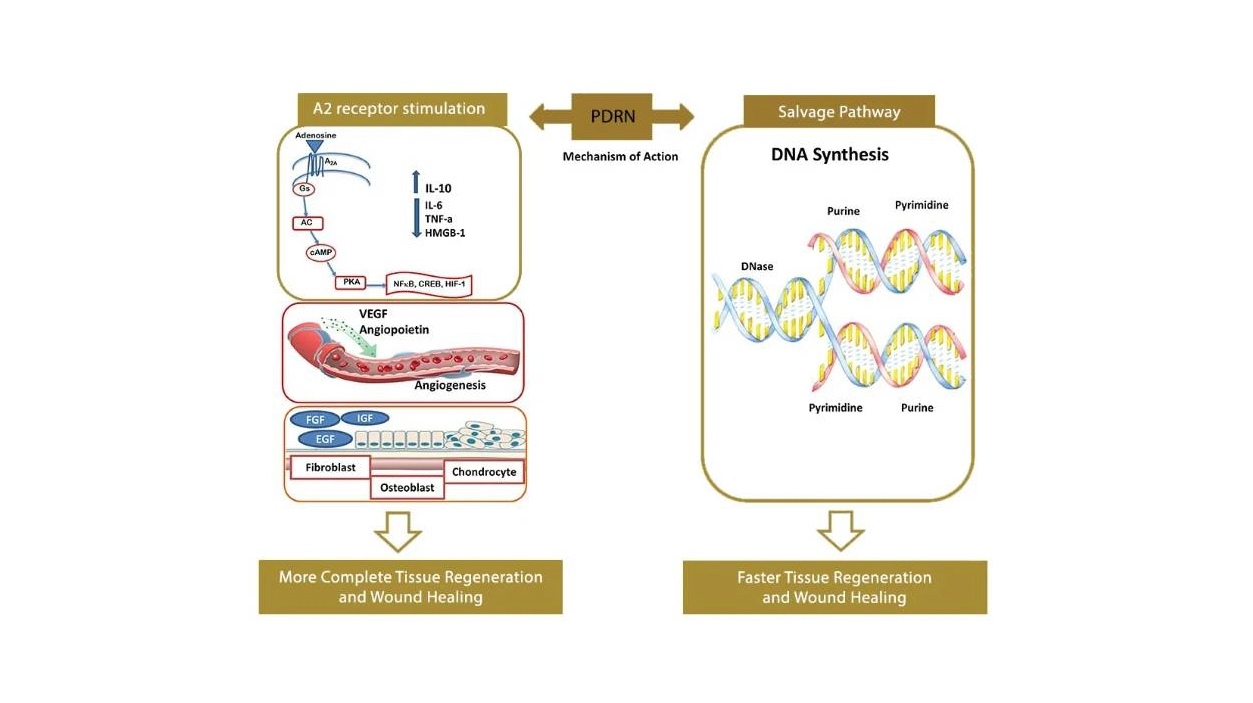
- Activates adenosine A2A receptors
- Reduces inflammatory cytokines (TNF-α, IL-6, IL-1β)
- Helps calm damaged or irritated tissue
3. Improves angiogenesis (blood vessel formation)
- Increases VEGF (vascular endothelial growth factor)
- Enhances microcirculation
- Improves oxygen and nutrient delivery to tissues
4. Biocompatible and low immunogenicity
- Derived from natural DNA (salmon/trout)
- Generally well tolerated in humans
- Low risk of immune rejection
5. Supports extracellular matrix and collagen production
- Stimulates collagen type I and III synthesis
- Improves tissue structure and elasticity
- Beneficial in scar remodeling
6. Useful in multiple clinical fields
- Dermatology (skin repair, anti-aging support)
- Aesthetic medicine (skin boosters)
- Orthopedics (tendon and joint repair adjunct)
- Wound care (chronic ulcers)
7. Metabolized into natural components
- Broken down into normal nucleotides
- Reused in DNA/RNA synthesis or safely eliminated
Cons of Polydeoxyribonucleotide
1. Not a primary curative drug
- Works as a supportive regenerative agent
- Does not directly treat underlying diseases
2. Variable clinical evidence quality
Stronger evidence in wound healing
More limited or mixed evidence in:
- Anti-aging cosmetic use
- Aesthetic “skin rejuvenation” claims
3. Injection-related side effects (when used clinically)
Possible mild reactions:
- Redness
- Swelling
- Bruising at injection site
- Temporary pain or discomfort
4. Requires sterile medical-grade handling
- Must be manufactured under strict conditions
- Improper preparation increases contamination risk
5. Cost and accessibility
- Often more expensive than basic dermatologic treatments
- Typically requires professional administration (not always OTC)
6. Limited oral effectiveness
- If taken orally, it is fully broken down in digestion
- Therefore, therapeutic use is mainly injectable or topical
7. Unclear long-term standardized dosing
- No universally standardized dosing protocols across all uses
- Clinical practice varies by region and indication
8. Not suitable for all conditions
Ineffective for:
- Genetic disorders
- Severe systemic diseases
- Non-regenerative pathologies
Quick Summary
| Category | Polydeoxyribonucleotide (PDRN) |
| Regenerative effect | Strong |
| Anti-inflammatory action | Strong |
| Safety profile | Generally good |
| Clinical evidence strength | Moderate |
| Side effects | Usually mild (injections) |
| Cost | Moderate–high |
| Systemic disease treatment | Not primary therapy |
Key Takeaway
Polydeoxyribonucleotide (PDRN) is best understood as a:
biological repair enhancer rather than a direct therapeutic drug
It is valuable for supporting healing, reducing inflammation, and improving tissue quality, but it is not a standalone cure and has more established use in regenerative and dermatologic support than in systemic disease treatment.