
Saccharide Isomerate is a naturally derived carbohydrate-based moisturizing ingredient widely used in skin-care and cosmetic formulations. It is a mixture of low-molecular-weight carbohydrates (sugar isomers) produced through the enzymatic rearrangement (isomerization) of plant-derived sugars, mainly glucose. It is classified as a humectant, meaning it attracts and retains water in the skin.
In cosmetics, Saccharide Isomerate is best known as a long-lasting hydration active that binds strongly to the skin’s surface, particularly to keratin proteins in the stratum corneum, helping improve skin moisture balance and barrier function.
Basic Information
| Property | Description |
| INCI Name | Saccharide Isomerate |
| Category | Humectant / Skin-conditioning agent |
| Origin | Plant-derived sugars (commonly glucose from corn or other botanical sources) |
| Chemical Type | Carbohydrate mixture (sugar derivatives) |
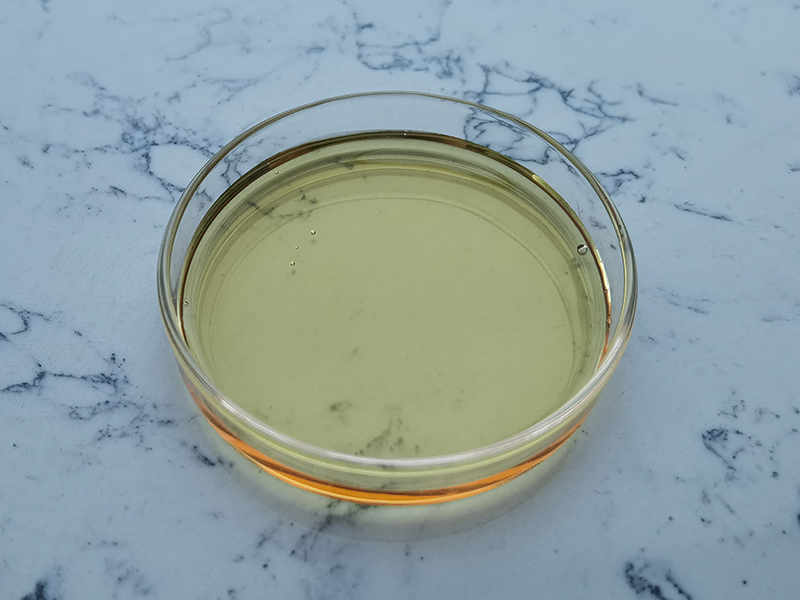
| Appearance | Clear to slightly yellow liquid solution |
| Solubility | Highly soluble in water |
| Common Use Level | Approximately 1–5% in cosmetic formulations |
| Applications | Moisturizers, serums, toners, masks, cleansers, anti-aging products |
Origin and Production
Saccharide Isomerate is produced using a biotechnological enzymatic process.
Typical production pathway:
Plant starch → Glucose → Enzymatic isomerization → Saccharide Isomerate
1. Plant starch extraction
- Raw materials such as corn, wheat, or other plant starches are hydrolyzed into glucose.
2. Enzymatic conversion
- Specific enzymes rearrange the glucose molecules into a mixture of sugar structures that resemble naturally occurring carbohydrates in human skin.
3. Purification and stabilization
- The carbohydrate mixture is purified and formulated into an aqueous cosmetic ingredient.
Unlike simple sugars, Saccharide Isomerate is designed to have stronger interaction with the skin surface.
Chemical Nature and Structure
Saccharide Isomerate does not represent one single molecule. It is a complex mixture of isomerized saccharides.
Major components may include:
- Glucose derivatives
- Fructose derivatives
- Mannose-like structures
- Other carbohydrate isomers
General molecular characteristics:
- Rich in hydroxyl (-OH) groups
- Highly hydrophilic
- Capable of forming hydrogen bonds with water and proteins
These hydroxyl groups allow Saccharide Isomerate to:
- Bind atmospheric moisture
- Interact with keratin proteins
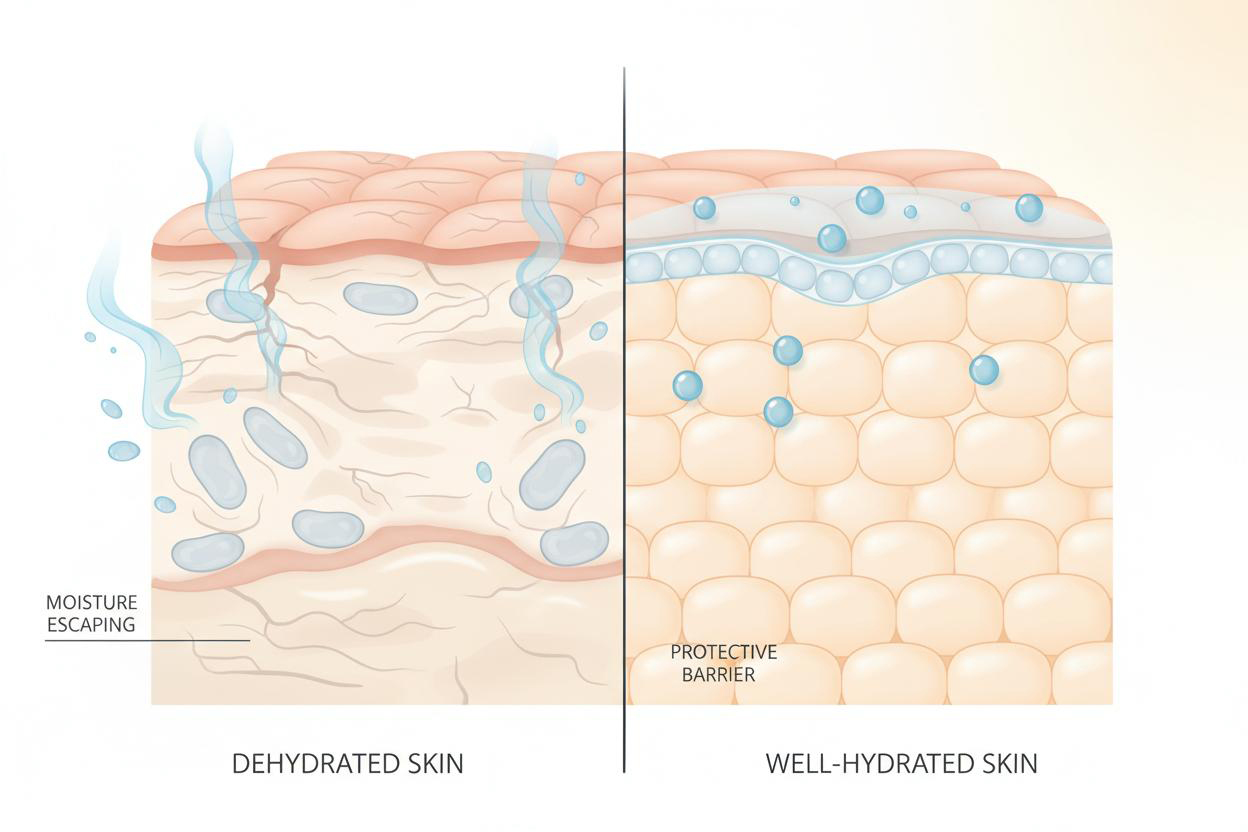
- Reduce transepidermal water loss (TEWL)
Mechanism of Action in Skin
1. Long-lasting hydration
Saccharide Isomerate works as a powerful water-binding agent.
Mechanism:
Saccharide Isomerate → binds keratin → holds water → increases skin hydration
It attaches to amino acid residues in the outer skin layer and forms a moisturizing reservoir.
Compared with common humectants such as glycerin:
- Glycerin mainly attracts water from the environment
- Saccharide Isomerate additionally binds to skin proteins, producing longer-lasting hydration
2. Strengthens the skin barrier
By increasing water content in the stratum corneum, Saccharide Isomerate helps:
- Improve skin flexibility
- Reduce dryness and roughness
- Support barrier recovery
- Decrease water loss from the skin
A well-hydrated barrier improves resistance against:
- Environmental stress
- Dry climate
- Excessive cleansing
- Irritation from active ingredients
3. Improves skin texture
Adequate hydration helps:
- Smooth rough skin
- Reduce flaky appearance
- Improve softness
- Enhance skin radiance
It is especially useful for:
- Dry skin
- Dehydrated skin
- Mature skin
- Sensitive skin
Main Benefits of Saccharide Isomerate
1. Deep and prolonged moisturizing
Primary benefit:
- Immediate hydration after application
- Sustained moisture retention
- Improved skin suppleness
It is often described as a “moisture-locking carbohydrate complex.”
2. Reduces dryness and roughness
Saccharide Isomerate can help:
- Smooth uneven texture
- Reduce tightness
- Improve skin comfort
Suitable for:
- Dry skin
- Winter skin care
- Barrier-damaged skin
3. Supports skin barrier health
Benefits include:
- Increased stratum corneum hydration
- Better barrier performance
- Reduced sensitivity caused by dehydration
4. Anti-aging support
Although not a direct collagen stimulant, hydration contributes to a younger-looking appearance.
Effects:
- Fine lines caused by dehydration appear reduced
- Skin looks plumper
- Improves elasticity appearance
5. Helps sensitive skin formulations
Because Saccharide Isomerate is:
- Mild
- Non-irritating
- Water-compatible
it is commonly used in products designed for:
- Sensitive skin
- Post-procedure hydration
- Barrier repair
Cosmetic Applications
1. Facial moisturizers
Used for:
- Daily hydration creams
- Barrier repair creams
- Lightweight lotions
2. Serums and essences
Commonly combined with:
- Hyaluronic acid
- Polyglutamic acid
- Panthenol
- Beta-glucan
- Ceramides
to create multi-layer hydration systems.
3. Anti-aging products
Used in:
- Fine-line treatments
- Firming serums
- Mature skin products
because hydration improves skin appearance.
4. Cleansers
Added to:
- Facial washes
- Micellar products
to reduce the drying effect of surfactants.
5. Hair-care products
Saccharide Isomerate can help:
- Improve hair moisture retention
- Reduce dryness
- Enhance softness
Compatibility With Other Ingredients
Saccharide Isomerate generally has excellent compatibility.
Good combinations:
| Ingredient | Purpose |
| Hyaluronic Acid | Multi-level hydration |
| Polyglutamic Acid | Strong moisture retention |
| Glycerin | Humectant synergy |
| Panthenol | Barrier repair |
| Niacinamide | Barrier + brightening |
| Ceramides | Lipid barrier support |
| Peptides | Anti-aging formulations |
| Retinoids | Helps reduce dryness |
Stability Characteristics
✅ Water soluble
✅ Stable in most cosmetic systems
✅ Compatible with many actives
✅ Suitable for leave-on and rinse-off products
However:
- Extreme pH conditions may reduce stability
- High-temperature processing should be controlled
Typical formulation range:
pH 4–7
Advantages and Limitations
Advantages
✔ Long-lasting hydration
✔ Plant-derived origin
✔ Gentle and suitable for sensitive skin
✔ Improves skin softness
✔ Compatible with many actives
✔ Supports barrier function
Limitations
✘ Does not directly stimulate collagen production
✘ Does not remove pigmentation directly
✘ Less occlusive than oils or petrolatum
✘ Usually requires combination with other moisturizing agents for very dry skin
Saccharide Isomerate vs Hyaluronic Acid
| Feature | Saccharide Isomerate | Hyaluronic Acid |
| Chemical class | Carbohydrate mixture | Polysaccharide |
| Main action | Binds to keratin, long-lasting hydration | Holds water in extracellular matrix |
| Skin penetration | Mainly surface | Depends on molecular weight |
| Texture | Lightweight | Gel-forming |
| Barrier support | Strong | Moderate |
| Sensitive skin suitability | Excellent | Excellent |
Summary
Saccharide Isomerate is a plant-derived carbohydrate moisturizing active that provides long-lasting hydration by binding to skin keratin and improving water retention in the stratum corneum. It is widely used in modern skincare formulations for deep hydration, barrier support, smoothing dry skin, and improving the appearance of fine dehydration lines.
It is especially valuable in formulations targeting dry, sensitive, dehydrated, and aging skin, and works well alongside ingredients such as hyaluronic acid, ceramides, niacinamide, peptides, and panthenol.