
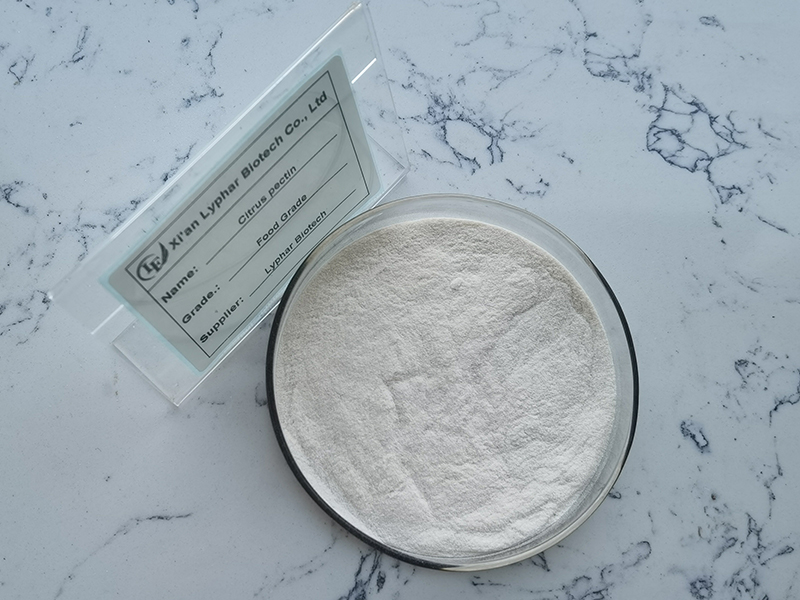
Citrus pectin is a natural polysaccharide extracted mainly from the peels of citrus fruits like oranges, lemons, limes, and grapefruits. Its basic ingredients/components are primarily carbohydrates, specifically complex polysaccharides. Breaking it down:
1. Polysaccharides (Major Component)
- Galacturonic acid units: The main building block of pectin. These are sugar acids that form long chains.
- Methyl esters: Some galacturonic acid units are methylated (–COOCH₃), which affects gelling properties.
- Acetyl groups: Present in small amounts in some types of pectin.
2. Neutral Sugars (Minor Components)
- Rhamnose, arabinose, galactose, and xylose. These form side chains that give pectin its functional properties, like viscosity and gel formation.
3. Water
- Pectin naturally contains some bound water.
4. Optional Additives (in commercial preparations)
- Citric acid (to adjust pH)
- Sugar (sometimes added for food applications)
- Calcium salts (in “low-methoxyl” pectin to help gel formation)
Summary
Chemically, citrus pectin is mostly galacturonic acid-rich polysaccharides with some neutral sugars and minor modifications. Its functional properties (gelling, thickening) depend on the degree of methylation and the presence of calcium ions.
Citrus Pectin VS Apple Pectin
1. Source
Citrus Pectin: Extracted from the peels of citrus fruits like oranges, lemons, and grapefruits.
Apple Pectin: Extracted from apple pomace (the pulp and peel leftover after juicing).
2. Chemical Composition
Both are pectins, which are soluble dietary fibers made primarily of galacturonic acid units.
Degree of Esterification (DE):
- Citrus pectin usually has a high degree of esterification (high methoxyl pectin), making it better for gelling in high-sugar conditions.
- Apple pectin can be low or high methoxyl, offering more versatility in gelling and food applications.
3. Solubility
Citrus pectin: Generally more soluble in water than apple pectin.
Apple pectin: Slightly less soluble, especially in cold water.
4. Viscosity and Gel-Forming Ability
Citrus pectin: Forms firmer gels in high-sugar or acidic conditions; preferred in jams and jellies.
Apple pectin: Forms softer gels; often used in low-sugar products and as a thickener in foods and supplements.
5. Health Benefits
| Benefit | Citrus Pectin | Apple Pectin |
| Cholesterol reduction | Yes, can bind bile acids | Yes, moderate effect |
| Blood sugar control | Yes, slows sugar absorption | Yes, slightly milder effect |
| Digestive health | Acts as prebiotic fiber | Acts as prebiotic fiber, may relieve constipation |
| Heavy metal binding (detox) | Modified citrus pectin (MCP) shown to bind heavy metals | Less evidence for detox purposes |
| Weight management | Promotes satiety | Promotes satiety |
6. Applications
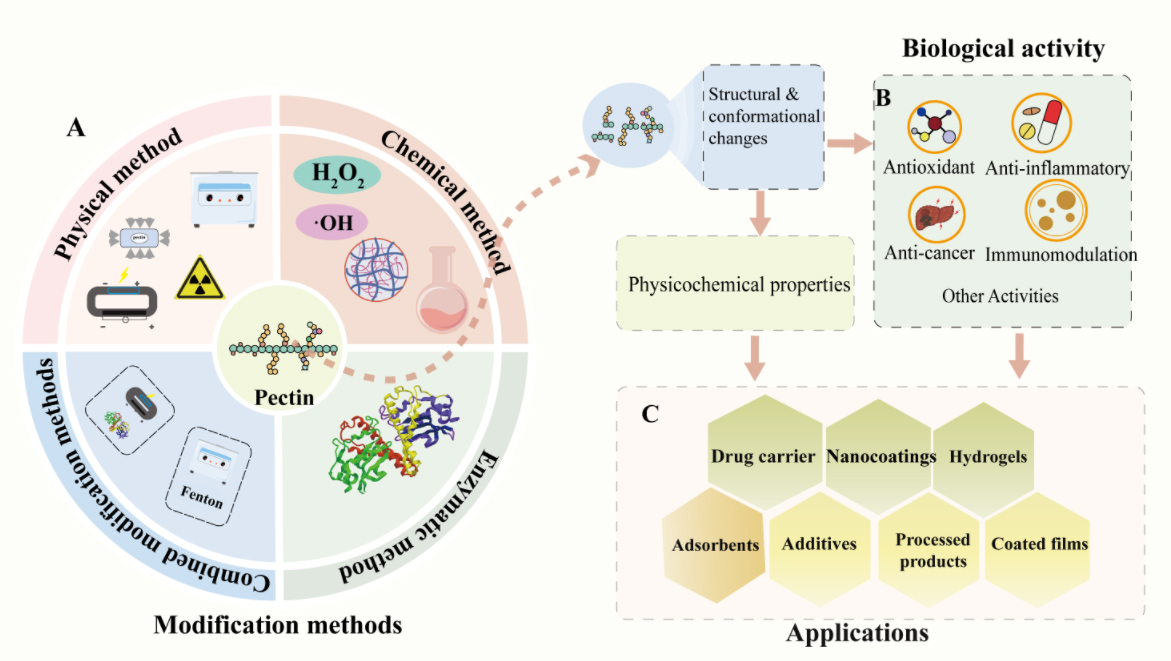
Citrus pectin: Jams, jellies, gummies, dietary supplements, cancer/chelation research (MCP).
Apple pectin: Food thickener, supplements for digestion and cholesterol control, low-sugar jams.
7. Cost and Availability
Citrus pectin is usually more widely available commercially due to high production from citrus peels.
Apple pectin is often slightly more expensive and found more in natural health products.
Summary
Citrus Pectin is more water-soluble, better for high-sugar gelling, and has specialized forms (like MCP) for detox.
Apple Pectin is gentler, more versatile in food applications, and traditionally used for digestive and cholesterol benefits.