
BAM-15, DNP, and other mitochondrial uncouplers all work by the same basic principle: they “uncouple” oxidative phosphorylation, allowing protons to leak across the mitochondrial membrane. This forces mitochondria to burn more fuel while producing less ATP, increasing energy expenditure.
However, their safety, selectivity, and pharmacology differ dramatically.
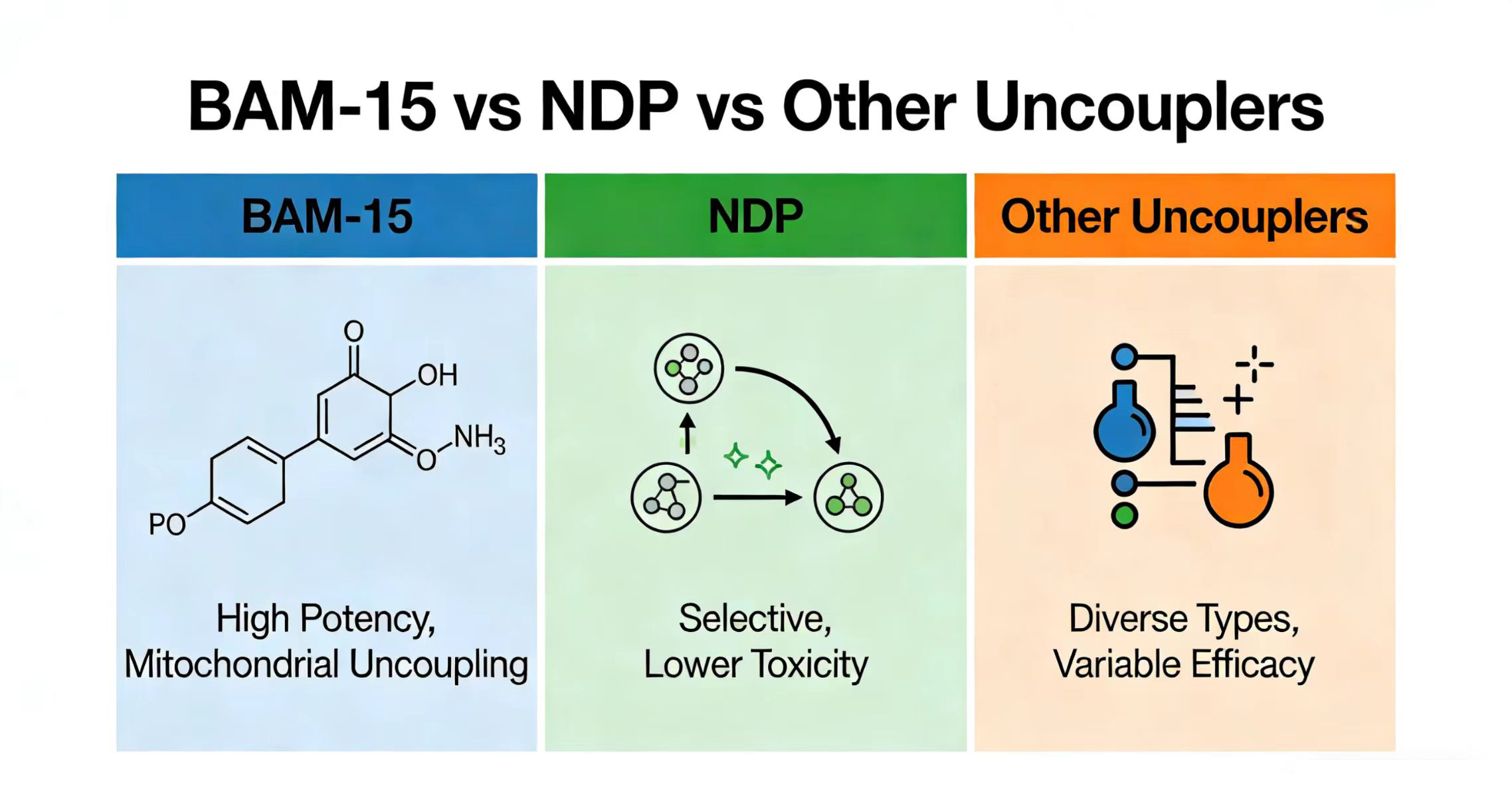
1. BAM-15 vs DNP vs Other Uncouplers
| Feature | BAM-15 | DNP (2,4-Dinitrophenol) | Other Uncouplers (FCCP, CCCP, Niclosamide) |
| Mechanism | Protonophore mitochondrial uncoupler | Protonophore uncoupler | Similar proton gradient disruptors |
| Discovery / Era | Modern research compound (2010s) | Used for weight loss in 1930s | Mostly lab research tools |
| Potency | ~7× stronger than DNP in some assays | Strong but unstable dose response | Very potent but toxic |
| Therapeutic window | Wide (animal studies) | Extremely narrow | Very narrow |
| Hyperthermia risk | Low in animals | Very high | Moderate–high |
| Plasma membrane effects | Minimal | Non-selective | Often non-selective |
| Current status | Preclinical research | Banned / highly toxic | Lab use only |
Evidence: BAM-15 shows ~7-fold greater potency for stimulating mitochondrial respiration than DNP and maintains activity across a wider concentration range.
2. Mechanistic Differences
DNP (classic uncoupler)
- Lipophilic proton shuttle across mitochondrial membrane
- Causes rapid proton leak
- Generates large amounts of heat
Consequences:
- Severe hyperthermia
- Massive ATP depletion
- Narrow dose-toxicity margin
DNP’s toxicity historically caused fatal overheating and led to its ban as a weight-loss drug.
BAM-15 (next-generation uncoupler)
Key design features:
- Selective mitochondrial targeting
- Minimal plasma membrane depolarization
- Better dose-response control
Studies show BAM-15:
- uncouples mitochondria without depolarizing the plasma membrane
- increases respiration strongly while showing lower cytotoxicity than DNP or FCCP
This improved selectivity is the main reason it is considered “next-generation.”
3. Safety Comparison
DNP
Major risks:
- Fatal hyperthermia
- Tachycardia
- Severe dehydration
- Cataracts
- Multi-organ failure
The therapeutic window is extremely small—slightly excessive doses can be lethal.
Animal studies show:
- No increase in core body temperature
- Reduced organ toxicity
- Wider dosing margin
However:
- No human clinical trials yet
- Long-term safety unknown.
Other Uncouplers
FCCP / CCCP
- Very potent research tools
- Highly toxic in cells
- Used mainly in mitochondrial respiration assays
Niclosamide / NEN
- Weak uncoupling
- Repurposed drug candidates
- Additional mechanisms beyond uncoupling
4. Metabolic Effects
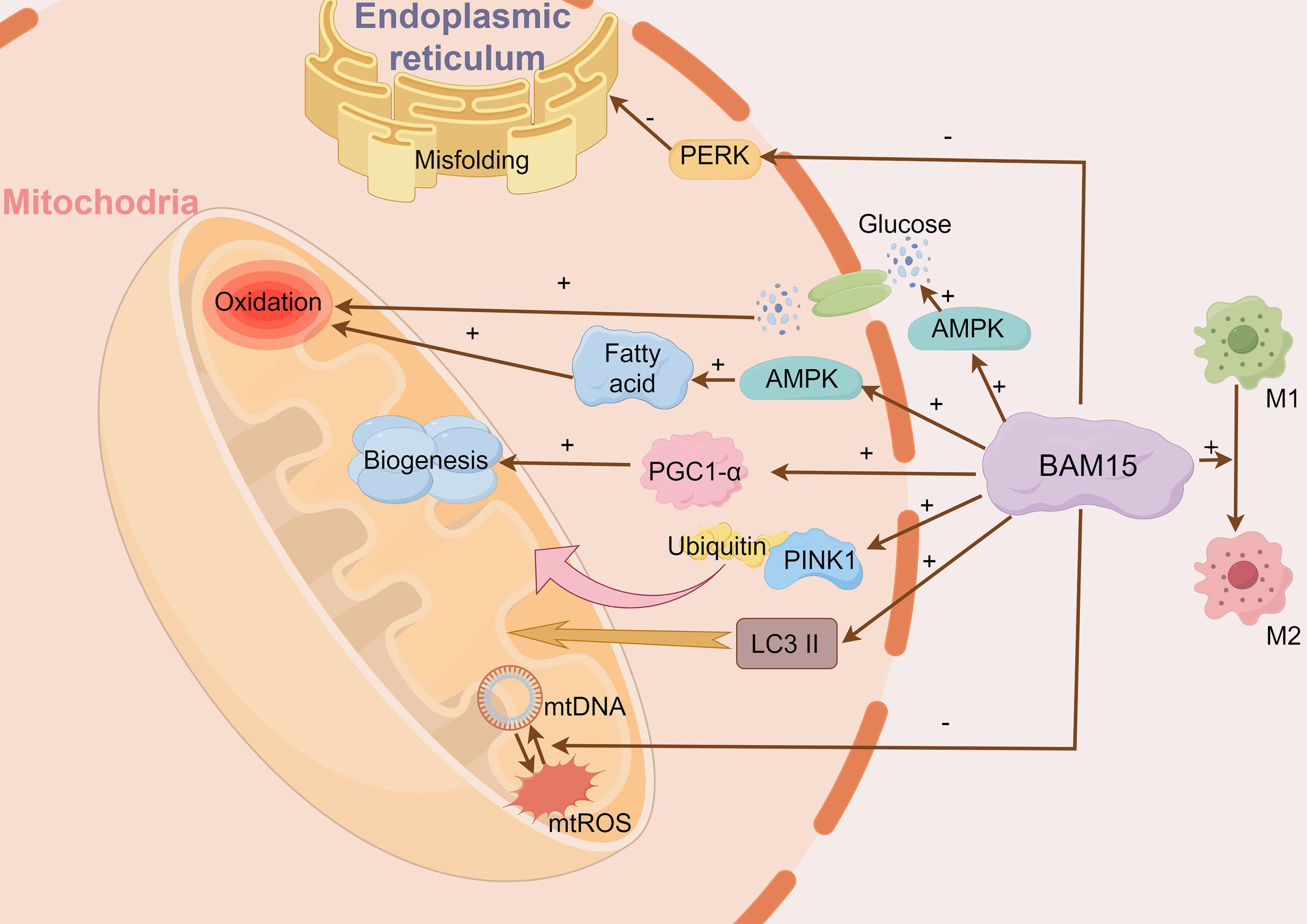
All uncouplers share similar metabolic outcomes:
Effects
- ↑ energy expenditure
- ↑ fatty acid oxidation
- ↓ ATP efficiency
- ↓ reactive oxygen species (mild uncoupling)
In animal models, BAM-15 has been shown to:
- reverse diet-induced obesity
- improve insulin sensitivity
- increase mitochondrial respiration.
5. Practical Comparison (Fat-loss context)
| Compound | Fat-loss power | Safety | Research status |
| DNP | Extremely high | Very dangerous | Historical / banned |
| BAM-15 | High (animals) | Promising but unproven | Preclinical |
| Niclosamide derivatives | Moderate | Safer | Investigational |
| FCCP/CCCP | High | Highly toxic | Lab only |
Key takeaway
- DNP: extremely powerful but extremely dangerous
- BAM-15: designed to keep the metabolic benefits of uncoupling while reducing toxicity
- Other uncouplers: mostly research tools with poor safety profiles
If you’d like, I can also explain why BAM-15 does NOT cause hyperthermia like DNP (the key biochemical difference that researchers are excited about).