
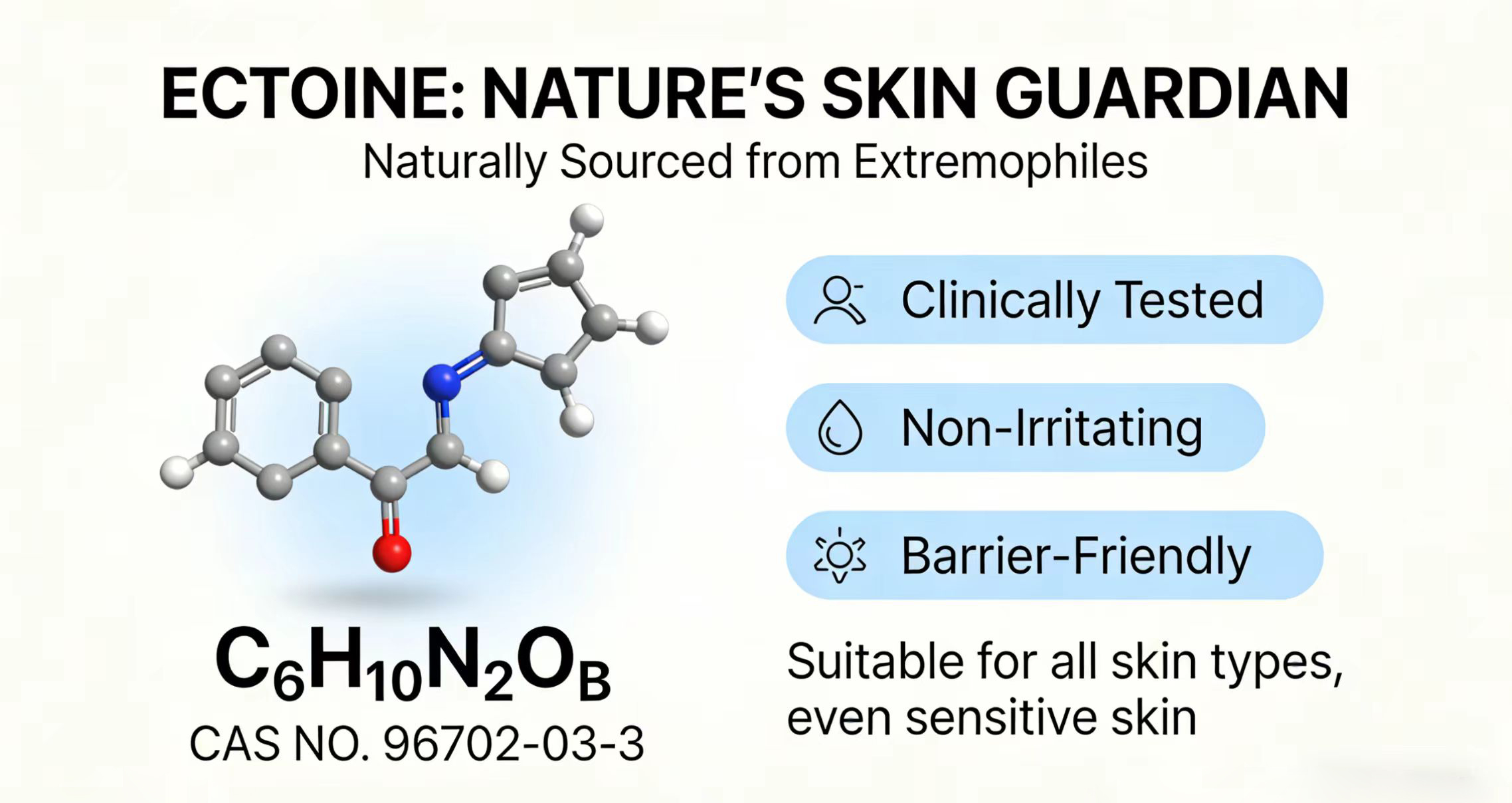
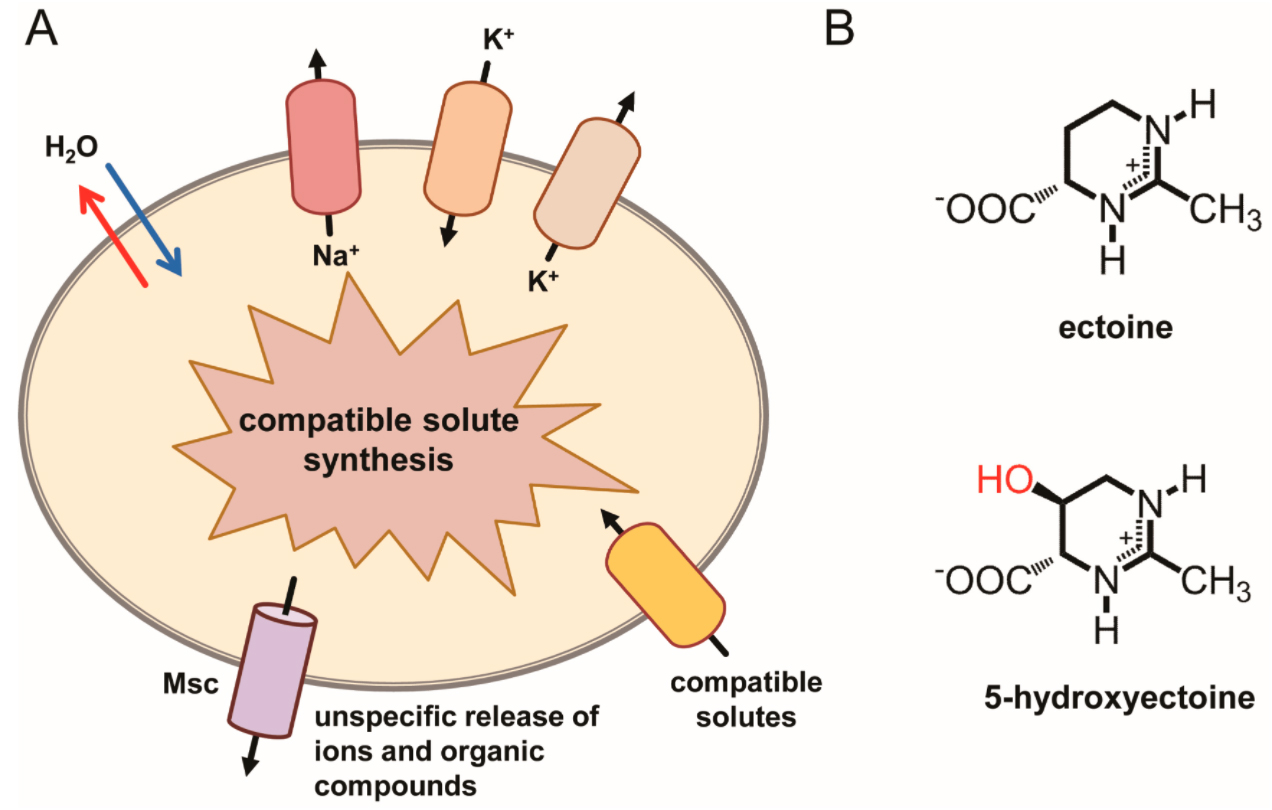
Ectoine is a naturally occurring compound, primarily produced by certain microorganisms, particularly extremophiles, in response to environmental stress like high salinity or temperature. It’s widely used in skincare products due to its protective and hydrating properties.
Here’s an overview of how Ectoine can be synthesized in a laboratory setting:
1. Microbial Production
Ectoine is traditionally produced through fermentation processes by halophilic bacteria (salt-loving bacteria). The steps are as follows:
a. Isolation of the Microorganisms:
- Identify and isolate microorganisms that naturally produce ectoine. These are typically halophilic bacteria, such as Ectothiorhodospira species or Halomonas species.
b. Fermentation:
- Grow the halophilic bacteria in a medium rich in salt, where they produce Ectoine as a stress response to the high salinity.
- The fermentation medium typically contains sodium chloride (NaCl) and other essential nutrients, such as nitrogen and carbon sources (glucose, for example).
c. Extraction:
- After the fermentation process, ectoine is extracted from the bacterial cells or fermentation broth using methods like centrifugation or filtration.
- A variety of extraction techniques such as solvent extraction, dialysis, or precipitation can be used to purify ectoine from the medium.
d. Purification:
- Once the Ectoine is extracted, it can be purified by methods like chromatography (ion-exchange or gel filtration chromatography).
2. Chemical Synthesis (Laboratory Synthesis)
While microbial production is the most common method for obtaining ectoine, it can also be synthesized chemically. This method typically involves a multi-step reaction. Here’s a basic outline of the synthesis:
a. Starting Material:
- The starting point is usually an amide, such as L-glutamic acid, which is chemically modified to form ectoine.
b. Reaction Steps:
- The glutamic acid undergoes several chemical transformations, including:
- Reduction of the amide group.
- Cyclization to form the heterocyclic ring structure of Ectoine.
- Finally, functional group modifications to form the specific structure of ectoine.
c. Purification:
- After synthesis, the product is purified through standard chemical purification methods, such as recrystallization or chromatography.
3. Applications
After preparation, Ectoine is used in various applications, particularly in skincare, pharmaceuticals, and biotechnology, due to its ability to stabilize proteins, protect against dehydration, and act as an anti-inflammatory agent.
Would you like more detailed procedures or specific protocols on any of these methods?