
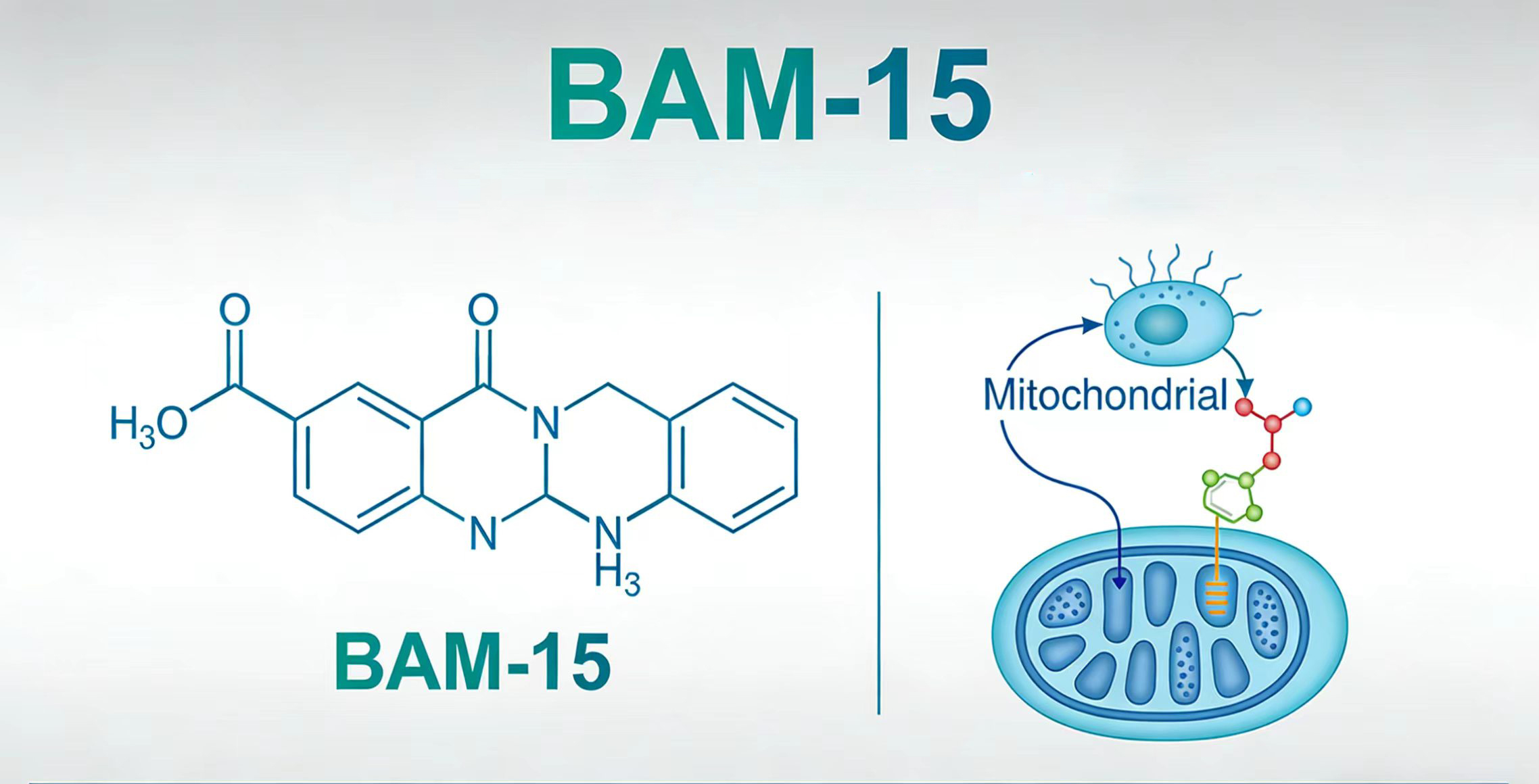
BAM-15 is a small-molecule mitochondrial uncoupler that increases cellular energy expenditure by disrupting the coupling between mitochondrial respiration and ATP production. It is mainly studied in metabolic disease research (such as obesity and diabetes) and is not an approved drug for human use.
1. Basic Overview
- Full name: BAM-15
- Chemical class: Mitochondrial protonophore / uncoupler
- Research focus: Metabolism, obesity, insulin resistance
- Status: Experimental compound used in laboratory research
BAM-15 works similarly in concept to older uncouplers like 2,4-Dinitrophenol, but it was designed to avoid some of the severe toxicity associated with those compounds.
2. Mechanism of Action
BAM-15 acts on mitochondria, the cell’s energy-producing organelles.
Normally:
- Nutrients are oxidized in mitochondria.
- This creates a proton gradient across the inner mitochondrial membrane.
- The gradient drives ATP synthesis through ATP synthase.
BAM-15 transports protons across the mitochondrial membrane, which:
- Collapses the proton gradient
- Reduces ATP production efficiency
- Forces cells to burn more fuel (glucose and fat) to generate energy
Result:
- Increased oxygen consumption
- Increased energy expenditure
- Increased fat oxidation
3. Potential Biological Effects (Observed in Studies)
Research in animals and cell models shows that BAM-15 may:
- Reduce body fat accumulation
- Increase metabolic rate
- Improve insulin sensitivity
- Reduce liver fat (hepatic steatosis)
- Improve glucose tolerance

Because of these effects, BAM-15 is being explored for:
- Obesity
- Type 2 diabetes
- Fatty liver disease
- Metabolic syndrome
4. Advantages Compared with Older Uncouplers
Compared with traditional uncouplers like 2,4-Dinitrophenol, BAM-15 shows:
- Less hyperthermia risk
- Lower toxicity in animal models
- Minimal mitochondrial membrane depolarization damage
However, human safety is still unknown.
5. Limitations and Safety
Important points:
- BAM-15 is not FDA-approved
- It is only used in research
- Long-term safety in humans is not established
- Mitochondrial uncouplers can be dangerous if misused
Summary
| Feature | BAM-15 |
| Type | Mitochondrial uncoupler |
| Main action | Increases energy expenditure |
| Research uses | Obesity, diabetes, metabolic disease |
| Clinical status | Experimental research compound |
If you’d like, I can also explain:
- Chemical structure of BAM-15
- How BAM-15 compares with DNP and other uncouplers
- Latest research studies on BAM-15 (2023–2025)
- Why BAM-15 is considered a “next-generation metabolic uncoupler.”