
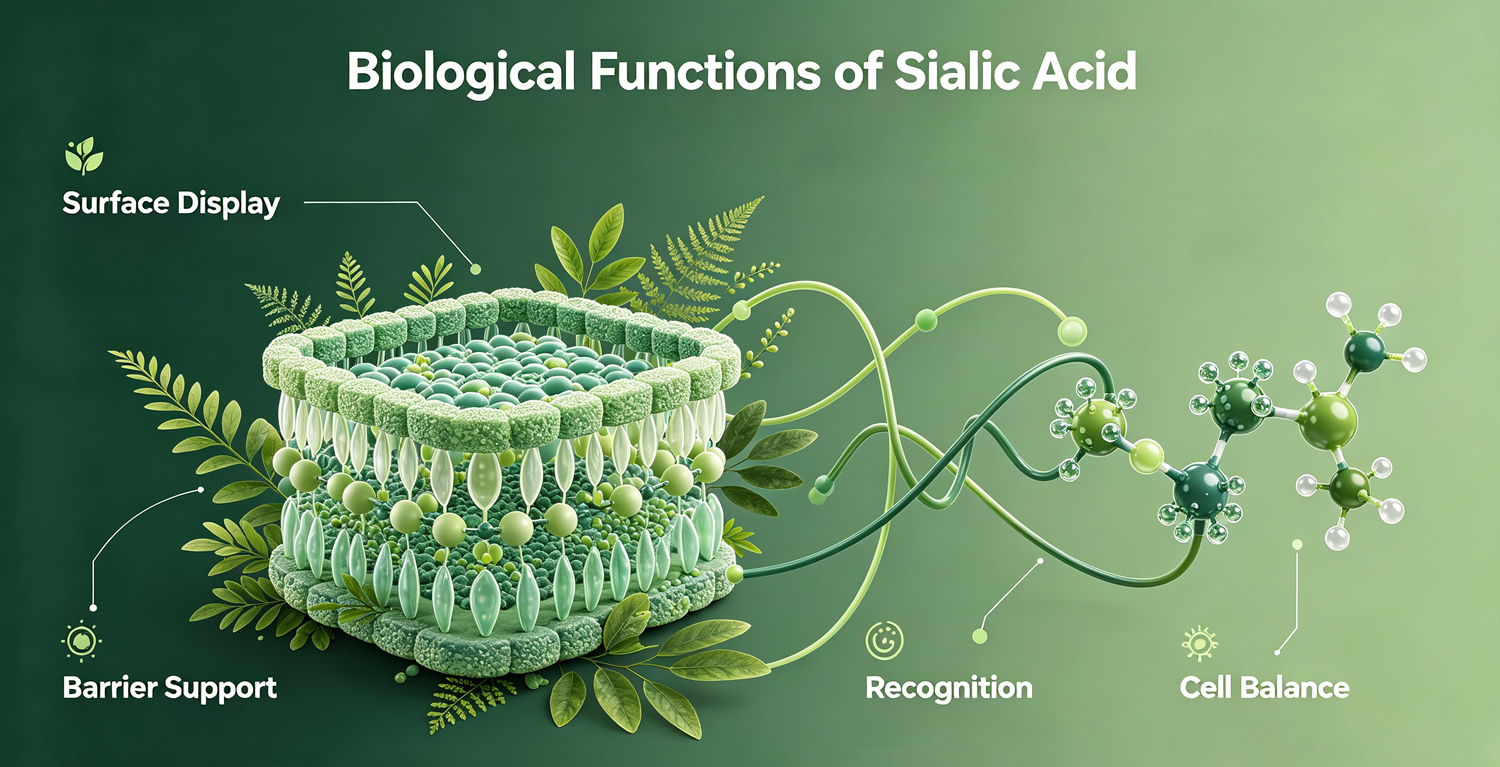
Sialic acid, with N-acetylneuraminic acid (Neu5Ac) being the major form in humans, is a family of nine-carbon acidic monosaccharides commonly found at the terminal positions of glycoproteins and glycolipids on cell surfaces. Because of its location and negative charge, it has important roles in cell recognition, immune regulation, signaling, and protection.
1. Cell-surface recognition and communication
Sialic acid forms the outermost part of many cell-surface glycoconjugates. It helps cells recognize and interact with one another by influencing receptors and adhesion molecules.
2. Regulation of immune responses
Sialylated glycans participate in interactions with Siglecs (sialic-acid-binding immunoglobulin-like lectins) on immune cells. These interactions can modulate immune-cell activation and help distinguish normal cells from abnormal or damaged cells.
3. Protection of cell surfaces
The negatively charged sialic-acid layer can create a hydrated, repulsive surface that helps protect cell membranes and proteins from unwanted interactions and enzymatic degradation.
4. Regulation of protein lifespan
Terminal sialylation can influence how long circulating glycoproteins remain in the bloodstream. Loss of terminal sialic acid can expose underlying galactose residues, which can promote recognition and removal of glycoproteins by hepatic receptors.
5. Role in cell adhesion
Sialic-acid-containing glycans participate in interactions between cells and between cells and the extracellular environment. Changes in sialylation can therefore affect cell migration, adhesion, and tissue organization.
6. Nervous-system development and function
Sialic acid is abundant in the nervous system and is incorporated into gangliosides and glycoproteins. It contributes to neuronal development, synaptic function, neurite growth, and cell–cell interactions.
7. Brain and cognitive functions
Sialylated glycoconjugates are involved in neuronal membrane organization and synaptic processes. Adequate sialylation is important for normal development and maintenance of nervous-system functions.
8. Interaction with pathogens
Many pathogens exploit host-cell sialic acids as attachment sites. For example, some viruses and bacteria recognize sialylated glycans during infection. Conversely, host sialic acids can act as part of the protective glycocalyx and influence pathogen recognition.
9. Regulation of receptor signaling
Sialylation can modify the activity, localization, and stability of membrane receptors. Changes in glycosylation can consequently influence intracellular signaling pathways involved in growth, differentiation, survival, and inflammation.
10. Role in erythrocyte lifespan
Red blood cells have abundant surface sialic acid. Their sialylated glycocalyx contributes to membrane properties and helps prevent premature clearance. Removal of terminal sialic acid exposes underlying sugars that can promote recognition and removal of aging cells.
11. Cancer biology
Abnormal sialylation is common in many cancers. Increased expression of certain sialylated glycans can alter cell adhesion, immune evasion, migration, invasion, and metastatic behavior. Therefore, sialylation is an important area of cancer biology research.
12. Inflammation
Sialic-acid-containing glycans can regulate inflammatory signaling through interactions with lectins and immune receptors. Altered sialylation may influence the balance between inflammatory and anti-inflammatory responses.
13. Maintenance of the glycocalyx
Sialic acid is a major component of the terminal layer of the cellular glycocalyx. It contributes to the physical and chemical properties of this protective layer and affects interactions between cells, proteins, and the extracellular environment.
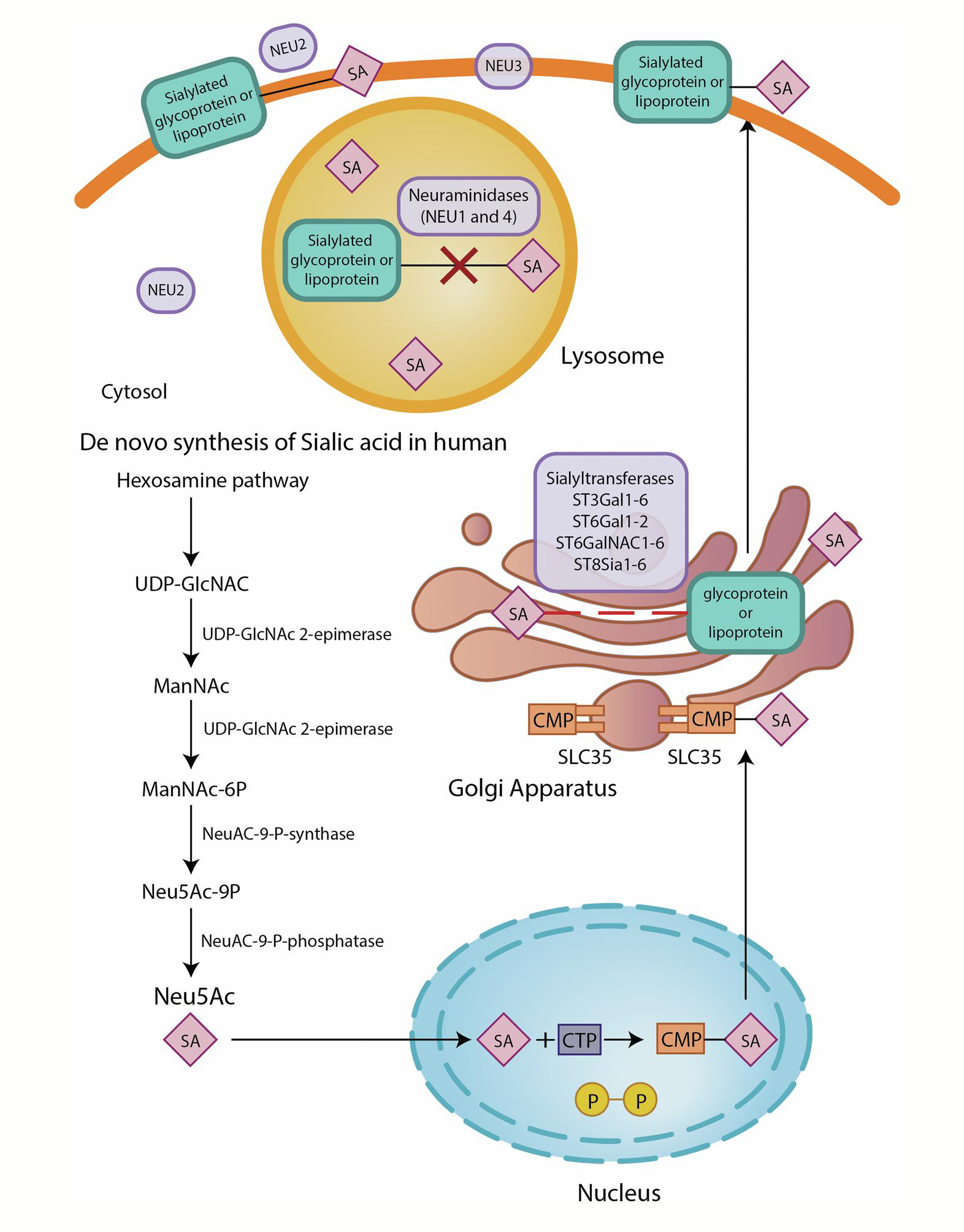
14. Biosynthetic function
Neu5Ac is an essential precursor for the synthesis of many biologically important sialoglycoconjugates, including:
- Glycoproteins
- Glycolipids
- Gangliosides
- Cell-surface receptors
- Mucins
Summary
| Biological function | Main significance |
| Cell recognition | Enables cell–cell identification and communication |
| Immune regulation | Modulates Siglec and other immune interactions |
| Cell protection | Helps protect the cell surface and membrane |
| Protein lifespan | Influences circulating glycoprotein clearance |
| Cell adhesion | Regulates cellular interactions and migration |
| Nervous system | Supports neuronal development and synaptic functions |
| Pathogen interaction | Serves as a receptor or recognition determinant for some pathogens |
| Receptor signaling | Modifies receptor activity and signaling |
| RBC survival | Helps regulate erythrocyte lifespan |
| Cancer biology | Influences tumor progression and immune evasion |
| Inflammation | Modulates inflammatory responses |
| Glycocalyx formation | Maintains the structure and function of the cell-surface glycocalyx |
Important distinction: Although sialic acid has extensive biological functions and is essential for normal cellular biology, this does not automatically mean that oral sialic-acid supplementation provides the same benefits. In humans, much of the biological activity of Neu5Ac occurs as part of cellular glycoproteins and glycolipids rather than as free sialic acid.