
Sialic acid is a family of acidic nine-carbon monosaccharides found mainly at the terminal positions of carbohydrate chains on cell-surface glycoproteins and glycolipids. The most common form in humans and many mammals is N-acetylneuraminic acid (Neu5Ac).
1. Basic profile
| Property | Information |
| Common name | Sialic acid |
| Principal human form | N-Acetylneuraminic acid (Neu5Ac) |
| Abbreviation | Neu5Ac |
| Molecular formula | C₁₁H₁₉NO₉ |
| Molecular weight | ~309.27 g/mol |
| Chemical class | Nine-carbon acidic monosaccharide |
| Carbohydrate family | Nonulosonic acids |
| Occurrence | Cell membranes, glycoproteins, glycolipids, mucins |
| Charge | Negatively charged at physiological pH |
| Biological role | Cell recognition, signaling, adhesion and protection |
2. What is N-Acetylneuraminic Acid?
N-Acetylneuraminic acid is the most abundant and biologically important sialic acid in humans. It is usually not present as a free sugar; instead, it is attached to the terminal ends of oligosaccharide chains through α-glycosidic linkages.
Because of its terminal position and negative charge, Neu5Ac can strongly influence how cells and molecules interact with their surroundings.
3. Natural sources
Sialic acids occur naturally in:
- Mammalian tissues and cell membranes
- Blood and serum glycoproteins
- Mucins and mucus
- Brain and nervous tissue
- Milk and dairy products
- Eggs and other animal-derived foods
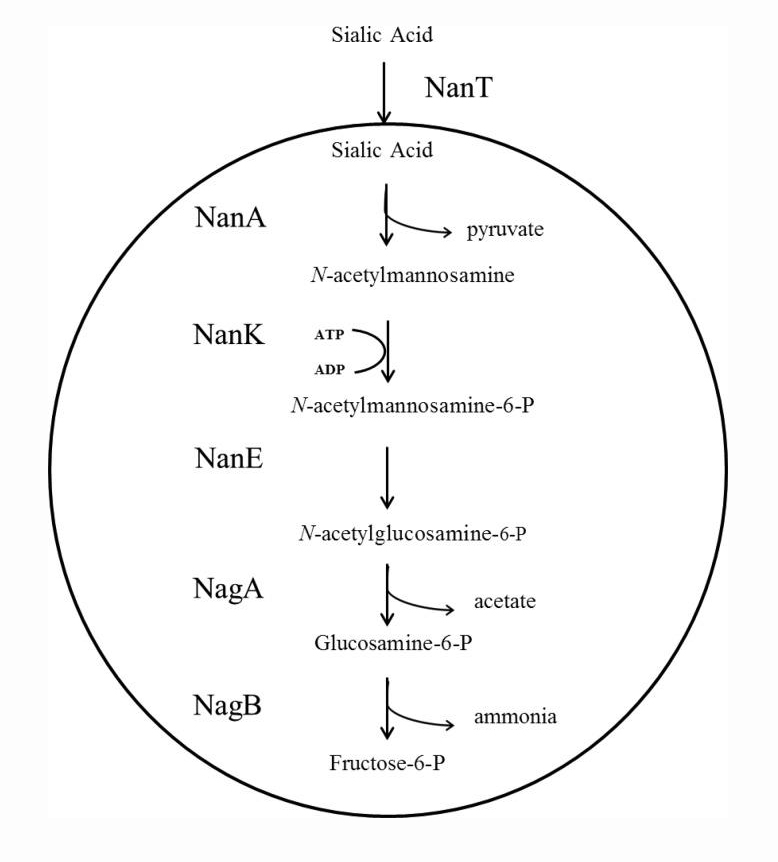
- Certain microorganisms, which can produce or utilize sialic acids
Human milk contains particularly important sialylated oligosaccharides, which are associated with infant intestinal and immune development.
4. Biological functions
Sialic acid participates in several important biological processes:
Cell recognition and communication:
Sialylated carbohydrates help cells recognize and interact with other cells and biological molecules.
Cell-surface protection:
The negatively charged sialic acid layer can help protect cell surfaces from unwanted enzymatic or chemical interactions.
Immune regulation:
Sialic-acid-containing structures can influence interactions between immune cells and other cells.
Pathogen interactions:
Some viruses and bacteria recognize sialic-acid-containing structures as receptors or use sialic acids during infection.
Protein and cell-surface lifespan:
The presence or removal of terminal sialic acid residues can influence the clearance and circulation time of certain glycoproteins.
Nervous-system biology:
Sialylated glycoconjugates are abundant in nervous tissue and participate in neuronal development and cell–cell interactions.
5. Why it is important
Sialic acid is important because it sits at the interface between cells and their environment. Although it is a relatively small carbohydrate, its terminal position allows it to regulate molecular recognition, cell adhesion, immune interactions and interactions with microorganisms.
6. Sialic acid vs. Neu5Ac
The terms are related but are not strictly identical:
- Sialic acids = a broader family of related nine-carbon acidic sugars.
- N-Acetylneuraminic acid (Neu5Ac) = the predominant sialic-acid form found in humans.
- Other forms include N-glycolylneuraminic acid (Neu5Gc) and several O-acetylated derivatives.
In short: N-Acetylneuraminic acid (Neu5Ac) is the principal human sialic acid and an important terminal component of cell-surface glycans, contributing to cell recognition, immune regulation, protection, and host–microbe interactions.