
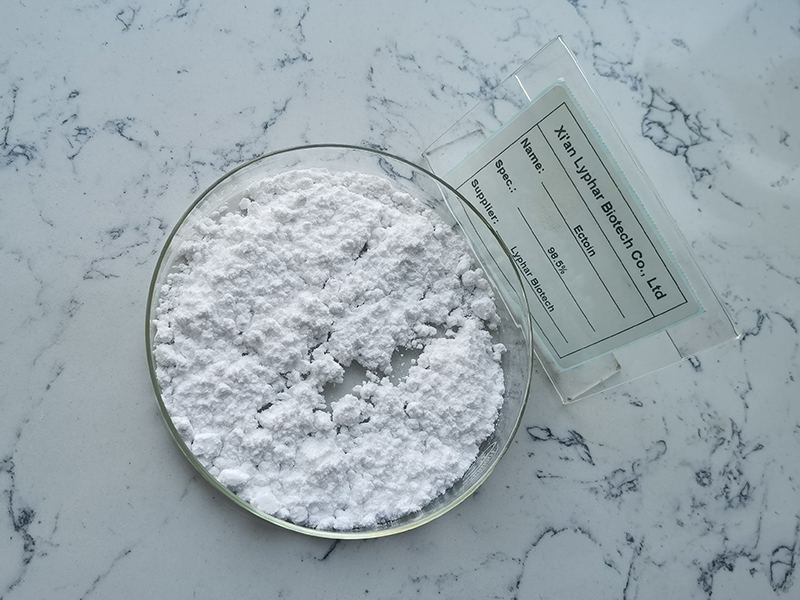
Ectoine is a natural osmolyte produced primarily by halophilic (salt-loving) bacteria to protect themselves from osmotic stress. It is widely used in cosmetics, pharmaceuticals, and biotechnology due to its cell-protective properties.
Materials of Ectoine:
1.Ectoine-producing bacteria:
- Halomonas elongata, Halomonas salina, Chromohalobacter salexigens — common strains used for ectoine production.
2.Growth Medium:
- Nutrient broth with high salt concentration (e.g., NaCl 10–20%)
- Glucose or other carbon sources
- Nitrogen source (yeast extract, peptone, or ammonium salts)
3.Chemicals & Reagents:
- Distilled water
- Sodium chloride (NaCl)
- Ethanol or methanol (for extraction or purification)
- Acetone (optional for purification steps)
- HPLC-grade solvents (for analysis)
4.Equipment:
- Incubator shaker
- Centrifuge
- Rotary evaporator
- HPLC or LC-MS (for ectoine quantification)
- Filtration systems
- pH meter
- Autoclave
Methods of Ectoine:
- Cultivation of Bacteria
- The selected bacteria are inoculated in a high-salt nutrient broth.
- Incubated at optimal temperature (30–37°C) with shaking for 48–72 hours.
- The osmotic stress from high salt stimulates ectoine production.
2. Harvesting Biomass
- The culture is centrifuged at 8000–10000 rpm for 15 minutes.
- The cell pellet is collected for ectoine extraction.
3. Ectoine Extraction
- Cells are resuspended in distilled water or ethanol.
- Heated (50–60°C) for 30–60 minutes to release ectoine.
- The extract is centrifuged to remove cell debris.
4. Purification of Ectoine
- The supernatant is concentrated using a rotary evaporator.
- Further purification is done using:
- Ethanol precipitation
- Activated carbon filtration
- Chromatographic techniques (Ion-exchange chromatography)
5. Analysis and Quantification
- HPLC or LC-MS is used to detect and quantify ectoine.
- Mobile phases like water/methanol with acid (formic acid or trifluoroacetic acid) are common.
- Detection at 210-220 nm UV wavelength.

Optional:
Genetic Engineering Methods
- Overexpression of ectABC genes (ectoine biosynthetic genes) in bacteria to improve yield.
Fermentation Optimization
- Adjustment of NaCl concentration, carbon source, pH, and temperature for maximum ectoine production.
Would you like me to:
- Provide a detailed lab protocol?
- Explain the biosynthesis pathway?
- Focus on extraction from natural sources or industrial production?
- Provide references for a research paper?