
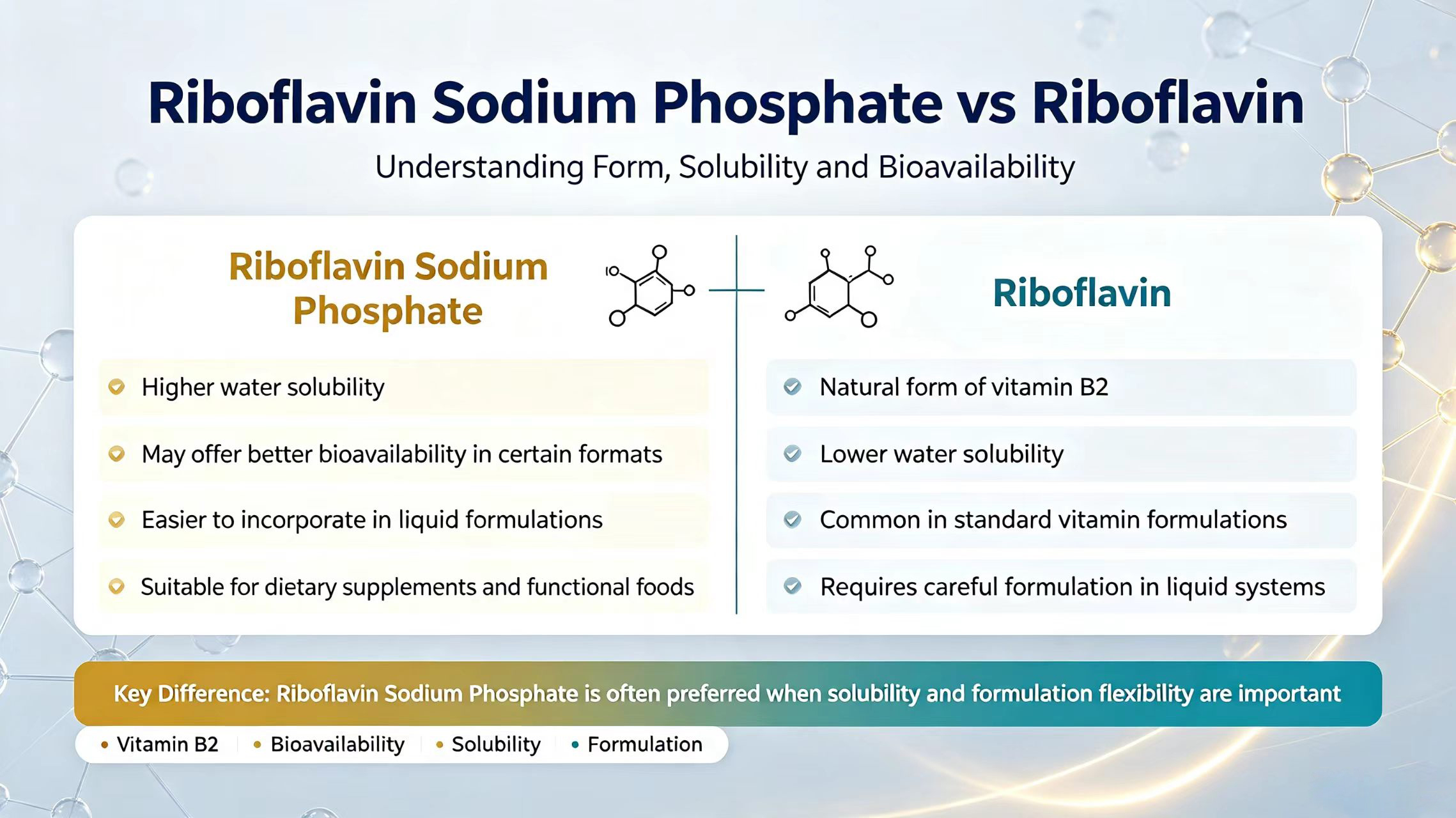
Riboflavin Sodium Phosphate (Vitamin B2 Sodium Phosphate) and Riboflavin (Vitamin B2) are closely related compounds. Both ultimately provide vitamin B2 activity, but they differ significantly in chemical structure, solubility, absorption characteristics, pharmaceutical applications, and formulation stability.
1. Basic Comparison
| Feature | Riboflavin | Riboflavin Sodium Phosphate |
| Chemical name | Riboflavin | Riboflavin 5′-Phosphate Sodium |
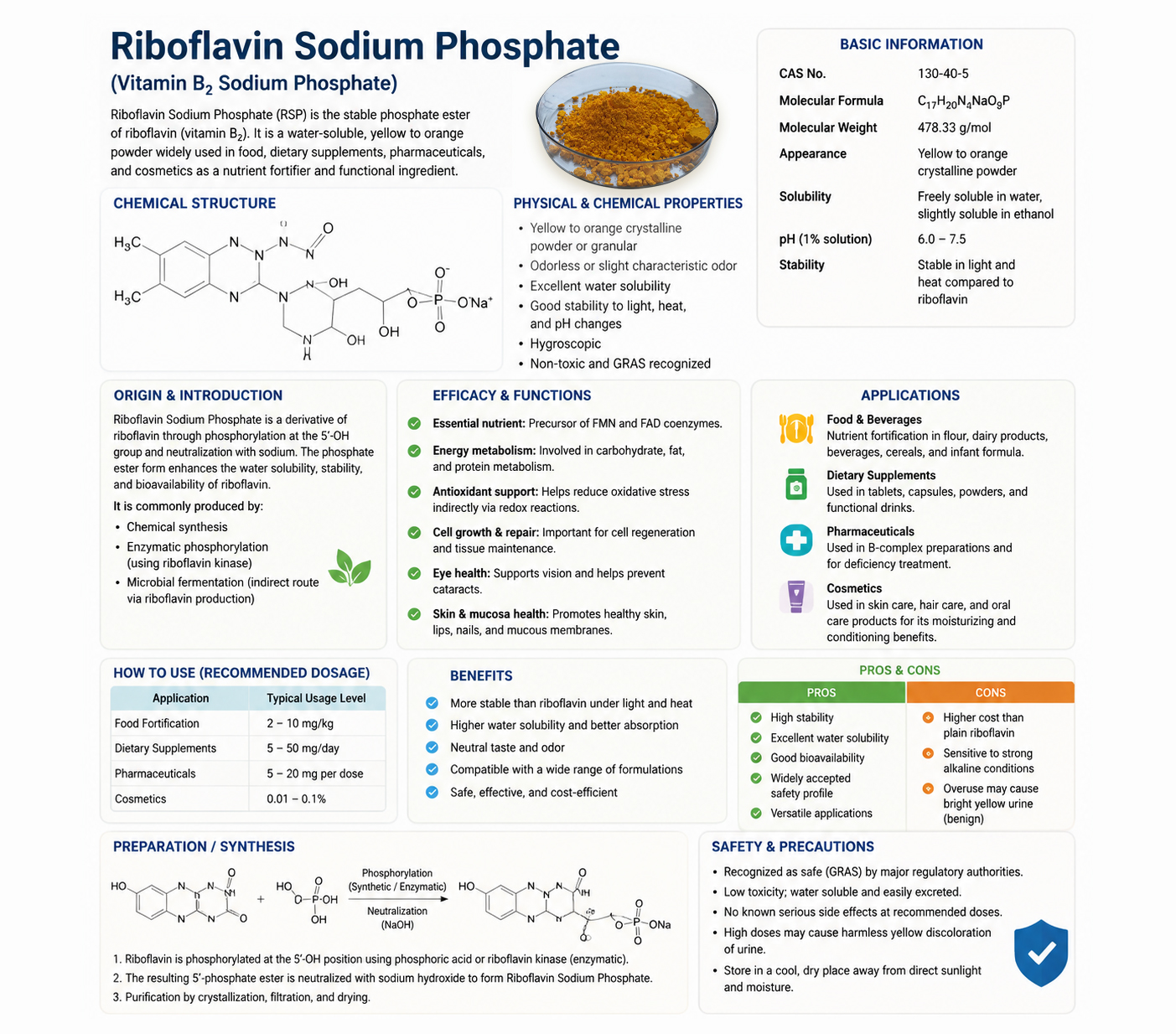
| Molecular formula | C17H20N4O6 | C17H20N4N4O9PNa2 (commonly supplied as sodium salt; hydration state may vary) |
| Molecular weight | 376.36 g/mol | ~478–514 g/mol (depending on hydration) |
| Water solubility | Poor (~0.07–0.12 g/L at room temperature) | Highly water-soluble |
| Color | Yellow-orange crystals | Yellow-orange powder |
| Biological activity | Vitamin B2 | Vitamin B2 precursor/coenzyme precursor |
| Stability | Good dry stability; light-sensitive | Good aqueous solubility; also light-sensitive |
| Pharmaceutical use | Oral tablets, capsules, supplements | Injections, eye drops, aqueous formulations |
2. Chemical Structure Difference
Riboflavin
Riboflavin consists of:
- Isoalloxazine ring system → responsible for redox activity
- Ribityl side chain → sugar alcohol chain attached to the flavin ring
It is biologically converted into:
- FMN (flavin mononucleotide)
- FAD (flavin adenine dinucleotide)
These are essential cofactors for many enzymes.
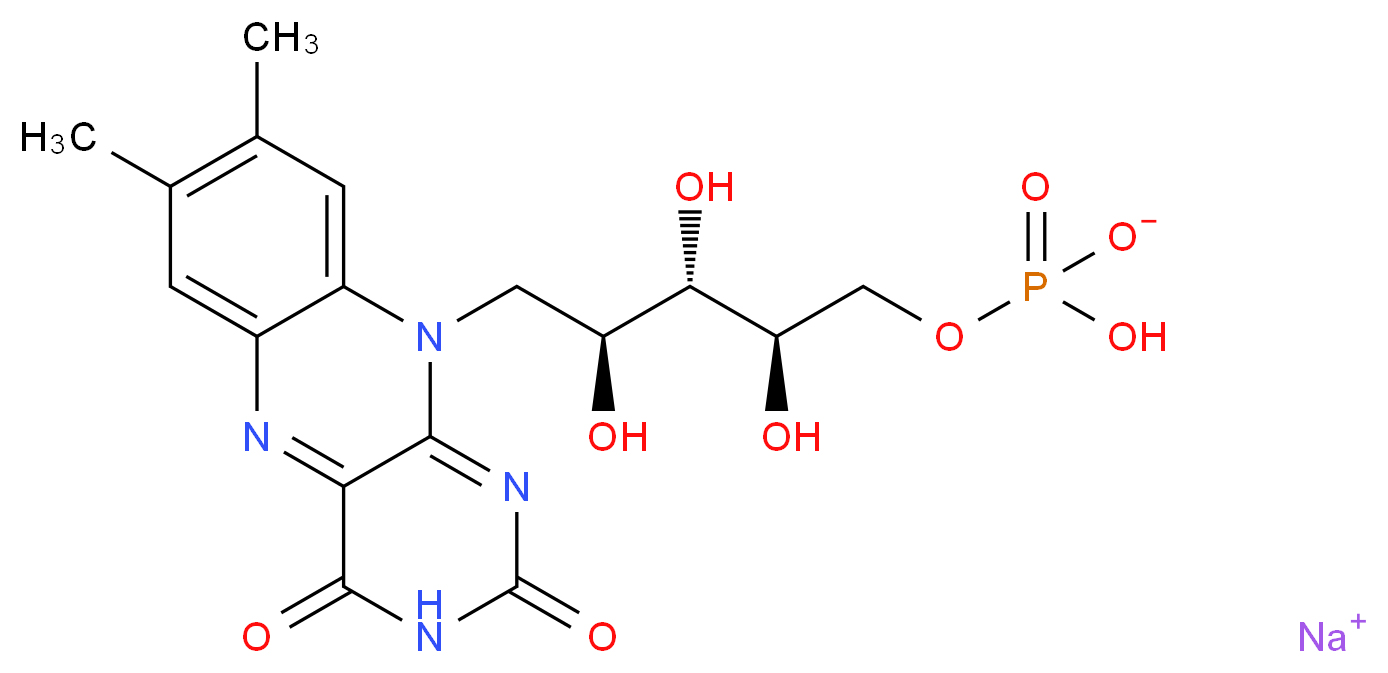
Riboflavin Sodium Phosphate is formed by adding a phosphate group to the 5′ hydroxyl group of riboflavin:
Riboflavin + phosphate → Riboflavin-5′-phosphate
The sodium salt improves:
- Water solubility
- Pharmaceutical handling
- Bioavailability in certain applications
It is essentially the sodium salt of FMN, one of the body’s naturally occurring active vitamin B2 coenzyme forms.
3. Biological Function Comparison
Both ultimately support the same Vitamin B2 pathways.
Riboflavin Functions
Riboflavin is converted into FMN and FAD, which participate in:
Energy metabolism
- Mitochondrial electron transport chain
- ATP production
- Fatty acid oxidation
- Carbohydrate metabolism
Antioxidant defense
FAD/FMN are required for:
- Glutathione reductase activity
- Maintenance of reduced glutathione (GSH)
Skin and tissue health
Vitamin B2 supports:
- Cellular regeneration
- Normal collagen metabolism
- Skin barrier maintenance
- Wound healing
Riboflavin Sodium Phosphate Functions
Because it is already phosphorylated:
Faster availability of FMN
It can directly contribute to formation of flavoproteins involved in:
- Oxidation-reduction reactions
- Cellular respiration
- Enzyme activation
Medical applications
It is used in:
- Vitamin B2 deficiency treatment
- Injectable vitamin formulations
- Riboflavin-mediated corneal collagen cross-linking
Cosmetic applications
Potential benefits include:
- Supporting skin repair
- Reducing oxidative stress
- Improving skin vitality
- Supporting barrier function
4. Absorption and Bioavailability
Riboflavin
After ingestion:
Riboflavin → intestinal absorption → phosphorylation → FMN → FAD
The body regulates conversion according to need.
Advantages:
- Natural dietary form
- Well-studied
- Suitable for daily supplementation
Limitations:
- Low water solubility
- Limited absorption at high doses
Pathway:
Riboflavin Sodium Phosphate → FMN → FAD
Advantages:
- More water soluble
- Easier formulation into liquids
- Better for injections and topical products
Limitations:
- Not necessarily superior for oral supplementation because the body tightly controls vitamin B2 metabolism.
5. Solubility and Stability
| Property | Riboflavin | Riboflavin Sodium Phosphate |
| Water solubility | Very low (~0.1 g/L range) | Much higher |
| pH stability | Sensitive | Generally improved |
| Light sensitivity | High | Still light sensitive |
| Formulation flexibility | Limited | Better |
Riboflavin is famously photosensitive. Exposure to UV/light can degrade it into photoproducts such as lumichrome and lumiflavin.
Riboflavin Sodium Phosphate is preferred where aqueous stability is required.
6. Cosmetic and Skincare Comparison
| Application | Riboflavin | Riboflavin Sodium Phosphate |
| Serums | Limited due to solubility | More suitable |
| Water-based formulations | Difficult | Easier |
| Antioxidant support | Yes | Yes |
| Skin brightening | Mild indirect effect | Mild indirect effect |
| Barrier repair | Supports metabolism | Supports metabolism |
| Injectable/medical cosmetic use | Less common | More common |
Why formulators prefer Riboflavin Sodium Phosphate
- Dissolves better in water-based products
- Easier to combine with hydrating ingredients
- More suitable for ampoules and injectable preparations
7. Riboflavin Sodium Phosphate in Corneal Cross-Linking
A major medical application is corneal collagen cross-linking (CXL) for keratoconus.
Mechanism:
- Riboflavin absorbs UVA light
- Generates reactive oxygen species
- Creates collagen cross-links
- Strengthens corneal tissue
Riboflavin Sodium Phosphate is commonly selected because of its better aqueous formulation properties.
8. Safety Comparison
Riboflavin
Generally very safe.
Possible side effects at high doses:
- Bright yellow urine (harmless)
- Mild gastrointestinal discomfort
- Rare allergic reactions
Generally safe when used appropriately.
Possible effects:
- Injection-site irritation
- Hypersensitivity reactions (rare)
- Photosensitivity concerns in medical light-based applications
9. Which One Is Better?
It depends on the purpose:
| Purpose | Better Choice |
| Daily Vitamin B2 supplement | Riboflavin |
| Food fortification | Riboflavin |
| Injectable vitamin therapy | Riboflavin Sodium Phosphate |
| Eye drops/corneal cross-linking | Riboflavin Sodium Phosphate |
| Water-based cosmetics | Riboflavin Sodium Phosphate |
| Stable liquid formulations | Riboflavin Sodium Phosphate |
Summary
Riboflavin = natural Vitamin B2 form
- Best for nutrition and general supplementation
- Less water soluble
- Requires conversion into active coenzymes
Riboflavin Sodium Phosphate = phosphorylated Vitamin B2 derivative (FMN sodium salt)
- More water soluble
- Easier to formulate
- More suitable for pharmaceuticals, injections, eye treatments, and cosmetics
For skin-care formulations, injectable preparations, or aqueous products, Riboflavin Sodium Phosphate is usually the preferred choice. For nutritional supplementation, ordinary Riboflavin remains the standard and well-established option.