
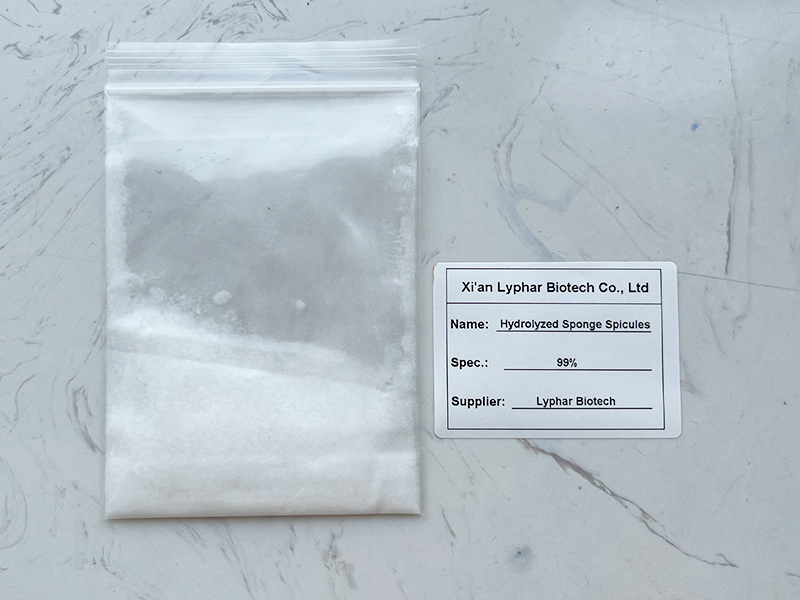
Hydrolyzed Sponge is a marine-derived biomaterial that has gained attention in cosmetics, medicine, and biotechnology due to its natural origin and functional versatility.
Pros of Hydrolyzed Sponge
1. Moisturizing & Hydrating
- Hydrolyzed Sponge is rich in water-binding components, which can help the skin retain moisture.
- It improves skin elasticity and can reduce dryness.
2. Skin-soothing properties
- It may contain bioactive compounds that calm irritation and inflammation.
- Useful in formulations for sensitive skin.
3. Collagen & Tissue Support
- Some Hydrolyzed Sponges contain peptides or proteins that can support collagen synthesis.
- Potentially aids in anti-aging and skin repair.
4. Bioactive & Functional Ingredients
- Can have antioxidant properties, helping protect cells from free radical damage.
- Sometimes used in wound healing or regenerative medicine studies.
5. Biodegradable & Natural
- If sourced sustainably, it is environmentally friendly compared to synthetic polymers.
Cons of Hydrolyzed Sponge
1. Allergic Reactions
- Rare but possible, especially in people with allergies to marine products or specific proteins.
2. Cost
- Natural Hydrolyzed Sponge extracts can be expensive compared to synthetic alternatives.
3. Stability Issues
- May degrade over time, particularly in formulations with extreme pH or temperature.
- Requires careful preservation in cosmetic products.
4. Limited Research
- While promising, some claims (like anti-aging effects) may lack extensive clinical validation.
5. Potential Contaminants
- If not properly purified, it may carry microbial contaminants or toxins from its natural source.
Summary: Hydrolyzed Sponge is a natural, hydrating, and potentially bioactive ingredient, excellent for skincare and regenerative uses, but it comes with considerations around cost, stability, and possible allergic reactions.