
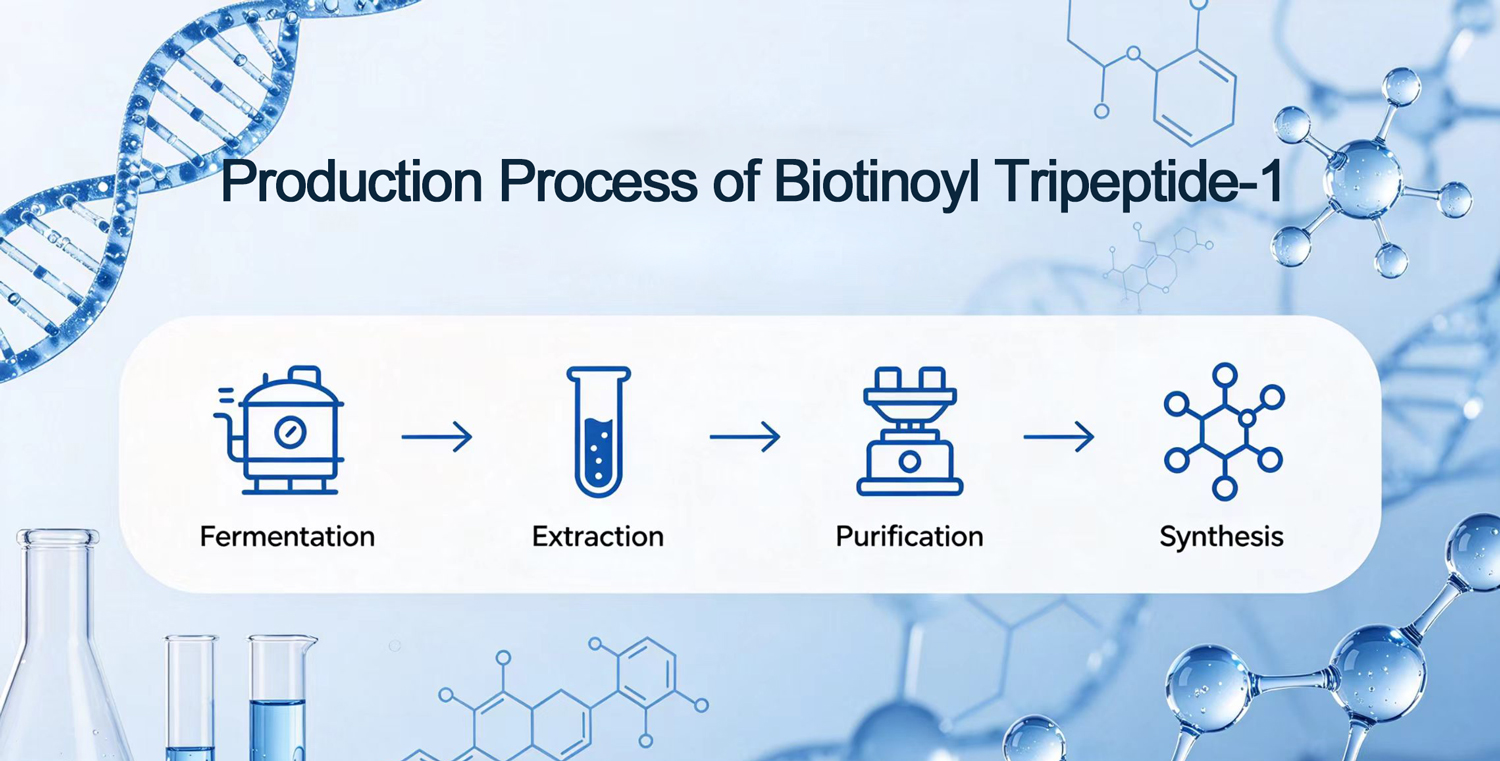
Biotinoyl Tripeptide-1 is a specialized process that combines principles of peptide synthesis and bioconjugation. Here’s a step-by-step overview of how it’s generally produced in laboratory or industrial settings:
1. Selection of Peptide Sequence
The tripeptide part of Biotinoyl Tripeptide-1 typically includes a short sequence of amino acids optimized for activity on hair follicles or skin cells.
Common sequences are Glu-His-Lys or similar derivatives, chosen for biological efficacy.
2. Solid-Phase Peptide Synthesis (SPPS)
The tripeptide is synthesized using SPPS, which involves sequential addition of protected amino acids to a resin-bound peptide chain.
Key steps include:
- Resin Loading – Attaching the first amino acid to a solid support (resin).
- Coupling – Adding subsequent amino acids with activated carboxyl groups.
- Deprotection – Removing protecting groups after each coupling.
SPPS ensures high purity and precise sequence control.
3. Biotin Conjugation
Once the tripeptide is synthesized, it is biotinylated:
- Biotin (vitamin B7) is chemically linked to the N-terminal of the peptide.
- This is usually done using a biotin-N-hydroxysuccinimide ester (biotin-NHS), which reacts with the free amine on the peptide.
This step is critical because biotin enhances binding to cellular receptors in hair follicles and skin.
4. Cleavage and Purification
The biotinylated tripeptide is cleaved from the resin.
Purification is performed using techniques such as:
- High-Performance Liquid Chromatography (HPLC) for separation by polarity and size.
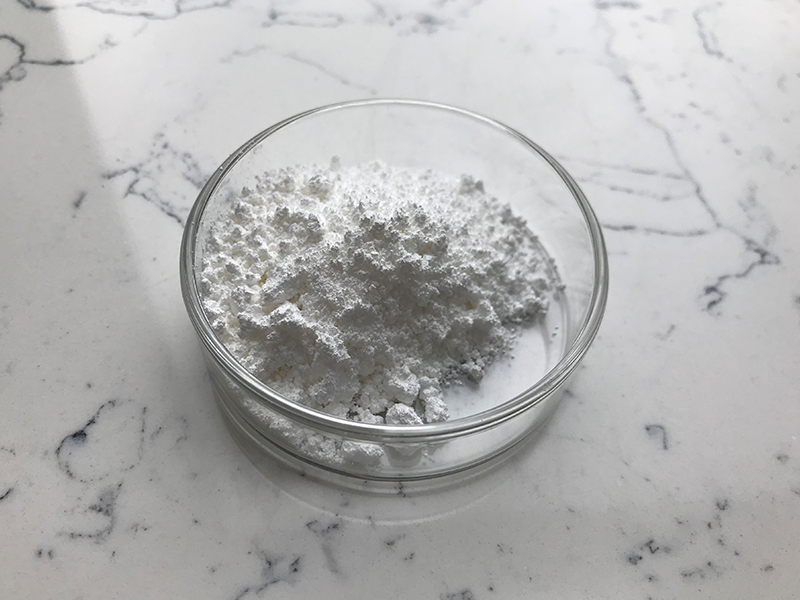
- Lyophilization to produce a stable dry powder.
5. Quality Control
Analytical tests ensure purity, identity, and activity:
- Mass spectrometry for molecular weight verification.
- HPLC analysis for purity (>95% is standard).
- Bioactivity assays to confirm efficacy on cell cultures (e.g., hair follicle cells).
6. Formulation
The final Biotinoyl Tripeptide-1 is typically formulated into cosmetic or hair care products:
- Solutions, serums, or creams.
- Often combined with stabilizers, solvents, and skin/hair delivery enhancers.
This process is highly controlled because the peptide’s activity depends on precise synthesis and biotin attachment.
If you want, I can also draw a flowchart of the production process for visual clarity—it’s actually easier to grasp step by step that way. Do you want me to do that?